
Advanced Claude Code Guide: 15 Hidden Productivity Features
Insider tips from Claude Code's core developers. Covers 15 advanced techniques including /loop auto-running, Worktree parallel development, and Chrome extension verification.

Advanced Claude Code Guide: 15 Hidden Productivity Features
Insider tips from Claude Code's core developers. Covers 15 advanced techniques including /loop auto-running, Worktree parallel development, and Chrome extension verification.
Quick Start
This article compiles 15 hands-on tips shared by Claude Code's product lead, helping developers squeeze every drop of performance out of this CLI tool.
Core Tips
1. /loop and /schedule: automated execution
The /loop command sets up an automated retry mechanism that keeps running until the tests pass. Combined with /schedule, you can automatically monitor scheduled tasks.
2. Parallel development with Worktrees
Claude Code supports creating Git Worktrees directly, letting you fix a bug without disturbing the development work on your current branch.
3. Real-time output verification
With Chrome extension integration, Claude Code can directly observe the rendered result of a web page, making sure UI adjustments match expectations.
Use Cases
A fit for developers who rely heavily on a terminal workflow and want to use an AI Agent to shorten delivery cycles even further.
Related articles

FineVLA: Which Hand, Where to Grasp — One Sentence Sets It All
HKU's XLANG Lab and Alibaba's Qwen team have open-sourced FineVLA, a framework that refines language supervision in robot policy learning from "what to do" to "how to do it," reaching 86.8% success in RoboTwin simulation (+15) and 62.7/100 on a real dual-arm robot, with code, models, and benchmark all open-sourced.
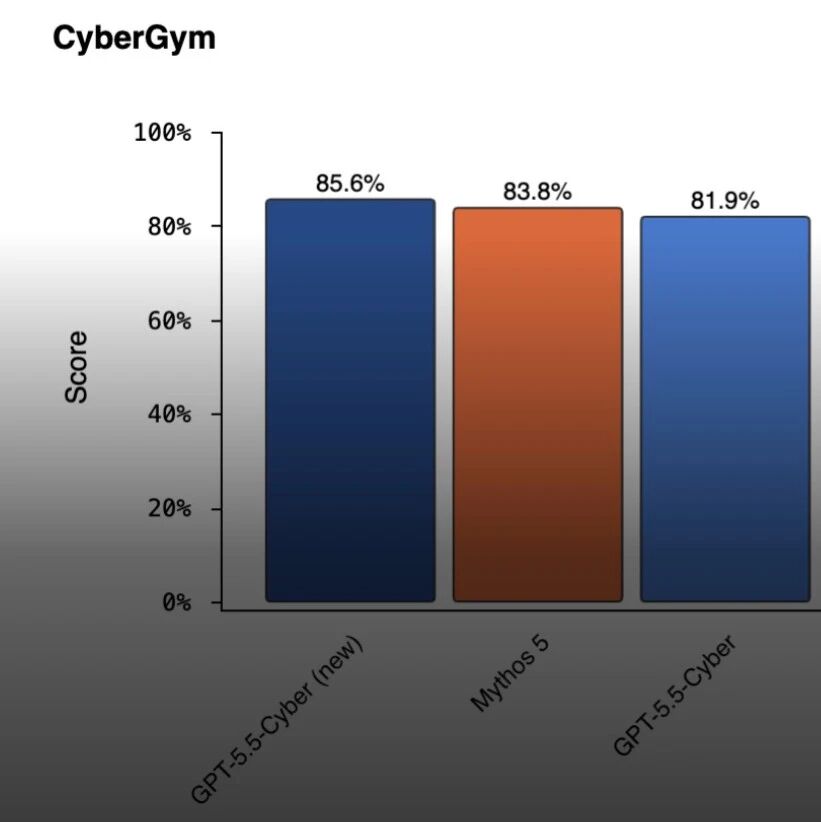
GPT-5.5-Cyber at Full Power: OpenAI Welds an AI Security Engineer into Codex
OpenAI expands its Daybreak security program with the full release of GPT-5.5-Cyber (CyberGym 85.6%, ahead of Mythos 5), a Codex Security plugin update, and the Patch the Planet open-source remediation effort — pushing vulnerabilities all the way from discovery to landed patches.

VLA-JEPA: Teaching Robots How Actions Change the World
Zhongguancun Academy × USTC × SJTU × EIT propose VLA-JEPA, fusing VLA models and world models in latent space: assembly tasks completed with just 13 trajectories, 97.2% on LIBERO, shared by LeCun and Saining Xie.

AutoControl-Arena: Auto-Generated, Actually Runnable Agent Risk Testbeds
Fudan × Shanghai Innovation Institute × Oxford publish the ICML 2026 paper AutoControl-Arena, which auto-synthesizes executable test environments to surface latent Agent risks in long-tail scenarios, reproducing Anthropic/OpenAI safety-report behaviors with a 0.87 correlation.
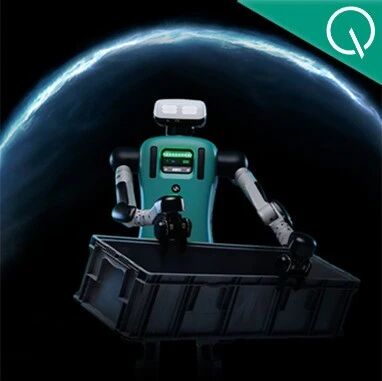
Nvidia Halos: An Open-Source Safety OS for Robots
At Automate 2026, Nvidia launched Halos for Robotics, a full-stack robot safety system that opens 18,600 engineering-years of autonomous-driving safety know-how to the embodied AI industry — the core safety framework is already open, with 43 companies on board.
PerfEvolve: Teaching Agents to Tune Databases Like a Senior DBA
ISCAS open-sources the PerfEvolve framework, converting static tuning docs into executable procedural skills for Agents and delivering up to 58.9% performance gains on PostgreSQL v16 — a direct fix for LLM tuning failures.