
Claude Sonnet 5 Arrives: Near-Opus 4.8 Performance at 60% of the Price
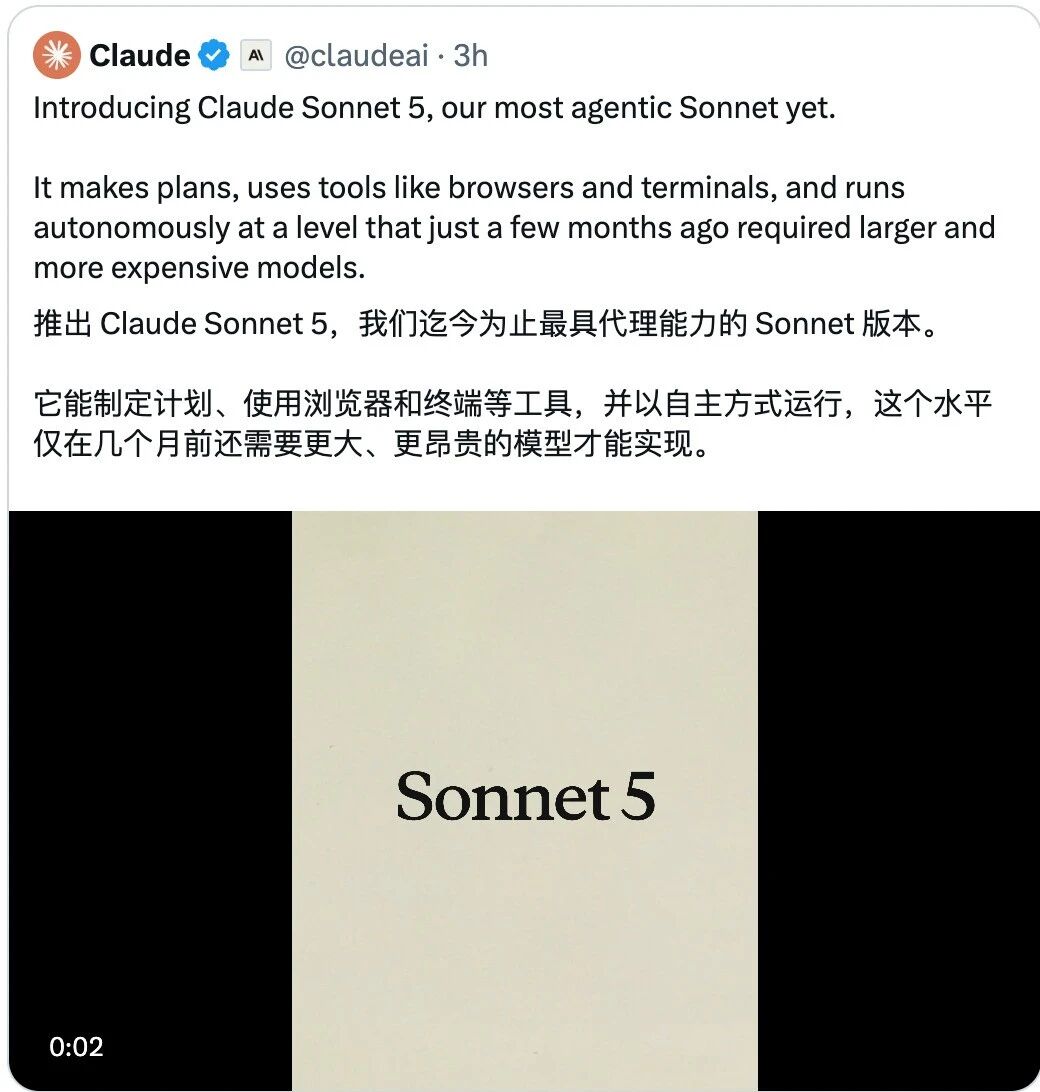
Anthropic releases Claude Sonnet 5 with adaptive thinking on by default and a new tokenizer. Pricing stays at $3/$15, with a limited-time $2/$10 rate through August 31.
Claude Sonnet 5 Arrives: Near-Opus 4.8 Performance at 60% of the Price
Anthropic releases Claude Sonnet 5 with adaptive thinking on by default and a new tokenizer. Pricing stays at $3/$15, with a limited-time $2/$10 rate through August 31.
On June 30, Anthropic released Claude Sonnet 5, positioned as a drop-in upgrade to Sonnet 4.6. It delivers clear gains on coding and agent tasks, with performance approaching the pricier Opus 4.8 while costing just 60% of the latter per million tokens. If you're on Sonnet 4.6, migration cost is minimal; if you were weighing a move up to Opus, this Sonnet deserves a fresh look.
Key Updates
Adaptive Thinking On by Default
This is the most significant behavior change. On Sonnet 4.6, requests without a thinking field don't think; on Sonnet 5, the same request automatically enables adaptive thinking. If you don't want it, you must explicitly pass thinking: {type: "disabled"}.
# Sonnet 5 uses adaptive thinking by default; no extra config needed
# To turn it off:
thinking = {"type": "disabled"}
Meanwhile, the old manual extended thinking (thinking: {type: "enabled", budget_tokens: N}) has been fully removed, and calls using it return a 400 error.
Manual Sampling Parameters No Longer Supported
Setting temperature, top_p, or top_k to non-default values returns a 400 error outright. During migration you must remove these parameters and steer model behavior via the system prompt instead. This restriction was previously introduced on Opus 4.7.
New Tokenizer: Roughly 30% More Tokens for the Same Text
Sonnet 5 ships a new tokenizer: the same input text produces about 30% more tokens than on Sonnet 4.6. This is not an API shape change (request/response/streaming event structures are unchanged), but it materially affects your budget:
- Token counts: the
usagefield will read higher for the same text; don't reuse counts from the old model - Context capacity: the 1M window is unchanged, but less text actually fits inside it
max_tokensceilings: output limits tuned on the old model may now truncate; re-evaluate them- Per-request cost: unit price is unchanged, but the same request carries more tokens, so total cost may rise
The First Sonnet with Real-Time Cyber Safety
Sonnet 5 is the first Sonnet-class model with built-in real-time cyber safety. Requests touching banned or high-risk cybersecurity topics may be refused; refusals come back as HTTP 200 + stop_reason: "refusal", not as errors.
Pricing
| Item | Price (per million tokens) |
|---|---|
| Standard input | $3 |
| Standard output | $15 |
| Limited-time input (through 2026-08-31) | $2 |
| Limited-time output (through 2026-08-31) | $10 |
For comparison, Claude Opus 4.8 is $5/$25. Note that because of the new tokenizer, the actual spend on equivalent requests may be higher than the unit-price comparison suggests.
Availability
- Claude API: available to all customers
- AWS: via Claude on Amazon Bedrock and Claude Platform on AWS; legacy Bedrock (
InvokeModel/ConverseAPI) is not supported - Google Cloud: via Claude on Google Cloud
- Microsoft Foundry: via Claude in Microsoft Foundry
- Supports ZDR (zero data retention) agreements
Migration Checklist
Sonnet 5 is a drop-in replacement for Sonnet 4.6 — changing the model ID is enough:
model = "claude-sonnet-4-6"  # before migration
model = "claude-sonnet-5"    # after migration
Then check three things, in order:
- Token budget and counting: re-count your prompts with the token counting tool, and re-evaluate
max_tokensvalues that sit near output-length ceilings - Extended thinking: if you're still using
budget_tokens, migrate to adaptive thinking - Sampling parameters: remove non-default
temperature/top_p/top_kvalues
Other API constraints (such as no assistant message prefilling) are the same as on Sonnet 4.6 — no further changes needed.
Where It Fits
- Coding agents: the biggest gains over Sonnet 4.6 are in coding and agentic tasks
- Need Opus-level capability on a budget: Sonnet 5 narrows the gap with Opus 4.8 on multiple benchmarks
- Production workloads already on Sonnet 4.6: a drop-in upgrade with low migration risk
If you rely heavily on fine-grained sampling parameters to tune temperature, or reuse historical token counts extensively for cost forecasting, this upgrade takes some adaptation work. Otherwise, it's the most worthwhile switch in the current Sonnet lineup.
Primary sources: