
DeepSeek V4 Hands-On: A Leap in Agent Coding, Plus API Pricing and a Getting-Started Guide
DeepSeek V4 is open-sourced with 1.6T parameters and a million-token context; its Agent coding ability is close to Opus 4.6. Includes API pricing, real-world test cases, and getting-started links.
DeepSeek V4 Hands-On: A Leap in Agent Coding, Plus API Pricing and a Getting-Started Guide
DeepSeek V4 is open-sourced with 1.6T parameters and a million-token context; its Agent coding ability is close to Opus 4.6. Includes API pricing, real-world test cases, and getting-started links.
On April 24, 2026, DeepSeek officially released and open-sourced the DeepSeek-V4 series. This 1.6T-parameter open-source behemoth upgrades across the board in Agent coding, long context, and complex reasoning, and shot to the top of Hugging Face's trending list on launch day. This article rounds up the core specs, API pricing, and multi-angle test results to help you quickly judge whether it's worth switching.
Core Specs
The DeepSeek-V4 series includes two versions, both built on a MoE (Mixture of Experts) architecture:
| Spec | DeepSeek-V4-Pro | DeepSeek-V4-Flash |
|---|---|---|
| Total parameters | 1.6T | 284B |
| Activated parameters | 49B | 13B |
| Context length | 1 million tokens | 1 million tokens |
| Positioning | Rivals closed-source flagships | Low latency, low cost |
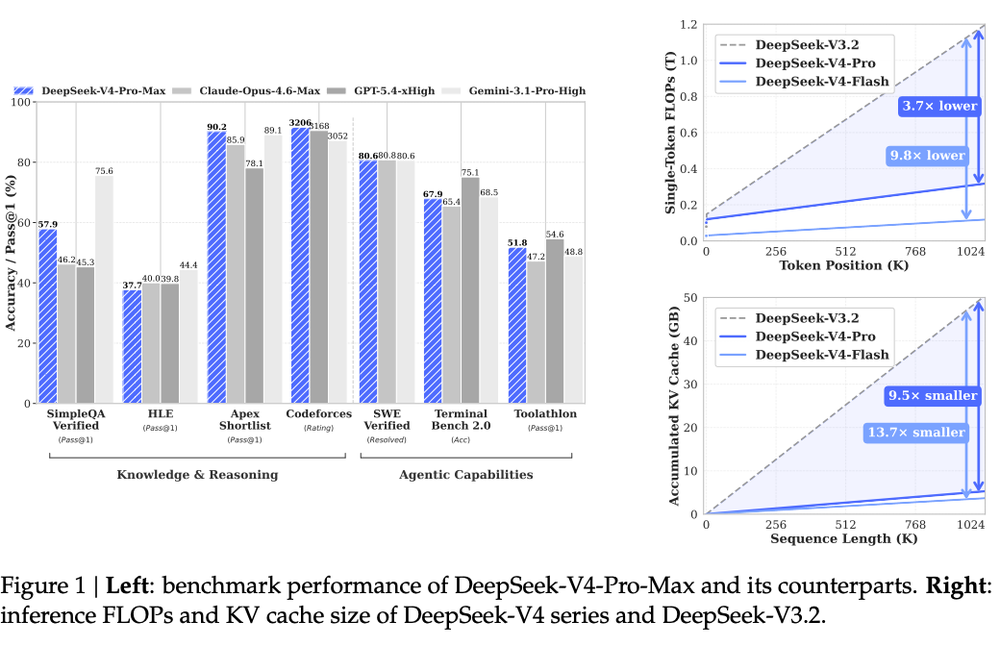
In the 1 million-token scenario, V4's per-token inference compute is only 27% of V3.2's, and KV Cache usage drops to about 10%.
API Pricing
| Billing item | V4-Pro | V4-Flash |
|---|---|---|
| Input (cache hit) | RMB 1 / million tokens | RMB 0.2 / million tokens |
| Input (cache miss) | RMB 12 / million tokens | RMB 1 / million tokens |
| Output | RMB 24 / million tokens | RMB 2 / million tokens |
V4-Flash's pricing is extremely aggressive — RMB 0.2 per million tokens on cache hits, well suited to lightweight, high-frequency calls.
Note: DeepSeek has stated that, constrained by high-end compute, V4-Pro's serving throughput is currently limited. Prices are expected to drop substantially once the Ascend 950 supernode ships in volume in the second half of the year.
Hands-On: 60 Minutes of Continuous Coding with No Intervention
Task 1: Building a complete bookkeeping system from scratch
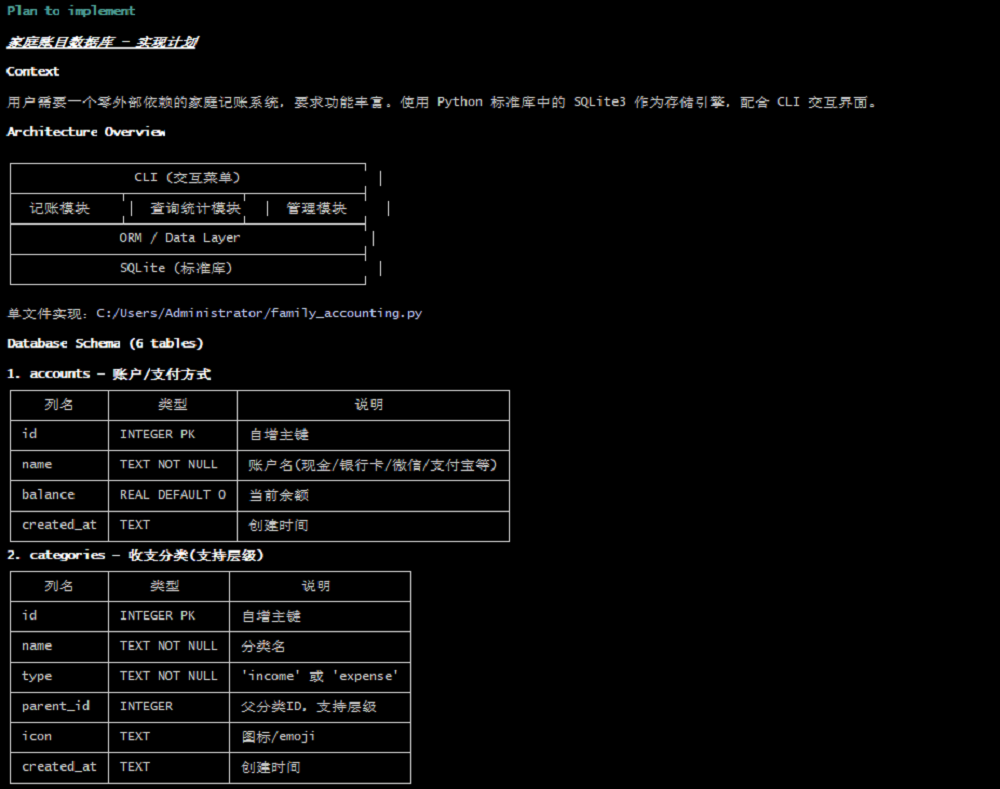
Testers gave DeepSeek-V4-Pro a vague database design requirement. The model first autonomously planned a solution with 8 functional modules and 6 database tables, then laid out a 10-item verification checklist.
Once planning was done, they let it run completely hands-off: nearly 60 minutes of continuous coding — no interruptions, no infinite loops, no missed critical steps. Every core frontend feature worked, and the front-end/back-end data flow was complete end to end.
This task consumed about 200,000 tokens (mostly input), with an API bill of roughly RMB 5. With the caching mechanism kicking in, the actual cost stayed under control.
Task 2: Building an Android emulator from scratch
The complexity of this task exceeded the model's knowledge, but it autonomously started web searches, made 18 tool calls, and after 11 minutes of thinking produced a complete seven-step development plan. It then ran continuously for over 50 minutes to finish the job.
The key takeaway: when the model hits a knowledge blind spot, it proactively searches to fill the gap instead of making things up.
Long-text test: reading the entire Three-Body trilogy in one go
Uploading the full text of The Three-Body Problem trilogy consumed 540,000 tokens. The model accurately answered questions about plot details from the books, validating that the million-token context is genuinely usable.
Known Weaknesses
- Occasional stumbles on lightweight tasks: On simple questions the Pro version sometimes "overthinks", while the Flash version is more direct and efficient
- Reasoning stability needs improvement: Infinite loops appear in some extreme math problems and lightweight tests
- Prices are up from V3.2: But the caching mechanism partially offsets the increase
Quick Start
- Web experience: chat.deepseek.com
- API docs: api-docs.deepseek.com
- Open weights: HuggingFace / ModelScope
- Technical report: DeepSeek_V4.pdf
Toolin Editorial Team
Categories
Related articles

Alipay Token Pay: Payment Infrastructure for Agents That Spend for You
Alipay launches four products — the world's first Token Pay service, AI Wallet, AI Pay, and AI Collect — forming a full-stack AI-native payment system that has already completed 300 million agent payments.
Hermes Agent: The Open-Source Python Project That Beat OpenAI Codex
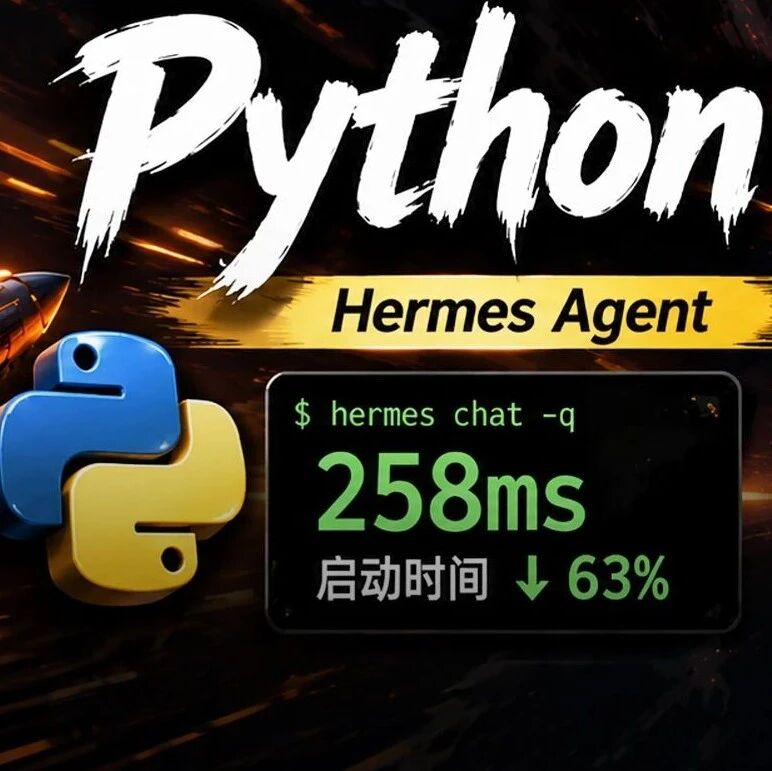
Hermes Agent cut its startup time by 63% through three engineering optimizations and beat the Rust-written OpenAI Codex 6:5 across 11 CLI benchmarks, with GitHub stars passing 160,000.

skill-cleaner: An Open-Source Tool to Put Your Agent Skills on a Diet
Peter, the 'father of the lobster,' has open-sourced skill-cleaner: 5 core features that audit and optimize your Agent skill descriptions, saving Token costs and improving Agent selection accuracy. Now open on GitHub.

SkyClaw-v1.0: A Free Agent Model Closing In on Opus 4.6
Kunlun Tech releases the SkyClaw-v1.0 Agent model: performance approaching Claude Opus 4.6 at half the price of mainstream models, OpenAI-interface compatible, free for a limited time.

CODA: Letting LLMs and Novices Write Speed-of-Light GPU Kernels
An open-source project from MIT, Princeton and others rewrites the scattered computations in Transformer training into the GEMM-Epilogue pattern, speeding up backpropagation by 1.6-1.8x
Multi-Machine Codex Collaboration: How to Actually Use Up Your AI Membership Quota
Build a Codex multi-machine collaboration system with 4 Macs, from research and planning to batch video generation, turning your AI membership from 'renewal anxiety' into 'continuous output'