
Turning an n8n Workflow into a Codex Skill: A Meta-Skill's Five-Step Pipeline
With the n8n-to-codex-skill meta-skill, convert any of n8n's 10,000+ public templates into a native Codex Skill — includes two real case studies: an SEO audit skill and a GEO content skill.
Turning an n8n Workflow into a Codex Skill: A Meta-Skill's Five-Step Pipeline
With the n8n-to-codex-skill meta-skill, convert any of n8n's 10,000+ public templates into a native Codex Skill — includes two real case studies: an SEO audit skill and a GEO content skill.
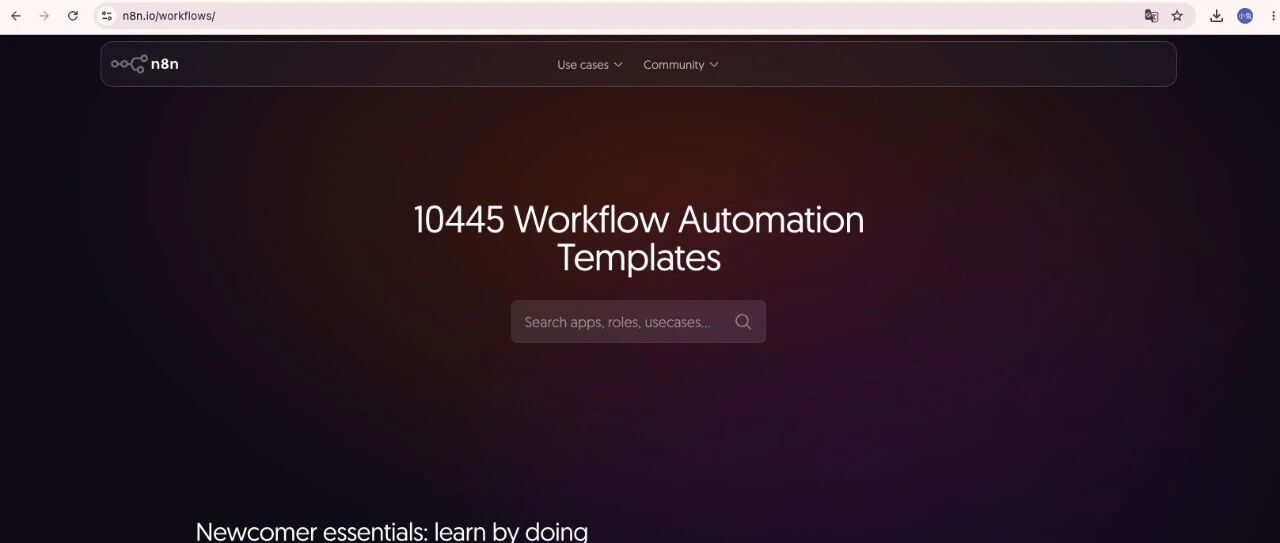
n8n's official template library holds 10,000+ public workflows — years of automation logic accumulated by countless people stepping on the same rakes. But n8n's barrier to entry has always been high: node configuration, credential authorization, upstream and downstream parameters that don't line up and break the chain — debugging can be harder than writing code.
This tutorial shows you how to use n8n-to-codex-skill, a meta-skill, to turn any n8n workflow into a native Codex Skill. The barrier drops from "learning to use n8n" to "judging whether Codex's conversion is correct." Two real case studies included: an SEO audit skill and a GEO content generation skill, plus a look at where Codex is genuinely stronger and weaker than n8n.
For developers and cross-border operators with Codex experience who want to move their stockpile of automation assets into the agent era.
Before You Start
- Codex App: a working Codex account
- An n8n template link: pick any public template from n8n.io/workflows
- API credentials: if the original workflow depends on paid data services like GSC, DataForSEO, or Exa.ai, bring your own keys
- Expected time: about 30-60 minutes per workflow (including verification)
Core Concept: Skill vs Meta-Skill
Before getting hands-on, two concepts need untangling:
- Skill: a packaged capability that Codex invokes when a matching request appears. Auditing a website is a Skill; writing listing copy is another Skill; each only knows its own job.
- Meta-Skill: it doesn't do a concrete task — its job is "building skills" itself. Give it an n8n workflow link, and its task is not to run the workflow but to break it down, judge it, and convert it into a new standalone Skill.
n8n-to-codex-skill is the latter.
The Five-Step Pipeline
Once you hand an n8n link to Codex, the meta-skill forces this flow:
- Parse: read the workflow, map out the nodes, what each one does, and which external services they depend on
- Classify: sort every node into a fixed category, each with default handling rules
- Counter-question: don't decide on its own — surface the key decisions to you with a recommended option attached
- Plan: build the plan, directory structure, and node mapping table; no code gets written until you nod
- Verify: run it once with real data; faking it with made-up results is not allowed
The 11 Node-Category Handling Rules
Classification is the heart of this pipeline. The table below is the meta-skill's built-in node mapping rules — understand it and you can predict how Codex will treat your workflow:
| Node Type | Examples | Default Handling |
|---|---|---|
| Generative AI / content generation | LLM text, image, speech generation | Codex steps in; for image/video, first confirm Codex has the corresponding quota, otherwise ask whether to keep the external API |
| Scraping nodes | Unauthenticated HTTP, public web/RSS fetching | Implemented directly in a script, no key needed |
| Paid data services | GSC, Exa.ai, DataForSEO, Airtop | Keep the external calls; user must supply credentials |
| Storage and collaboration tools | Google Sheets, Notion, Lark, Gmail | Localize by default; ask whether to keep the original integration |
| Trigger nodes | Webhook, Chat Trigger, forms, Cron | Convert to one-off commands by default; ask whether to keep scheduled/resident operation |
| Data transformation / shaping | Set, Code, Edit Fields | Keep the logic as-is, implemented in a script |
| Control flow / branching | IF, Switch, Merge, Loop, Wait | Keep the logic as-is |
| Human approval | sendAndWait, Slack approvals | Ask whether to keep the human confirmation step |
| Sub-workflow calls | Execute Workflow | Recursively parse the called sub-workflow; skipping is not allowed |
| Error handling / retry | Error Trigger, Stop and Error, Retry | Preserve the error-handling intent, implemented with try/except |
| Documentation / comments | Sticky Note | Transcribed into SKILL.md; not part of execution |
Case 1: The SEO Audit Skill
Source template: n8n.io/workflows/4151
The original workflow has 6 nodes and does this: give it a URL → a scraper fetches the HTML → extract visible text/heading hierarchy/meta → AI scores it (0-10) → output fix recommendations.
Steps
- Hand the template link to Codex and have it invoke the meta-skill to reproduce the workflow
- Codex fetches the workflow from the web and starts evaluating, counter-questioning on a few points:
- Which trigger method?
- Keep the AI node, or let Codex step in?
- Where should the output report go?
- Should the robots.txt check be strengthened?
- After you answer, Codex lays out the detailed plan for confirmation
- Once confirmed, it starts generating the skill files
- Verify against a real website
Verification Results
We tested two children's toy DTC brands:
- Lovevery: 7.7
- Yoto: 8.6
- robots.txt: all 6 AI crawlers allowed on both sites
- llms.txt: 404 on both sites
💡 Pitfall warning: Shopify has generated llms.txt by default since May, but both Lovevery and Yoto returned 404. After we had Codex re-verify, 404 was confirmed — both sites run custom frontends, not the standard Shopify template. These "counterintuitive" results are exactly what real-data verification is for.
Case 2: The GEO Content Generation Skill
Source template: n8n.io/workflows/8768
The original workflow: a form collects requirements → AI generates content → Gmail human approval → Google Sheets logs the status.
Key Modifications
- The form fields (originally a tech-blog template) were split into page type, selling points, target audience, and more
- Gmail approval became local human confirmation, so no email account needs to be connected
The Bug Codex Found
⚠️ Important finding: during parsing, Codex discovered that this template may never have run end-to-end successfully — several nodes reference nodes that simply don't exist. The n8n template library has 10,000+ entries, but nobody guarantees each one is a working, tested product.
Chaining the Two Skills Together
During the counter-question phase, feed the previous SEO audit skill's report into the content generation skill:
- Content generation reads the specific gaps in the audit report
- Missing H3s → generate hierarchical headings
- Missing JSON-LD → generate schema recommendations
- The output includes a section titled "How This Responds to the Audit Report," mapping one-to-one to the audit's 4 findings
Known Limitations
The chaining mechanism works, but there's no way to prove the new content will actually earn ChatGPT one more citation. AI-generated content has no objective standard, and human review judges it by subjective ones.
Codex vs n8n: Where Each One Wins
Three Places Codex Is Genuinely Stronger
- It can spot bugs in the original system: the 8768 workflow had broken node references, and Codex caught it at the parsing stage — not when the run crashed. n8n only errors out when execution hits the broken point.
- It can handle deterministic and non-deterministic work at once: in the audit skill's scoring logic — length, tags, and anything else that can be pinned down goes to a rules engine, while summarization and other judgment calls go to the AI. n8n nodes are either pure code (fully deterministic) or LLM nodes (full black box), with nothing in between.
- Generalization: one n8n workflow does exactly one thing. This meta-skill can, in theory, swallow any one of the 10,000+ templates on n8n.io — parsing it on its own and counter-questioning on the edge cases itself. That's the gap between "being automated" and "learning how to automate."
Two Places n8n Is Still Stronger
- Determinism and auditability: run the same n8n workflow 100 times and the node execution path is identical every time; when something breaks, you can pinpoint the exact node. A Codex skill is a mix of reasoning + rules, and over long, high-volume runs its consistency naturally trails a pure node chain.
- Integration bridging: n8n connects to a huge catalog of external nodes — add credentials and it works. With Codex you have to write the auth and data-format handling yourself.
How to Choose
- Scenarios that need judgment and self-correction → Codex is stronger
- Scenarios that need mature connectors and errors you can see at a glance → n8n still fits better
n8n isn't dead — some of the work has just found a smarter way to get done.