
WeChat's AI Assistant "Xiaowei" Hands-On: 12 Scenarios to Map Its Powers and Limits
WeChat's native AI assistant Xiaowei has opened gray-scale testing. Built on Tencent's in-house WeLM model, it can send messages, check bills, and analyze Moments — but no scheduled sending or bulk operations yet.

WeChat's AI Assistant "Xiaowei" Hands-On: 12 Scenarios to Map Its Powers and Limits
WeChat's native AI assistant Xiaowei has opened gray-scale testing. Built on Tencent's in-house WeLM model, it can send messages, check bills, and analyze Moments — but no scheduled sending or bulk operations yet.
WeChat's AI assistant "Xiaowei" has opened gray-scale testing. It is not a standalone app — it lives inside WeChat, as a conversation panel on the left negative-one screen, summoned by tapping the "little side-eye" icon in the top-left corner or swiping right. Under the hood it uses Tencent's in-house WeLM large model (MoE architecture, latest total parameter count 258B). This piece tests its real capabilities and clear limits across four dimensions and 12 scenarios, so you can decide whether to pick it up now.

Xiaowei's entry point is in WeChat's top-left corner, in conversation form, accepting text, voice, images, and files as input.
Dimension One: When AI Enters WeChat's Social Graph
Scenario 1: Sending Messages in Chats
We had Xiaowei send a message to a specified contact. It handles homophones from voice input reasonably well, and layered with its user-memory feature it finds the right person fairly easily. It asks for a second confirmation before sending, so recognition errors don't fire off directly; after sending it gives a jump link that opens the corresponding chat page, so a mistaken send can be recalled immediately.
Beyond text, it can also start voice calls and send images and files — covering the full set of contact-communication abilities inside WeChat.
The second-confirmation mechanism and the jump link are the key privacy-safety designs — the AI cannot fire off messages on your behalf directly.
⚠️ Limit: You can give a scheduled instruction like "send xxx to xxx in ten minutes," but in testing, tapping confirm sends immediately — it does not wait for the set time; and if you don't tap confirm, there's no reminder when the time arrives either. Xiaowei cannot send scheduled messages for now.
Scenario 2: Sending Red Packets
Once the contact, amount, and greeting are confirmed, Xiaowei hands you a jump link to a pre-filled red-packet page, and you just tap send. The flow is similar to sending a message.
⚠️ Limit: No bulk operations. Bulk-sending messages or red packets by tag or nickname is refused. This is to prevent abuse for mass spamming.
Scenario 3: Sending Messages in Group Chats
In group chats, text, images, and files can all be sent, as can red packets (regular and luck-based).
Scenario 4: What It Cannot Do with Contacts and Chats
WeChat protects chat history strictly:
- You cannot have Xiaowei directly summarize a stretch of chat or a group conversation
- You cannot have it proactively search past chat records
- You cannot query the group member list through Xiaowei
- You cannot query which shared groups you and a given friend belong to
You can manually select a stretch of conversation and ask Xiaowei about it, but the AI itself cannot read, search, or organize chat content on its own initiative, beyond user actions.
Dimension Two: When AI Faces Social Activity in WeChat
Scenario 5: Summarizing Moments
Ask Xiaowei to summarize recent Moments posts and it organizes them by topic. Under a category like "AI and tech," it will aggregate one friend discussing Terence Tao on the formalization of mathematics by AI, another friend reposting Yan Junjie's views on AI Coding, and a third analyzing the valuation gap between Zhipu and MiniMax.
The nice part: it doesn't just give a summary paragraph — it attaches the corresponding Moments posts as quotes, and tapping one jumps straight to the original post to like or comment.
Moments summaries with quoted originals and jump-through are an efficient way to filter the feed, especially for contact-dense information streams.
Scenario 6: Viewing a Specific Friend's Moments
Say you added a dropshipper who posts to Moments constantly — you can have Xiaowei first summarize what they've been selling lately, which products they're pushing, and which might suit you, then decide whether to look closer.
Scenario 7: Recognizing Dynamic Content
What Xiaowei understands isn't limited to text. It can also recognize and summarize Moments content like images and article links — for instance, summarizing where everyone has been traveling lately, or what the articles people repost are about.
Dimension Three: When AI Invokes WeChat's Services
Scenario 8: Invoking Mini Programs
Xiaowei can invoke mini-program services. "Order me a Luckin" jumps into the Luckin mini program; "get me a ride" brings up a ride-hailing mini program. That makes it more than a Q&A entry point — it genuinely saves a few taps.
⚠️ Limit: What gets invoked is a mini program, not a native app service. Anything the mini program doesn't cover, it can't do.
Scenario 9: Information Queries
You can ask Xiaowei "check the books" style requests — for example, querying your WeChat Pay bills or recent spending records. This capability generates fast, with almost no waiting.
Dimension Four: Xiaowei's "Generation" Abilities
Scenario 10: Generating Small Tools
Based on context, Xiaowei can generate small tools — a simple to-do list, a mini calculator — used right in the conversation.
Scenario 11: Image / File Understanding
Send Xiaowei an image or a document and it can recognize and summarize — pulling the key points out of a PDF, or reading the text in a photo.
Scenario 12: Summarization in Group Chats
(Constrained by Scenario 4's limits) Xiaowei cannot proactively read group chat content, but if the user copies or forwards group content to it, it can summarize and distill.
Hands-On Experience
Strengths
- Clear privacy boundaries: user-initiated choice over AI barging into the social graph — the restraint a national-scale app should have
- Fast generation: apart from mini-program simulated operations, content generation needs almost no waiting
- Native WeChat integration: invoking mini programs, jumping to chat pages, quoting Moments — deep connections no "bolt-on AI assistant" can match
Limitations
- No scheduled sending: it claims to understand but doesn't actually do it — the most annoying gap right now
- No bulk operations: mass messages and mass red packets are both blocked
- Doesn't read chat history: no summarizing, no searching — you must feed it yourself
Use Cases
- Moments information triage: a must for feed-dense users — filter by topic + jump to the original
- Fast messages / red packets: skips the few taps of digging through contacts
- One-tap mini-program services: coffee orders, rides, account queries
- Image / file summaries: send a document, get the conclusions directly
Xiaowei is planned for full rollout in Q3 2026. It is currently in gray-scale testing, and some users already have access.
Toolin Editorial Team
Categories
Related articles
Nvidia Halos: An Open-Source Safety OS for Robots
At Automate 2026, Nvidia launched Halos for Robotics, a full-stack robot safety system that opens 18,600 engineering-years of autonomous-driving safety know-how to the embodied AI industry — the core safety framework is already open, with 43 companies on board.

PerfEvolve: Teaching Agents to Tune Databases Like a Senior DBA
ISCAS open-sources the PerfEvolve framework, converting static tuning docs into executable procedural skills for Agents and delivering up to 58.9% performance gains on PostgreSQL v16 — a direct fix for LLM tuning failures.
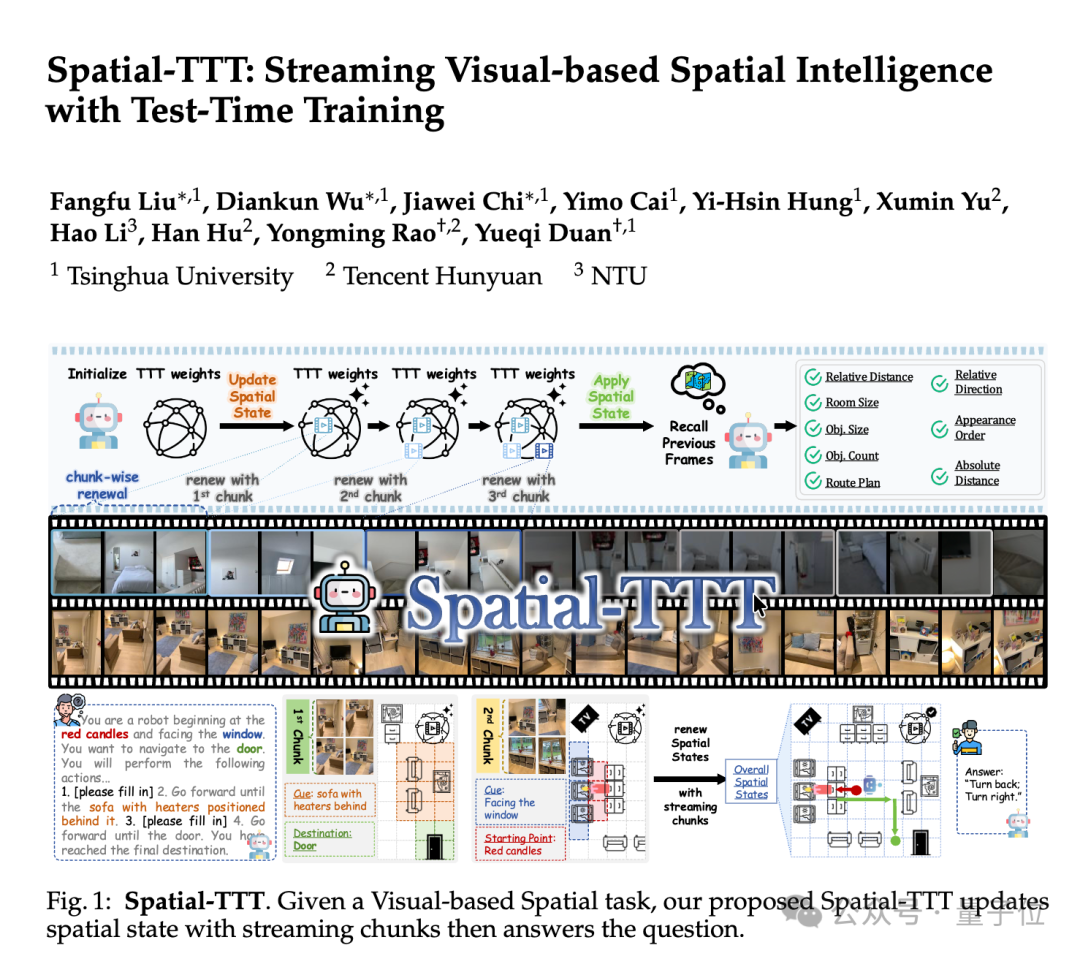
Spatial-TTT: An Open-Source Spatial Intelligence Model at 2B Parameters
Tsinghua's open-source Spatial-TTT makes ECCV 2026: at just 2B parameters it beats GPT-5 and Gemini-3-pro on multiple spatial intelligence benchmarks, handling 120-minute streaming video while updating its spatial memory as it watches.

TerminalWorld: The First Agent Benchmark Built on Real CLI Workflows
A 1,530-task benchmark distilled from 80,000 human terminal recordings, spanning 18 workflow categories and 1,280 command tools — a cure for Agents that rack up leaderboard points yet fall apart in real terminal scenarios.

Ruoyu Lanyue 01: The World's First AI Explosion-Proof Robot Fuels Real Cars by Itself
Driven by the Ruoyu Jiutian robot brain, the explosion-proof Lanyue 01 robot autonomously runs the full workflow at gas stations 24/7 — opening the fuel door, grabbing the nozzle, fueling, returning the nozzle — bringing embodied intelligence into high-risk environments.

TRIAD: Teaching AI Agents Not Just to Refuse, but to Repair Dangerous Plans
The open-source Agent safety framework TRIAD replaces binary guardrails with three-way decisions (proceed/update/refuse), preserving the user's original task even under prompt injection attacks.