
The Codex Hands-On Guide: An Open-Source Tutorial from Sign-Up to First Steps
CodexGuide, open-sourced on GitHub, covers complete usage tutorials for the Codex desktop app, CLI, and mobile, including Plus subscription, hands-on cases, and configuration guides.
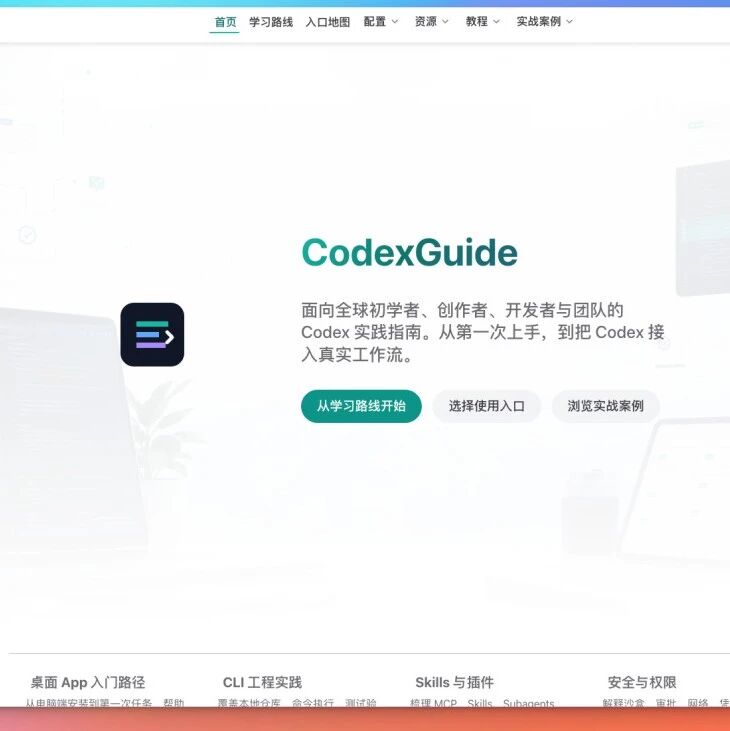
The Codex Hands-On Guide: An Open-Source Tutorial from Sign-Up to First Steps
CodexGuide, open-sourced on GitHub, covers complete usage tutorials for the Codex desktop app, CLI, and mobile, including Plus subscription, hands-on cases, and configuration guides.
Codex updates at a furious pace, but many people are stuck at the starting line: how do you register an account? How do you pay for Plus? Desktop, CLI, IDE extension, mobile — which one should you use? CodexGuide, open-sourced on GitHub, exists to solve exactly these problems. It is a complete guide from registration to real-world use — free, continuously updated, and paired with an online reading site.
What CodexGuide Contains
The guide is organized in four layers — "know the entry points, get tasks running, build a methodology, accumulate team knowledge" — with core modules including:
- Entry-point map: from the CLI to the desktop app and IDE extension, helping you sort out the positioning and use cases of each surface in one pass
- Subscription tutorial: the registration and payment flow for Codex Plus — topping up yourself is more stable than finding someone to do it for you
- Mobile usage: connect, via the ChatGPT phone app, to Codex running on your desktop or a remote dev box, so you can keep viewing, approving, and adjusting tasks away from your computer
- Hands-on cases: 13 typical scenarios, including Codex x Draw.io MCP for auto-drawing architecture diagrams, Codex x GitHub Actions for auto-fixing failing CI, and Codex x Obsidian for building an AI knowledge base
Quick Start with the Desktop App
The most-used surface today is the Codex desktop app; its engineering capabilities stand out, particularly computer use and browser control.
The guide covers the full flow from download and installation through subscribing to Plus in detail.
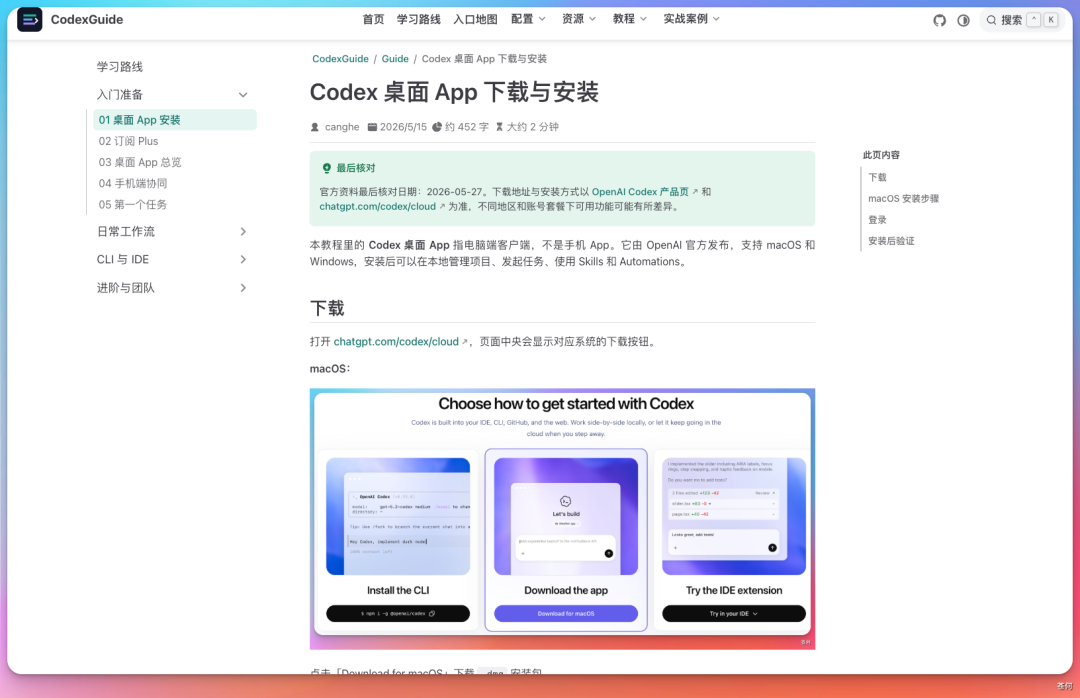
💡 Tip: The Plus subscription tutorial spares you the cost and risk of finding someone to top up for you. Charging your own account is more stable.
Remote Control from Your Phone
Mobile Codex is not a standalone app — it is the Codex entry inside the ChatGPT phone app. Think of it this way: Codex runs on the desktop app or a remote dev box, and the phone side connects to those environments so you can keep viewing, replying to, approving, and adjusting tasks when you step away from the computer.
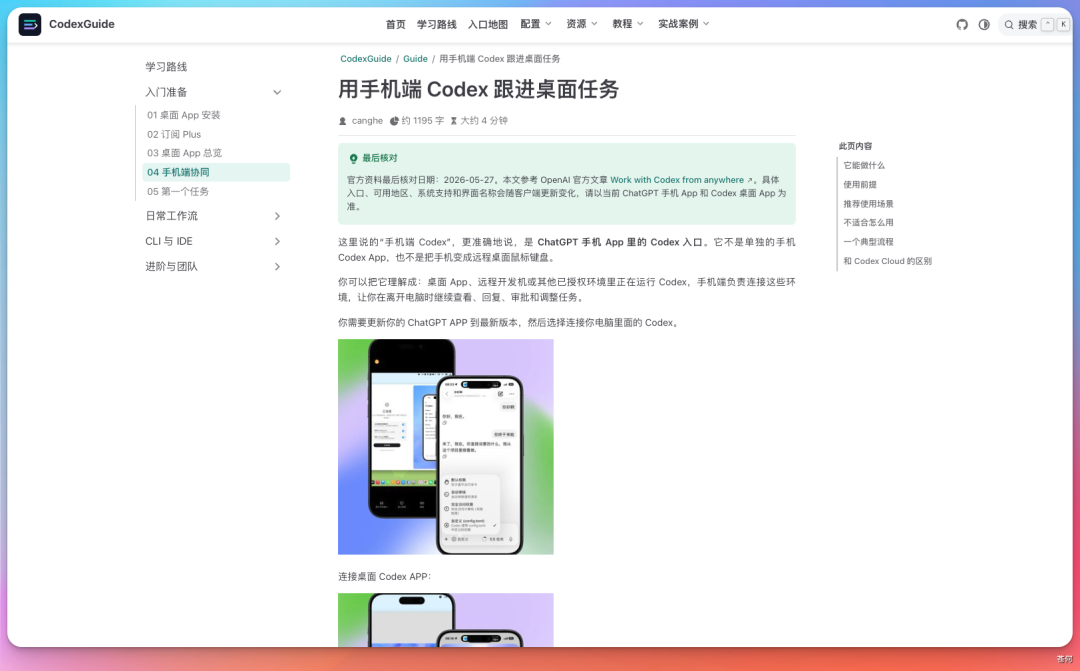
In actual use, as long as Codex is running on the computer, you can direct tasks from your phone at any time — vibe coding from anywhere.
Selected Hands-On Cases
The hands-on cases are the guide's biggest highlight, each with detailed replication steps:
- Codex x Draw.io MCP: have AI auto-draw architecture diagrams
- Codex x GitHub Actions: auto-fixing failing CI, field-tested
- Codex x Obsidian + LLM Wiki: building an AI knowledge base
- Codex x remote dev box: running tasks remotely from your phone
How to Get It
- GitHub repository: search for CodexGuide — open-sourced under the MIT license
- Online reading site: linked from the GitHub repository, with a nicer reading experience
- Community-driven: PRs welcome — help add cases and improve the docs together
💡 Tip: the guide auto-checks for updates via Codex to keep its content in sync with the official docs. Codex itself updates fast, so star the repository to catch updates promptly.
Related articles
Getting Started with Claude Code from Scratch: A Step-by-Step Installation Guide for Users in China
No overseas phone number or Visa card required — Claude Code runs on domestic models too. A complete installation walkthrough for both Mac and Windows, from installing the framework to connecting GLM-5.1.
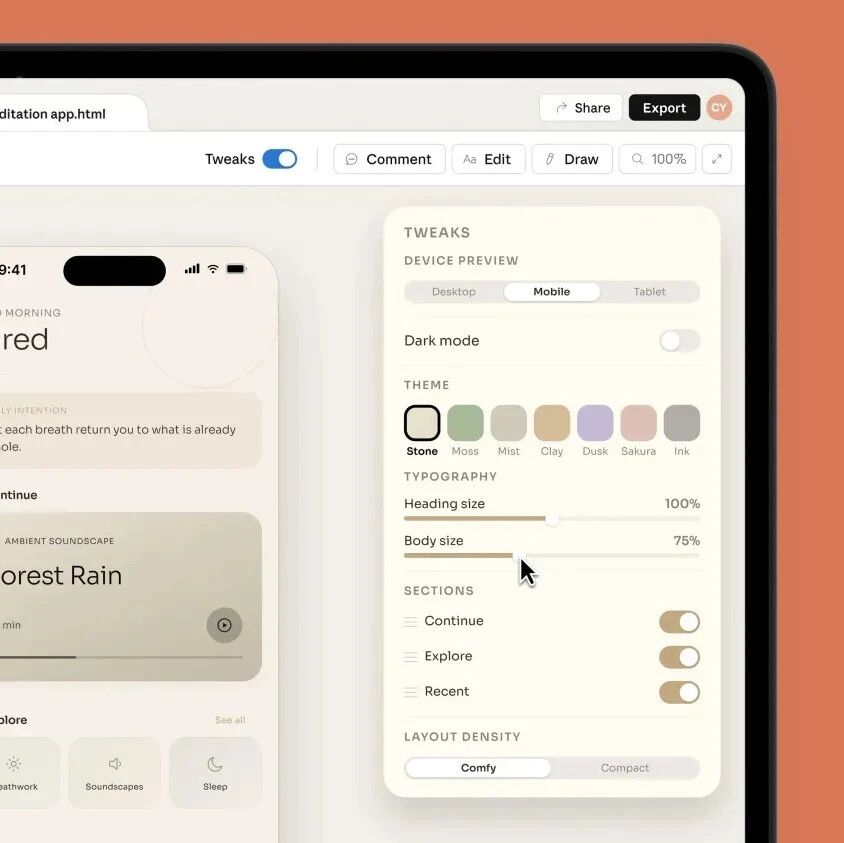
Claude Design Hands-On: Professional-Grade Design from a Single Prompt
Claude Design can build web pages, PPTs, prototypes, and even animated videos. This article collects the full set of use cases plus official practical tips, with the access URL and example prompts.

CLAUDE.md Goes Viral on GitHub: Four Rules to Keep AI Coding in Line
The CLAUDE.md configuration file, born from Karpathy's coding experience, hit number one on the GitHub trending chart, with 60,000 developers copying it. Four core principles to substantially raise your AI coding quality.

Fun-ASR1.5: An AI Speech Recognition Model That Accurately Transcribes Dialects Too
Alibaba's Tongyi Lab has released Fun-ASR1.5, a large speech recognition model supporting 30 languages and seven major Chinese dialect groups, with dialect character error rate down 56.2% and classical poetry accuracy at 97%. Includes demo links and API sample code.

An Anthropic Lead's Vibe Coding Masterclass
Anthropic researcher Erik Schluntz shares hands-on lessons on using Vibe Coding responsibly in production, covering the 22000-line code merge case, the leaf node strategy, and advanced tips.

AI Memory Enhancement Tools: A Roundup and Hands-On Guide
From Claude-Mem to DeepSeek DSA, a roundup of the mainstream AI memory enhancement tools of 2026, with principle comparisons and selection advice.