
GLM-5.2 Open Source, Put to the Test: On the Same Level as Opus 4.8 and GPT 5.5
GLM-5.2 is the first Chinese open-source model to enter the new "Big Three", with 1M long context and coding ability close to closed-source flagship level, MIT-licensed and ready to use.
GLM-5.2 Open Source, Put to the Test: On the Same Level as Opus 4.8 and GPT 5.5
GLM-5.2 is the first Chinese open-source model to enter the new "Big Three", with 1M long context and coding ability close to closed-source flagship level, MIT-licensed and ready to use.
GLM-5.2 is an open-source large model released by Zhipu AI under the MIT license, ranked first on the Code Arena leaderboard. It is the first Chinese model to break into AI coding's "Big Three". Its price is a fraction of Opus and GPT's, and it runs directly on a Coding Plan. We put it through two real-world tasks to see what it can actually do.
Test 1: Auditing a 60-Skill System
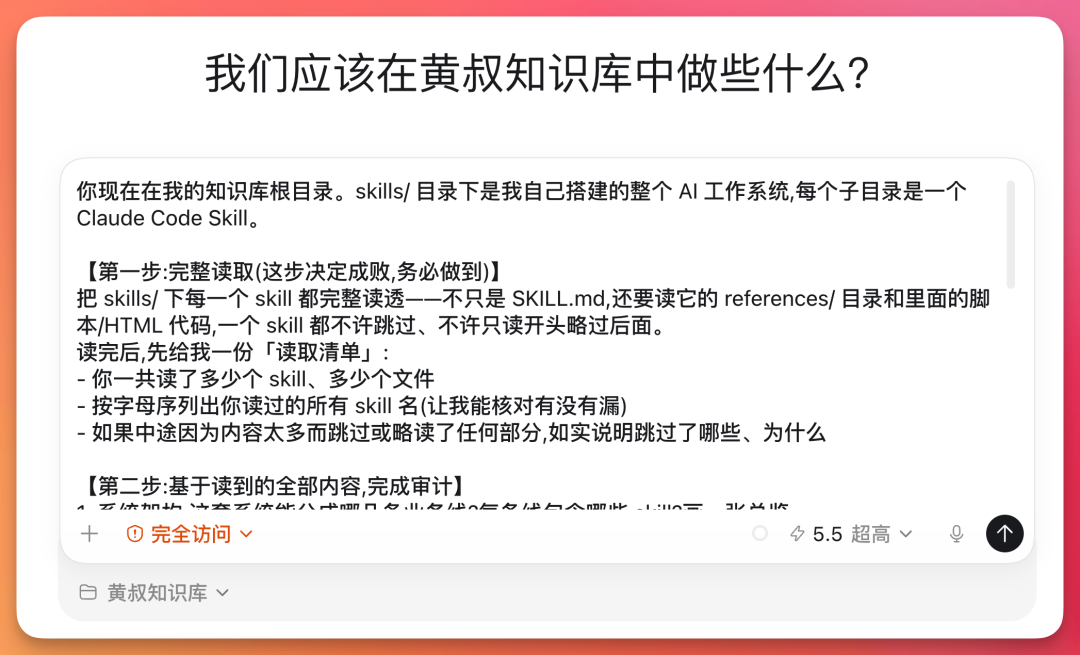
The tester threw 60+ self-built Skills accumulated over more than half a year at three models, asking each to read all the Skills, map the system architecture, find conflicts and duplicates, and finally generate an HTML dashboard.
| Metric | Opus 4.8 | GLM-5.2 | Codex (GPT) |
|---|---|---|---|
| Context peak | 341K / 1M | 227K / 1M | 157K / 258K |
| Skills covered | 34 | 64 (the most) | 61 |
| Conflicts found | 9 groups | 9 pairs | 31 pairs |
| Reading strategy | Everything into a single context | Read 40 directly + subagent summaries for the rest | Batched extraction |
GLM-5.2 covered the most Skills at 64 and even surfaced a bug the other two models missed. Notably, Codex, constrained by its 258K context window, admitted itself that it took shortcuts.
Test 2: World Cup Championship Simulator
All three models got the same World Cup data and task: build a championship simulator website, draw the knockout bracket as an SVG, and run 10,000 Monte Carlo simulations to compute title odds.

| Dimension | Opus 4.8 | GLM-5.2 | Codex |
|---|---|---|---|
| Five-dimension total | 96 | 91 | 82 |
| Knockout format | Correct round of 32 | Correct round of 32 | Lazily did a round of 16 |
| Context peak | 202K / 1M | 72K / 1M | 91K / 258k |
| Self-verification | Opened a browser to test + fixed 2 bugs | Node logic tests | Browser self-test |
| Design look | Most polished dark theme | Clean, restrained dark theme | Light theme |
How GLM-5.2 Performed
GLM-5.2's simulator uses a dark theme with teal accents — clean and restrained. The round-of-32 bracket is correct, winners highlighted with scores and losers grayed out. Monte Carlo ran 10,000 simulations in 0.34 seconds. When all four teams in Group H finished with 1 point, it sorted them correctly by goal difference — the tiebreaker is written correctly.
Where does it fall short of Opus? No national flags, no connecting lines in the bracket, and the probability bars only appear after a manual click. But it consumed only 72K tokens — a third of Opus's usage, the leanest for the same job.
The Three Models' Championship Predictions
GPT and GLM-5.2 predictions were fairly close (Argentina at about 25%); Opus gave only 17%.
GLM-5.2 Core Features
- 1M ultra-long context: long-context capability on par with Opus 4.8
- Open source under the MIT license: anyone can take it and use it, with no commercial restrictions
- Strong coding: efficiently handles complex tasks such as SaaS product development, adding features to projects, and reviving legacy codebases
- Extremely low cost: a fraction of the price of Opus/GPT, and it runs directly on a Coding Plan
How to Use It
GLM-5.2 is available through the following channels:
- Zhipu Open Platform: call the API directly
- Zcode: use it inside a coding environment
- Local deployment: the MIT license supports self-hosting
Original article: Two Real Exam Questions for GLM-5.2, with Opus 4.8 and GPT 5.5 Along for the Ride
Further reading: GLM 5.2 - A Chinese Model Appears in the New "Big Three" for the First Time!
Related articles

OpenClaw 2026.6.1: Native Windows Support at Last
The world's largest open-source AI Agent project ships a major update: native Windows support, a Skill Workshop that lets Agents self-evolve, and multi-Agent Workboard collaboration — 1.6 billion PCs become compute nodes.

Step 3.7 Flash: The Agent Efficiency Model at 409 tok/s
StepFun's new model hits 409 tokens/s output speed, costs 1/9 of Claude Opus 4.6 per task while matching 97% of its coding ability, and is designed for high-frequency Agent call scenarios.

OpenSquilla 3.0: Auto-Orchestrating AI Skill Flows with MetaSkill
The open-source AI Agent framework OpenSquilla 3.0 introduces MetaSkill, which synthesizes multi-step workflows from natural language, paired with intelligent model routing to cut usage costs.

JoyAI-Echo: JD Open-Sources a 5-Minute Long-Video Generation Framework
JD open-sources JoyAI-Echo, its first long audio-video generation framework, attacking the three big problems of character consistency, voice stability, and generation speed head-on, leading on multiple metrics.

Mashangfei: Open an AI Shop in 30 Seconds and Run a Full Vibe Business
Mashangfei generates a complete business system from natural language, covering the full chain of product creation, promotional customer acquisition, and AI customer service. It includes 200 yuan in trial-operation credit, suited to one-person companies closing the business loop fast.

GitHub Cuts Agent Token Costs 62% with Daily Audits
GitHub's gh-aw CLI tool builds an audit-optimize loop through daily token audits and MCP pruning; the Auto-Triage task has sustained a 62% reduction in equivalent token cost.