
Mureka V9: The First AI Music API to Clear the Production-Readiness Bar
With its MusiCoT chain-of-thought architecture, Mureka V9 delivers publish-on-generation music quality; Sondo doubled its business after switching over entirely, and the API is now officially open.

Mureka V9: The First AI Music API to Clear the Production-Readiness Bar
With its MusiCoT chain-of-thought architecture, Mureka V9 delivers publish-on-generation music quality; Sondo doubled its business after switching over entirely, and the API is now officially open.
AI music has been locked in a fierce consumer-side race for a long time, but the business side never took off -- the core reason being that the leading products (Suno, Udio) offer no official API. Companies were forced through gray-market relays: no SLA, no support, blind-box quality.
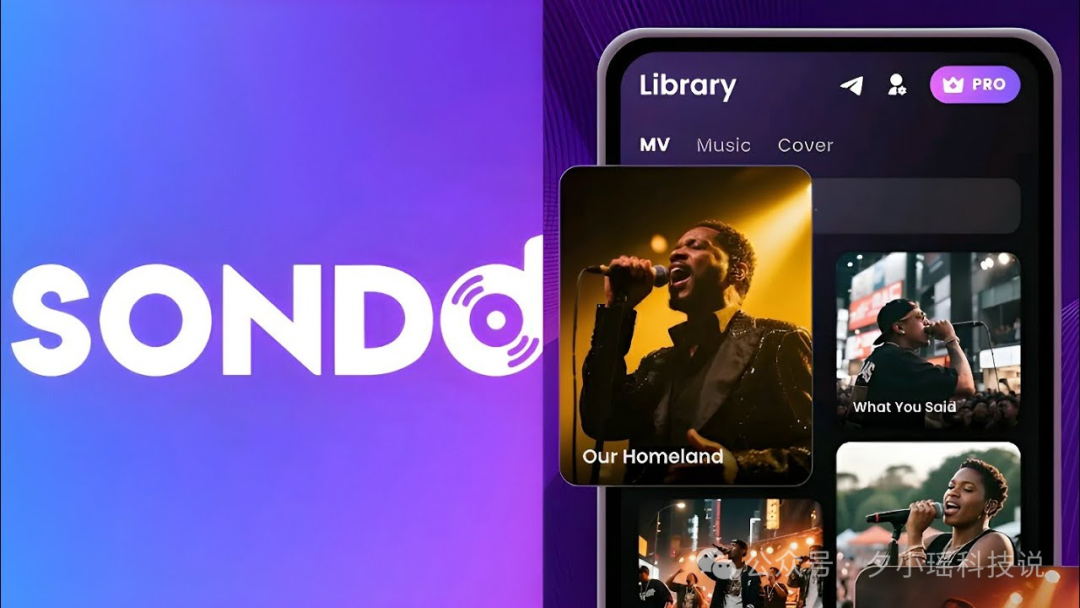
Mureka V9 breaks that deadlock. Sondo, a North American growth-stage company, switched entirely from gray-market Suno access to Mureka; partnership volume grew more than 70% and its core music business doubled. These aren't marketing numbers -- this is production-environment validation.
It's a fit for product teams and developers who need to embed AI music capabilities in their own products.
MusiCoT: From Guessing Notes to Planning the Whole Song
Earlier AI music generation was essentially "guess the next note" -- the model writes one note, probabilistically guesses the next, and keeps guessing to the end. No planning, no global view; with bad luck the chorus collapses halfway through.
Mureka introduced MusiCoT (Music Chain-of-Thought), borrowing the chain-of-thought idea from the LLM world so the AI thinks the whole song through before writing the first note. It models four dimensions at once:
- Where lyric sections split
- Which word each section's semantic center of gravity falls on
- How the musical structure corresponds
- How vocal expression follows the emotional arc
Five Upgrades in V9
- Section-level text control: the emotional focus of the lyrics lands precisely on target -- no longer "it got sung" but "expressed accurately in the right section"
- Mixing and audio quality: vocals and accompaniment are layered separately, approaching master quality
- Vocal expression: fewer inexplicable high-note spikes and stray noise; it sounds like a real person singing
- Generation efficiency: with the inference chain optimized, trial-and-error costs drop, and companies no longer need to keep rerolling
- Generation diversity: more possibilities explored within the same direction, instead of five nearly identical songs
Stack those five together and the result: from "generate, then manually post-process" to "publishable straight out of generation".
Validated in Production
The shift in Sondo's assessment (a North American growth-stage AI music platform) says it best:
- Mureka V7.6 verdict: "just about acceptable"
- Mureka V8 verdict: "the vocals feel more human -- ready to plug directly into the product and engineering workflow"
After V8 shipped, Sondo ran a round of A/B tests across multiple scenarios; Mureka won consistently, and they then switched over entirely.
Other cases:
- Kuaige (a top AI music app in China): chose Mureka for its Chinese-language capability
- A leading overseas AI artist platform: consumption grew 6x after integration
Mureka V8 took first place on both the vocal and instrumental leaderboards of the Artificial Analysis Music Arena.
API Availability
Unlike Suno/Udio, Mureka offers:
- An official API: backed by a formal SLA
- Compliance: not a gray-market relay -- support is guaranteed
- Consistent quality: no rerolling and hoping for luck
Suited to these scenarios:
- Music generation embedded in products: UGC platforms, short-video tools, games
- Bulk music asset production: ad scores, podcast BGM, content creation
- Enterprise-grade music services: commercial scenarios that need SLA guarantees
How to Get It
The Mureka API is officially open and can be accessed through Mureka's official channels. For exact pricing and documentation, visit the official website for the latest information.
Related articles
wechat-cli: Manage Your WeChat Chat History from the Command Line
wechat-cli, an open-source WeChat command-line tool, offers 11 commands for operating on local WeChat data—export chat history, search messages, run statistical analysis—designed for AI Agent integration.
Codepilot Beginner's Guide: The Open-Source Cross-Platform Agent Client
The open-source Agent client Codepilot supports Claude, OpenAI, and Chinese models via Codeplan, with a full feature set including Skills, MCP, IM remote connections, and generative UI -- plus a detailed installation and configuration tutorial

MemPalace: A Free Local AI Memory System That Is Blowing Up on GitHub
The open-source AI memory system MemPalace uses the memory palace method, scores 96.6% on LongMemEval, runs locally, supports MCP integration, and costs only 10 USD a year