
Lingly
UK vocational English AI scenario roleplay training platform
Tool details
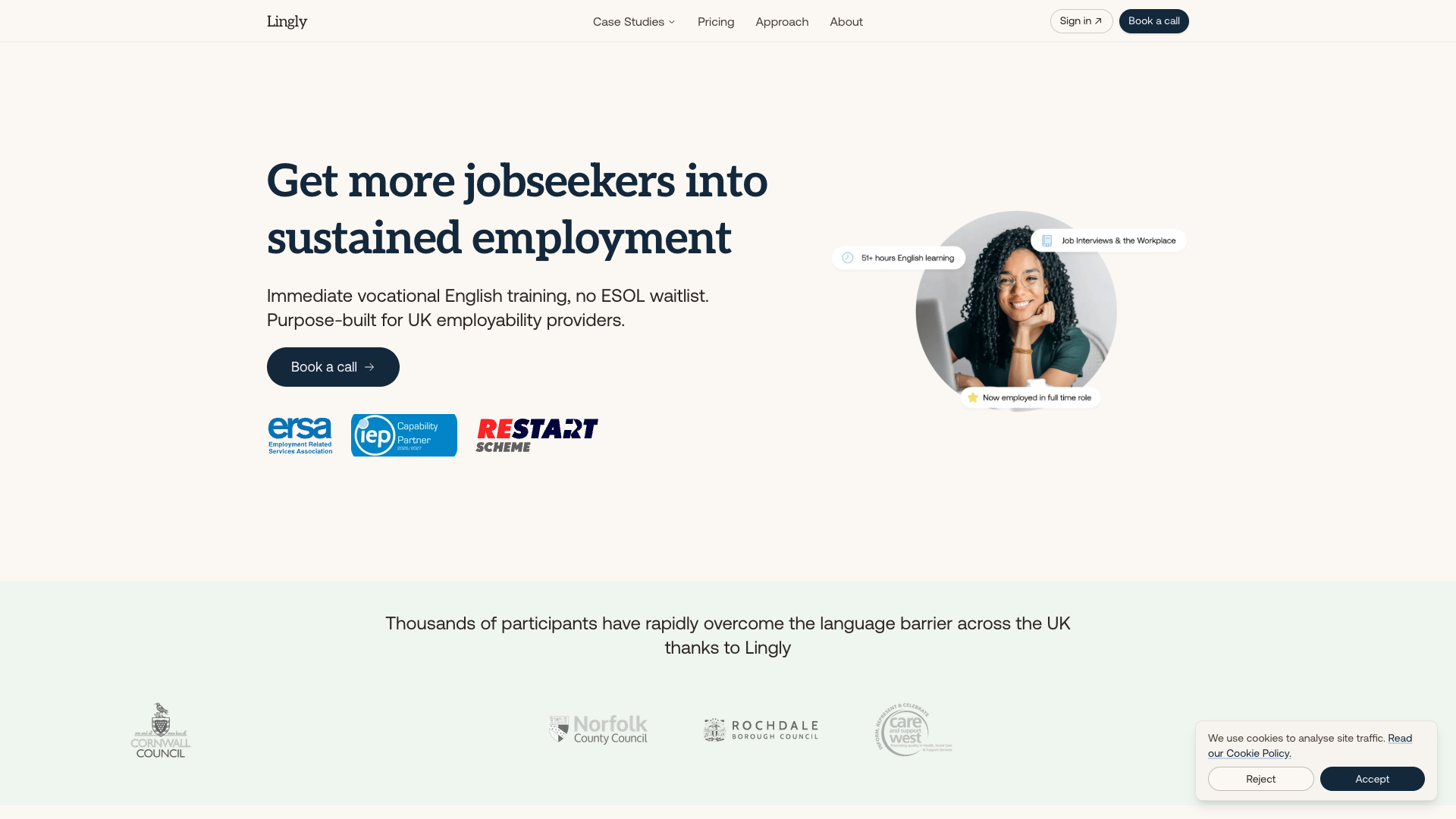
Lingly is a vocational English training platform built by a UK team, aimed at employability providers and adult social care employers: learners spend a dozen or so minutes a day on their phone practising realistic workplace conversations — care handovers, care notes, interviews — with AI characters. It does not sell general English; it attacks the pain point of ESOL waiting lists that run from six months to a year and a half. But it sells through enterprise contracts, with no self-service sign-up and no self-service checkout: to use it you must book a call first.
Core capabilities
- AI voice roleplay: rehearse care handovers, interviews and similar scenarios with lifelike AI characters; the point is speaking out loud, not memorising vocabulary
- Mistake-driven micro-practice: the system turns the learner's own errors into micro-activities and focus-area review, closing gaps one by one
- Pre-test and post-test: one assessment at intake and one at completion, paired with pronunciation scoring and speaking-pace analysis, so progress becomes measurable
- Forty-one native-language explanation layers: covering Simplified Chinese, Arabic, Somali and others, while AI characters can also mimic more than thirty UK regional accents
- Care compliance content: courses aligned to the British Care Certificate and CQC inspection standards, teaching how care notes should be written
- Organisation back office and certificates: a multi-tenant admin console for learners, courses, invites and progress, with a certificate at completion
Where it fits UK employability contractors, care home groups, and local-authority adult skills and ESOL programmes. Not suited to individual self-learners, non-UK users, or teams that want to build on an API.
What sets it apart Against ESOL classes at twenty to forty-five pounds an hour — often after waiting half a year — Lingly prices per person, opens cohorts within days, and puts the content directly into UK care settings. General-purpose language apps have neither compliance content nor an evidence dashboard an organisation can audit.
Editorial assessment Vertical depth and compliance transparency are rare for a company of this size: a public ROPA, a full list of sub-processors, immediate audio deletion, UK data residency. The most important procurement caveat is that two sets of pricing coexist — the product page and FAQ state ninety-nine pounds per learner per quarter with a minimum of five seats, while the pricing page states from one thousand pounds a month billed on a shared practice-hours pool, plus a one-month pilot at five hundred and ninety-nine pounds plus VAT; always go by a written sales quote. There are also hard shortcomings: no self-service entry point, zero G2 or Trustpilot profiles, and every performance figure is vendor-reported.
Pricing
Subscription£99 / learner / quarterQuarterly subscription, minimum of five learners
One-month unlimited pilot; paid, with no free trial
The pricing page states from £1,000 per month, billed on a practice-hours pool shared by the team; confirm with sales
Additional notes
Two pricing logics coexist on the same site: the product page gives £99 per learner per quarter (minimum of five), while the pricing page gives from £1,000 per month on an hours-pool basis, plus a one-month pilot at £599 + VAT; the actual price must follow a written sales quote.
FAQ
User reviews
User Reviews
No reviews yet
No one has reviewed this tool yet