
Soula
An emotional support AI companion for women
Tool details
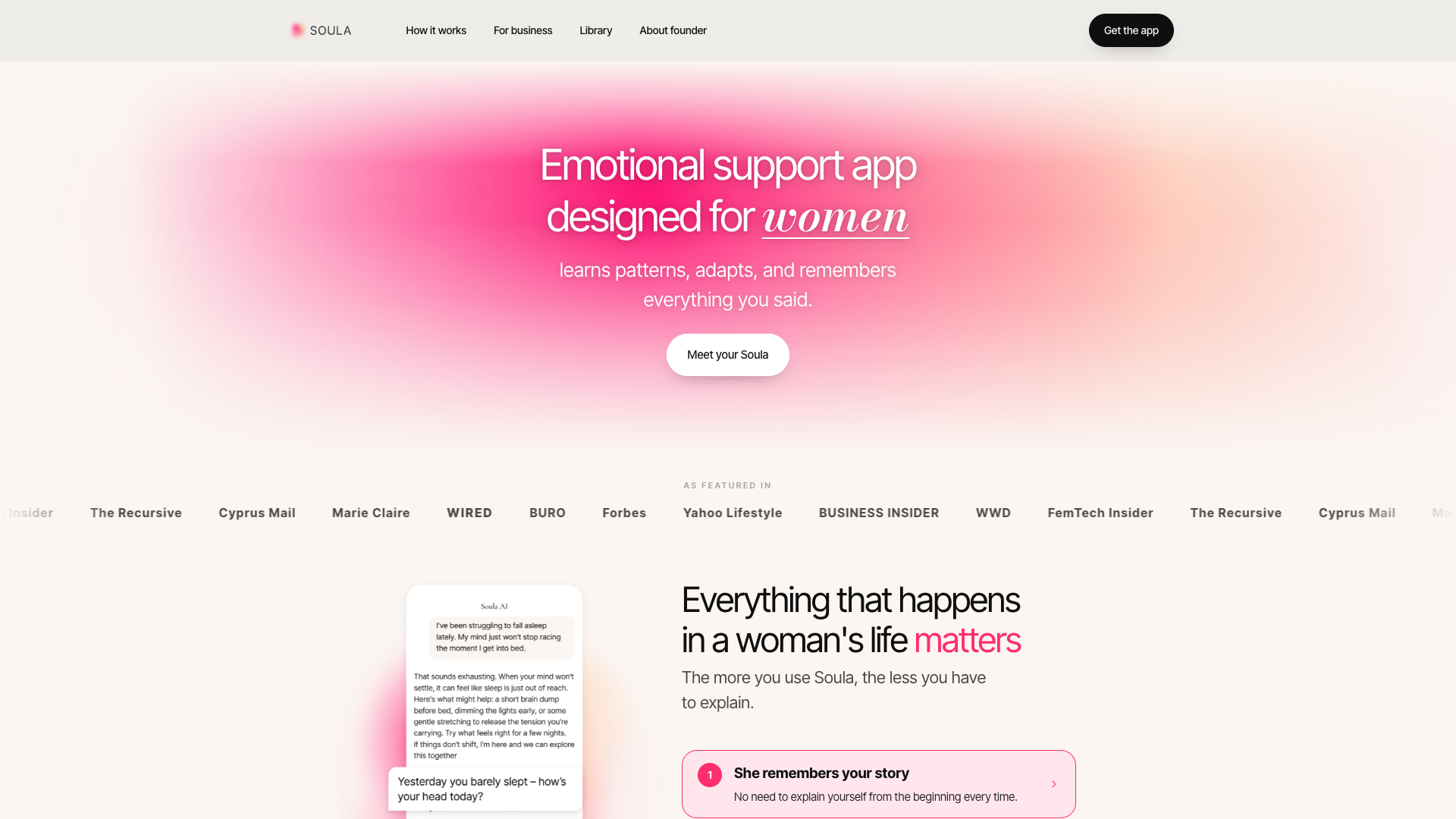
Soula is a women-only AI emotional support app from Cyprus-based MAMATECH, whose site states it is made for women, and only for women, covering trying to conceive, pregnancy, postpartum, menstrual hormones, perimenopause and workplace burnout. It is not a general-purpose chat companion and does not call itself a medical device; it aims only to be a companion you can talk to at any moment without having to explain yourself again.
Core capabilities
- Twenty-second check-in: tap instead of typing to log sleep, mood, feelings and body
- Mood cards and long-term memory: a check-in produces a status card, and the AI remembers your story and patterns across weeks
- Cycle awareness: mood swings are mapped to cycle phases, with prompts before your period and in the luteal phase, plus separate care for perimenopause
- Exercise library and twenty-eight-day program: breathing, somatic regulation, mindfulness and CBT/DBT/ACT frameworks, unlocked day by day
- Voice and text channels: you can type or speak; four personality lines existed in an older version and are no longer visible on the live site
- Calendar and anxiety self-assessment: read-only access to busy slots in Google Calendar, plus an anxiety trigger test
Where it fits Best for English-speaking adult women: from trying to conceive through postpartum, those with pronounced premenstrual swings, people in perimenopause, or burned-out professionals weighed down by mental load; it can also supplement the gaps between appointments. Do not choose it if you need licensed diagnosis, are in an active crisis, or read only Chinese.
What sets it apart General assistants do not build woman, hormonal cycle and life stage into the product structure; Soula does. The crisis resources page is unusually thoughtful: alongside 988, Crisis Text Line and Samaritans it lists a dedicated postpartum PSI line and lines for sexual assault and domestic violence, and it promises crisis support always sits outside the paywall.
Editorial assessment Positives: a women-led design team, a /science framework page, a 4.76 rating in the US App Store (221 ratings), and in 2023 a Google Cloud credit award worth three hundred and fifty thousand dollars plus integration with Med-PaLM 2. The weaknesses are real too: one privacy policy carries two retention stories, naming OpenAI and admitting chats may contain health data while the calendar section says traffic goes through OpenRouter with zero retention; the suicide and self-harm prevention protocol, four sections long in the 2026-06 archive, is reduced on the live site to a hotline list only; age wording comes six ways across three regimes, eighteen and older on the official site, thirteen in the terms, and Everyone on Google Play. It is also English-only, has no web version, cannot be downloaded in mainland China, has zero clinical validation, and the WIRED and Vogue endorsements cannot be traced to any original article.
Pricing
Freemium$0 (Free to start)The store description mentions a trial, but the official site does not; the evidence conflicts between 3 days and 7 days, so it is not confirmedFree tier: basic check-ins, mood cards and limited AI chat; exact limits are published neither on the official site nor in the stores, and the company only says the first check-in and crisis support are free
Range across ten iOS in-app purchases, covering trying to conceive, birth preparation, pregnancy tracking and the women's wellbeing assistant; iOS in-app purchases run $4.99–$69.99, and neither the official site nor the stores state how monthly and annual billing map to individual items
In-app purchase range for the new Android package soula.app; the older care.soula.app package has been delisted and its range was $4.99–$69.99
Additional notes
The official site has no pricing page (/pricing and /faq both return 404, and none of the three hundred and sixty-five URLs in the sitemap covers pricing, plans or FAQ), so prices can only be taken from the App Store and Google Play in-app purchase lists. The ten iOS in-app purchases list only names and prices with no billing period: $59.99 and $69.99 are clearly higher than $14.99, but calling them annual lacks first-hand evidence; free-tier limits are not published; trial length evidence conflicts (several user reviews say three days, a third-party review says seven days), so it is not confirmed. The current terms still say the app is free for now with subscriptions being considered, which contradicts the more than three thousand paying users it already has. Historical price points ($16.66/month and a user charged $29.95) are no longer in the current SKU list and are excluded.
FAQ
User reviews
User Reviews
No reviews yet
No one has reviewed this tool yet