
Claude for Teachers: A Free AI Teaching Assistant for Every K-12 Teacher in the US
Anthropic launches a free AI teaching assistant for certified US K-12 teachers, wired into 50 states' standards, with lesson-plan alignment, differentiated tiering, and student data analysis.
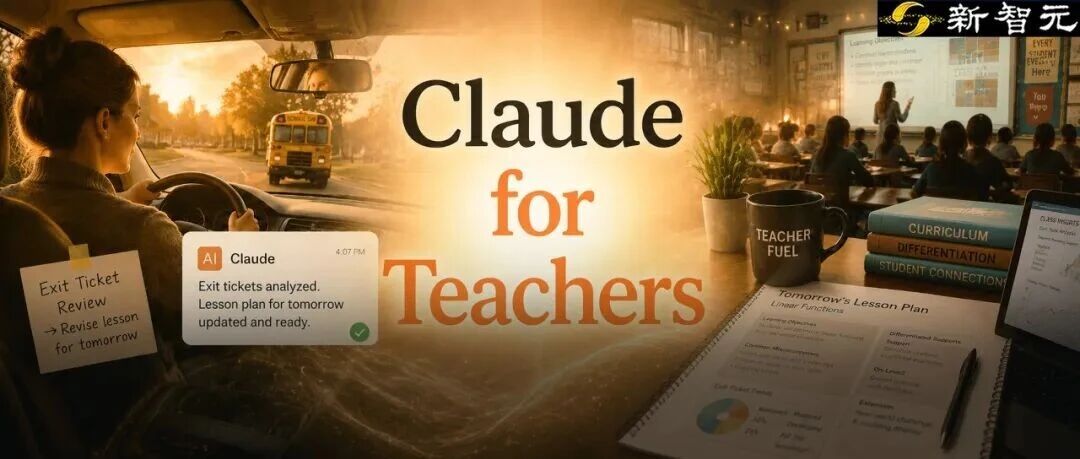
Claude for Teachers: A Free AI Teaching Assistant for Every K-12 Teacher in the US
Anthropic launches a free AI teaching assistant for certified US K-12 teachers, wired into 50 states' standards, with lesson-plan alignment, differentiated tiering, and student data analysis.
On July 14, Anthropic launched Claude for Teachers, giving certified US K-12 (kindergarten through grade 12) teachers free access to Claude's advanced capabilities and a library of teaching skills, plus Learning Commons integration covering the standards of all 50 states. It targets a well-defined pain point: US public K-12 teachers work an average of 49 hours a week (RAND 2025), with lesson planning, grading, and standards alignment eating up much of that time — and teaching materials generated by general-purpose AI tend to "look polished but teach hollow": the grade level is off and the standards get skipped.
If you're a certified US K-12 teacher, or you build education products and need to understand this move by Anthropic, this article breaks down its three core capabilities, the privacy and compliance boundaries, and how to get started.
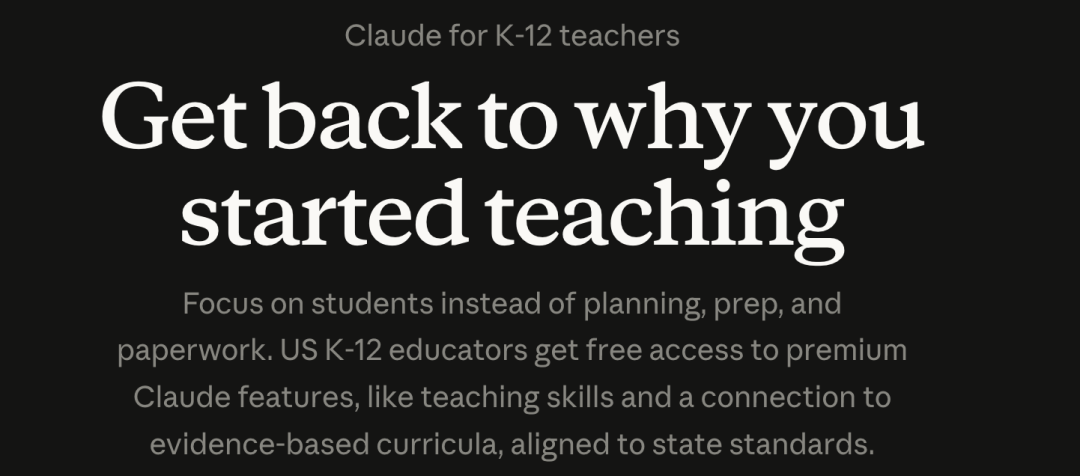
Claude for Teachers packages the entire teaching workflow — lesson planning, differentiation, data analysis — into one product.
What Problem It Solves
The biggest trap when teachers use AI to draft lesson plans is alignment: a general-purpose model doesn't know which state standard your lesson maps to, nor the mistakes students typically make at that step. The result: whatever time the AI saves gets burned on double-checking and rework.
Claude for Teachers' difference is that it pulls the standards first, then generates content. Drew Bent, Anthropic's education lead, gives an example: ask it to teach "how to construct linear functions," and it first pulls the relevant standards, flags the errors students most commonly make, then builds the lesson around those errors.
Three Core Capabilities
1. Lesson Planning and Alignment
With Learning Commons integrated, Claude gets not just the text of all 50 states' standards but also the finer skill progressions under each standard and the common learning sequences students follow. What comes out isn't a floating slide deck, but a lesson plan already aligned to your state's standards with the learning scaffolding built in order.
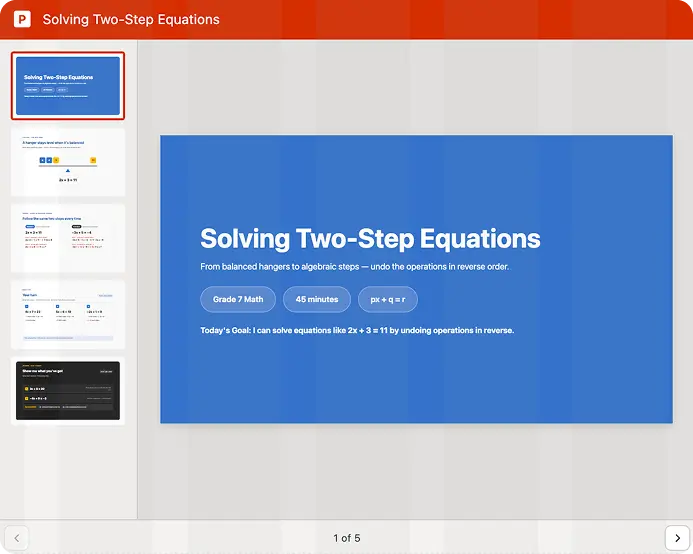
Claude builds lesson plans and student materials automatically according to state standards and learning progressions.
2. Differentiation
Students in the same class are at wildly different levels. Give Claude a learning goal and it can produce a tiered plan:
- Struggling students: sentence starters and scaffolds, so the material stays within reach
- Advanced students: added extension work
- English language learners (ELL): a layer of language support
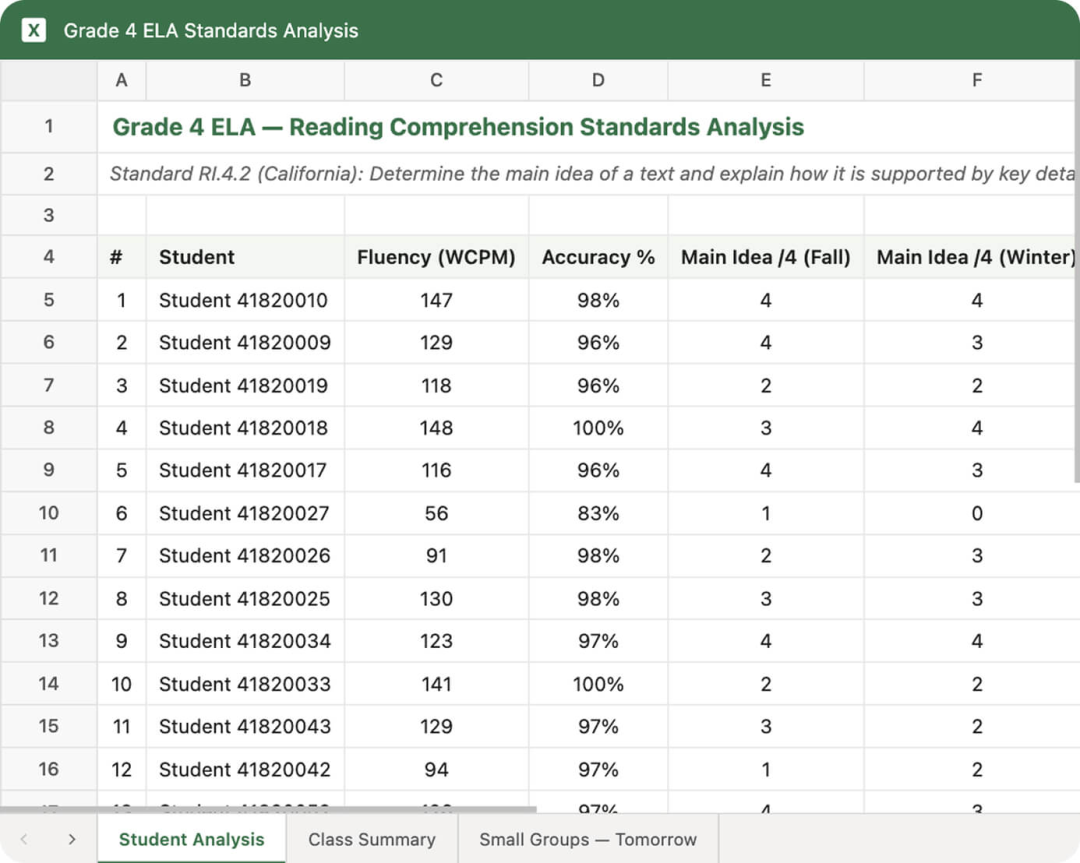
The same lesson, automatically tiered by student level.
3. Student Data Analysis
Feed it your roster, diagnostic scores, attendance, and quick observational notes, and it pieces together where every student stands: who's falling behind, and which concepts the whole class hasn't grasped.
You keep control of the data: you decide what to hand over, and data you share is not used for model training.
9 K-12 Ecosystem Connectors
Beyond the three core capabilities, Claude for Teachers also integrates 9 K-12 tools:
- ASSISTments: standards-aligned math problems with automatic grading
- Canva: turning teaching materials into classroom-ready designs
- Brisk / Diffit / MagicSchool / TeachFX and more
Tools teachers already know are now strung together in a single line inside Claude. More importantly, it ships with Claude Code and Cowork, meaning it can push work forward on its own and be set up as scheduled daily tasks — for example, reviewing exit tickets every day and auto-adjusting the next day's lesson plans.
Cowork lets Claude run scheduled tasks, turning one-off assignments into daily automated routines.
Students Can't Touch Claude
This has to be stated clearly: Claude is only open to users 18 and over, so the vast majority of K-12 students have no account at all. Whether they benefit depends entirely on how well the teacher works this hand-off. Anthropic's official framing: Claude for Teachers is a tool for teachers — it doesn't replace them, and it's not fed directly to students.
This is deliberate compliance design — student-facing AI is deeply contested (cheating, cognitive offloading, whether young children should touch generative AI at all). In June of this year, Norway issued a near-ban on generative AI for students in grades 1–7, effective with the new school year in late August.
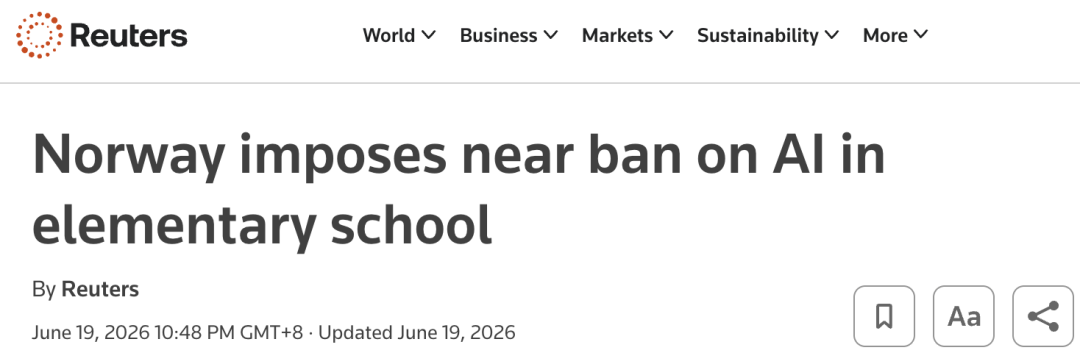
Norway has all but banned generative AI in grades 1-7 — Anthropic chose to steer around that minefield and arm only the teachers.
Privacy and Compliance: FERPA and the Gold Standard
The real moat in education isn't model intelligence; it's trust. Anthropic has made its trust play loudly:
- Data is not used for model training
- Compliance with FERPA (the US Family Educational Rights and Privacy Act)
- Dedicated K-12 data-handling terms
- A privacy Gold Standard co-built with the American Federation of Teachers (AFT)
For comparison: eight months ago, OpenAI launched ChatGPT for Teachers — likewise free, likewise aimed at K-12, likewise free through 2027, likewise backed by the AFT. Model capability is just the entry ticket; FERPA compliance, data isolation, and teachers' union backing are what determine whether you can actually land in schools.
How to Get Started
- Identity verification: visit anthropic.com/news/claude-for-teachers and submit K-12 teacher verification
- Activate advanced capabilities: once verified, get Claude's advanced access + the teaching skills library for free
- Connect Learning Commons: select your state so Claude gets the corresponding standards
- Connect the toolchain: hook up ASSISTments, Canva, MagicSchool, and the other ecosystem tools as needed
- Set up scheduled tasks (optional): use Cowork to make reviews and lesson-plan adjustments run automatically every school day
Who It's For
- Certified US K-12 teachers (the required condition)
- Ed-tech leads at schools and districts
- Developers building education products that need to integrate with Claude's education ecosystem
- Education policy researchers (the compliance design is worth studying)
Known Limitations
- Teachers only, 18+; there is no student-facing entry point
- Auto-grading stops at the practice-problem level; it doesn't take over all assignment grading
- Data compliance is designed around the US K-12 system; teachers outside the US are not currently covered