
GPT Image 2: OpenAI's First Image Model That Thinks
GPT Image 2 topped the Arena text-to-image leaderboard on launch, leading the runner-up by 241 points, with native thinking ability, 99% text rendering accuracy, and API images at just $0.21.
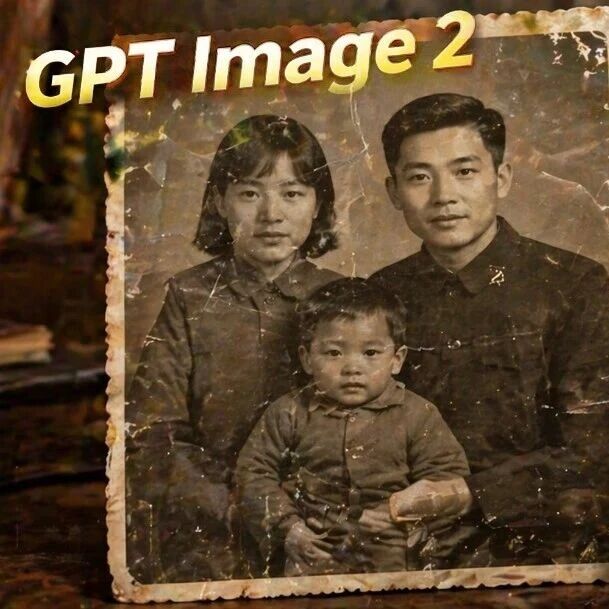
GPT Image 2: OpenAI's First Image Model That Thinks
GPT Image 2 topped the Arena text-to-image leaderboard on launch, leading the runner-up by 241 points, with native thinking ability, 99% text rendering accuracy, and API images at just $0.21.
Within 12 hours of launch, GPT Image 2 topped the Arena text-to-image leaderboard with a score of 1512, leading the runner-up Nano Banana 2 by 241 points -- the biggest gap in Image Arena history. It is not only OpenAI's counterattack after half a year of pressure from Google; more importantly, it pushes image generation from the "rendering era" into the "reasoning era".
What Is GPT Image 2
GPT Image 2 is an image generation model rebuilt from scratch by OpenAI, which officially calls it "the GPT of images". Its biggest difference from all previous image models: native thinking ability -- it plans before drawing, checks its own work after drawing, and can even search the web for reference material when needed.
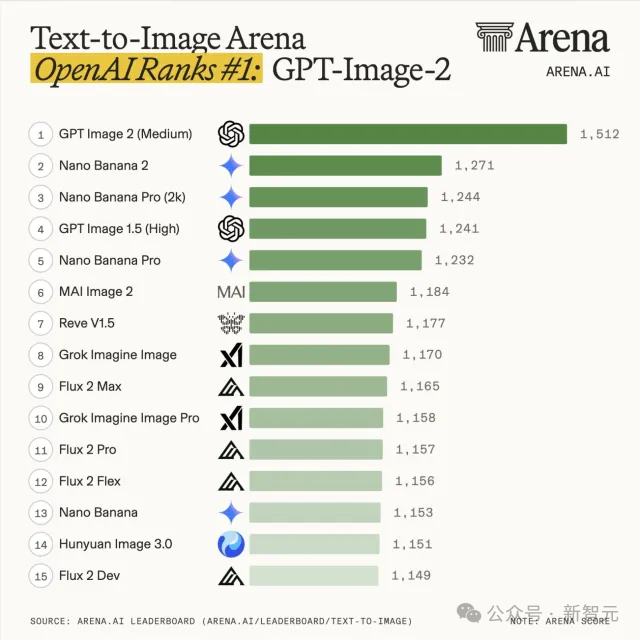
GPT Image 2 topped all three Arena sub-leaderboards; the official wording is "a clean sweep"
Core Capabilities
99% Text Rendering Accuracy
Text rendering has always been a hard problem for AI image generation. GPT Image 2 pushes text rendering accuracy to 99% (the previous generation, Nano Banana Pro, was at 94%). Its text rendering sub-score rose 316 points over the previous generation.
Multiple Styles from One Prompt
The old pain of AI image generation was uniform output. GPT Image 2 can produce multiple images in different styles from a single prompt -- different compositions, color schemes, and information density -- a big step up in variant controllability.
Linear algebra explainer images generated from the same prompt, in four completely different compositions and styles
Multi-Image Editing
Beyond generation, GPT Image 2 also topped the single-image and multi-image editing sub-leaderboards. It can make precise modifications directly on top of the original image, completing the edit while preserving the original's details.
Thinking Mode
With Thinking mode enabled, the model first produces a reasoning plan and then starts drawing. This mode is especially good at complex scenes -- comic page generation, for example, where it keeps character consistency and coherent multi-panel storytelling.
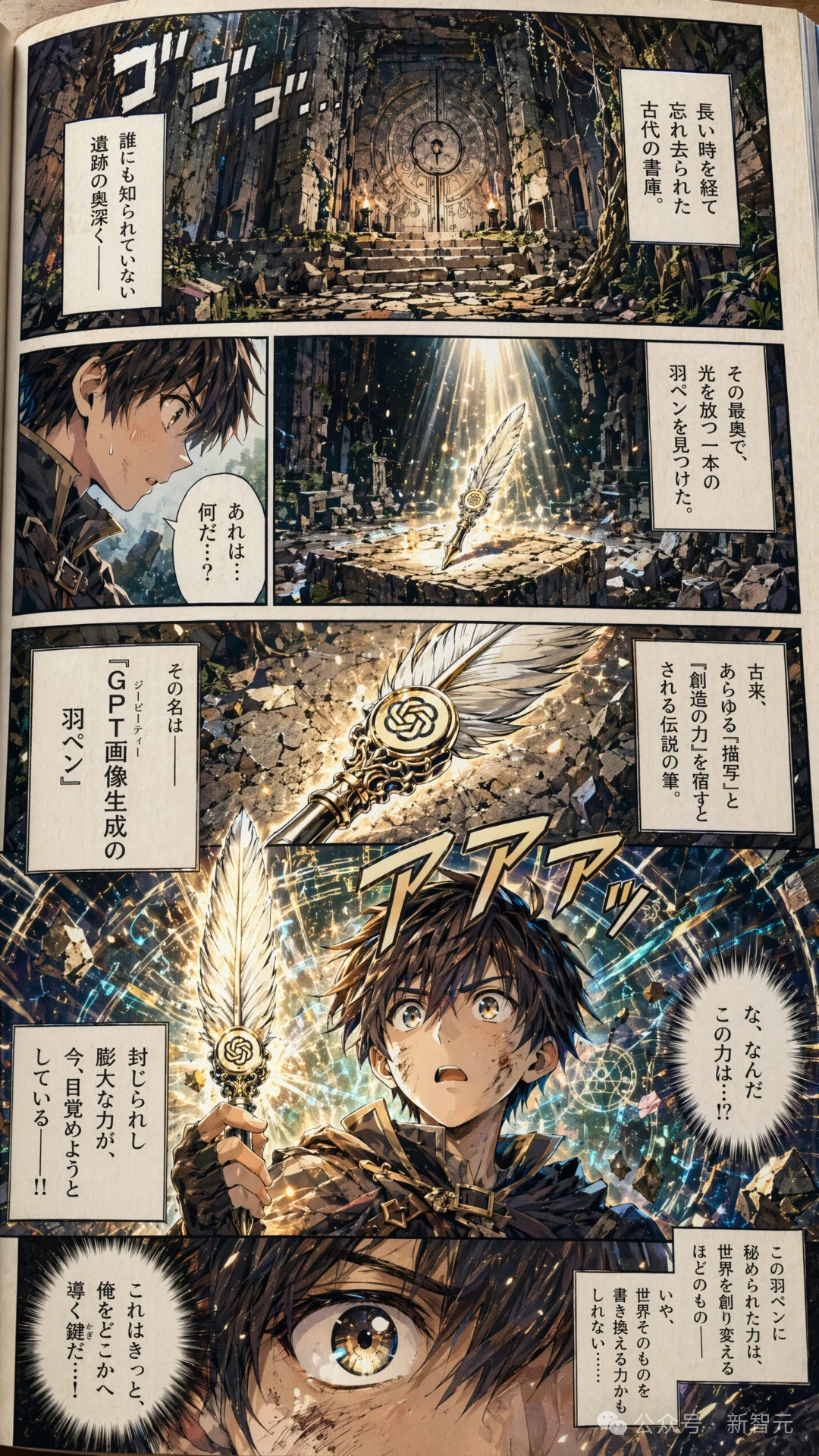
A comic page generated in Thinking mode, with character consistency and coherent multi-panel storytelling
How to Use It
In ChatGPT
ChatGPT Plus subscribers ($20/month) can use it directly; image generation is already included in the plan.
API
from openai import OpenAI

client = OpenAI()

response = client.images.generate(
    model="gpt-image-2",
    prompt="A realistic candid photograph, coastline, overcast sky, a vintage car parked at the roadside, film texture",
    n=1,
    size="1024x1024"
)
API pricing: $0.21 per image for high-quality output.
Third-Party Integrations
On launch day, Figma, Canva, Adobe Firefly, fal, and Hermes Agent had all completed integrations, so you can call GPT Image 2 directly inside these tools.
Note: DALL-E 2 and DALL-E 3 will be officially retired on May 12.
Real-World Comparison
Arena blind-test data: GPT Image 2's win rate is 93% -- across 100 paired blind image selections, people picked GPT Image 2's result 93 times.
| Capability dimension | Improvement vs previous generation |
|---|---|
| Text rendering | +316 points |
| Cartoon & anime | +296 points |
| Portraits | +296 points |
| Product/3D/photorealism | +247 to +277 points |
Limitations
- Cannot faithfully reproduce brand logos (in ZDNet's hands-on test, even its own logo came out crooked)
- Nano Banana 2 still has the edge in photorealistic portraits and multi-reference-image consistency
- Complex scenes occasionally show detail errors
Related articles
Colleague.Skill Explained: How Do You Actually Turn a Person's Capabilities into an AI?
Colleague.Skill, the project that went viral on GitHub, feeds chat logs and work documents into an AI to generate a reusable work Skill. This article breaks down its technical architecture and the core strategy of distilling yourself proactively versus being distilled by others.
GLM-5V-Turbo Visual Coding Hands-On: Drop In a Screenshot, Get Code Out
A hands-on test of Zhipu's GLM-5V-Turbo, a natively visual coding model: screenshot replication, PDF chart extraction, and cover art style transfer, plus three integration paths — AutoClaw / OpenClaw / Claude Code.
Gemma 4 Open-Source Hands-On: 31B Cracks the Global Top Three, 2B Runs Agents Offline on a Phone
Google has released the Gemma 4 family — truly open source under Apache 2.0, covering everything from 2B to 31B, with multimodal agents running offline on phones. Includes a local deployment guide.
Seedance 2.0 + LibTV Canvas Workflow: No Queuing, One Stop from Script to Finished Video
The LibTV platform integrates the full-power Seedance 2.0, with a canvas workflow chaining script, storyboard, generation, and editing into one pipeline — no queuing. Includes a hands-on tutorial and a pitfall guide.
Jimeng CLI Goes Live: Call Seedance 2.0 to Generate Videos Directly Inside Your Agent
Jimeng has launched a CLI tool that lets agents like OpenClaw and Claude Code call Seedance 2.0 through natural language to generate videos and images directly — no API configuration required.