
OpenRouter Fusion Tutorial: A Three-Model Combo That Matches Fable 5 at Half the Cost
OpenRouter's Fusion multi-model blending scheme: a Kimi K2.6 + DeepSeek V4 Pro + Gemini 3 Flash combo matches Fable 5 on the DRACO benchmark at only 50% of the cost

OpenRouter Fusion Tutorial: A Three-Model Combo That Matches Fable 5 at Half the Cost
OpenRouter's Fusion multi-model blending scheme: a Kimi K2.6 + DeepSeek V4 Pro + Gemini 3 Flash combo matches Fable 5 on the DRACO benchmark at only 50% of the cost
Fable 5's takedown caught many developers off guard, but OpenRouter offers an alternative: Fusion, its multi-model blending scheme. By teaming several large models up to collaborate, an affordable model lineup can deliver composite capability close to Fable 5's — at only half the cost. This article covers how Fusion works and how to use it in practice.
What Is Fusion
Fusion is OpenRouter's multi-model blending scheme. When you send an instruction to Fusion, the system:
- Fans the task out to multiple models in parallel (all of them support web search and content fetching)
- Has a judge model analyze each model's reply one by one, sorting out points of consensus, contradictions, information gaps, and unique insights
- Generates the final answer based on that analysis
The whole process runs server-side, and the calling experience is basically identical to using a single model.
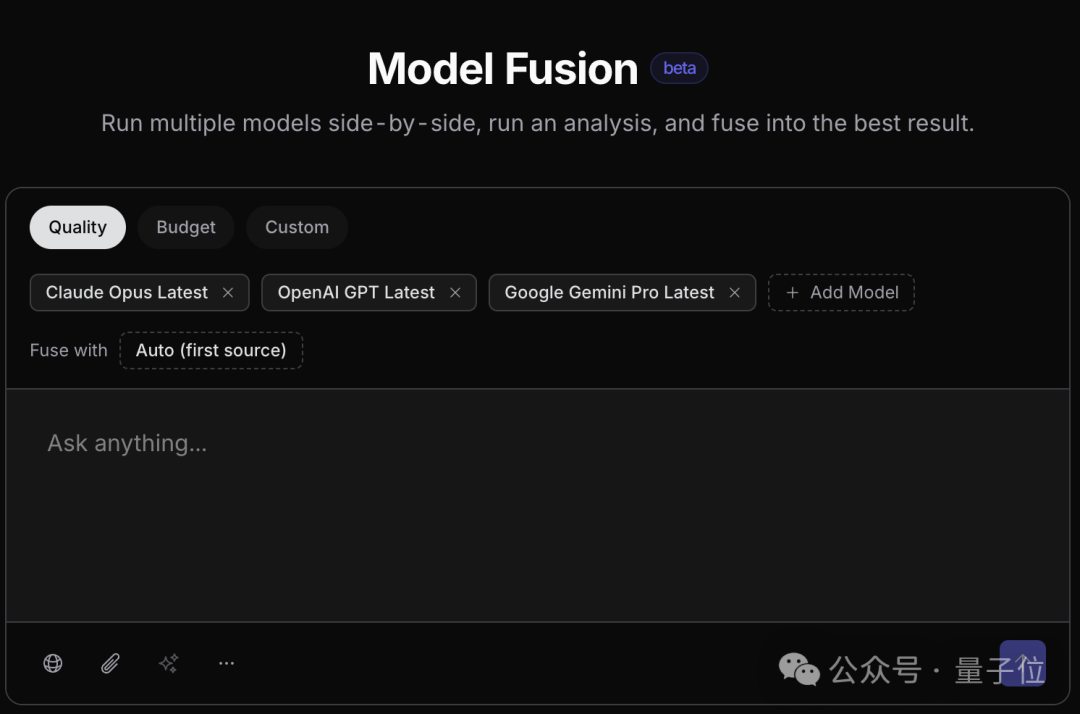
The task is fanned out to multiple models in parallel, and a judge model consolidates and analyzes the replies before outputting the final answer.
Performance Data
On DRACO, the deep-research benchmark built by Perplexity AI (100 practical questions spanning ten domains including academia, finance, law, healthcare, and technology), the test results show:
| Model / Combo | DRACO Score |
|---|---|
| Opus 4.8 + GPT-5.5 | 69.0% (highest) |
| Claude Fable 5 (standalone) | 65.3% |
| Kimi K2.6 + DeepSeek V4 Pro + Gemini 3 Flash | 64.7% |
The budget combo trails Fable 5 by just 0.6 percentage points — performance is essentially on par.
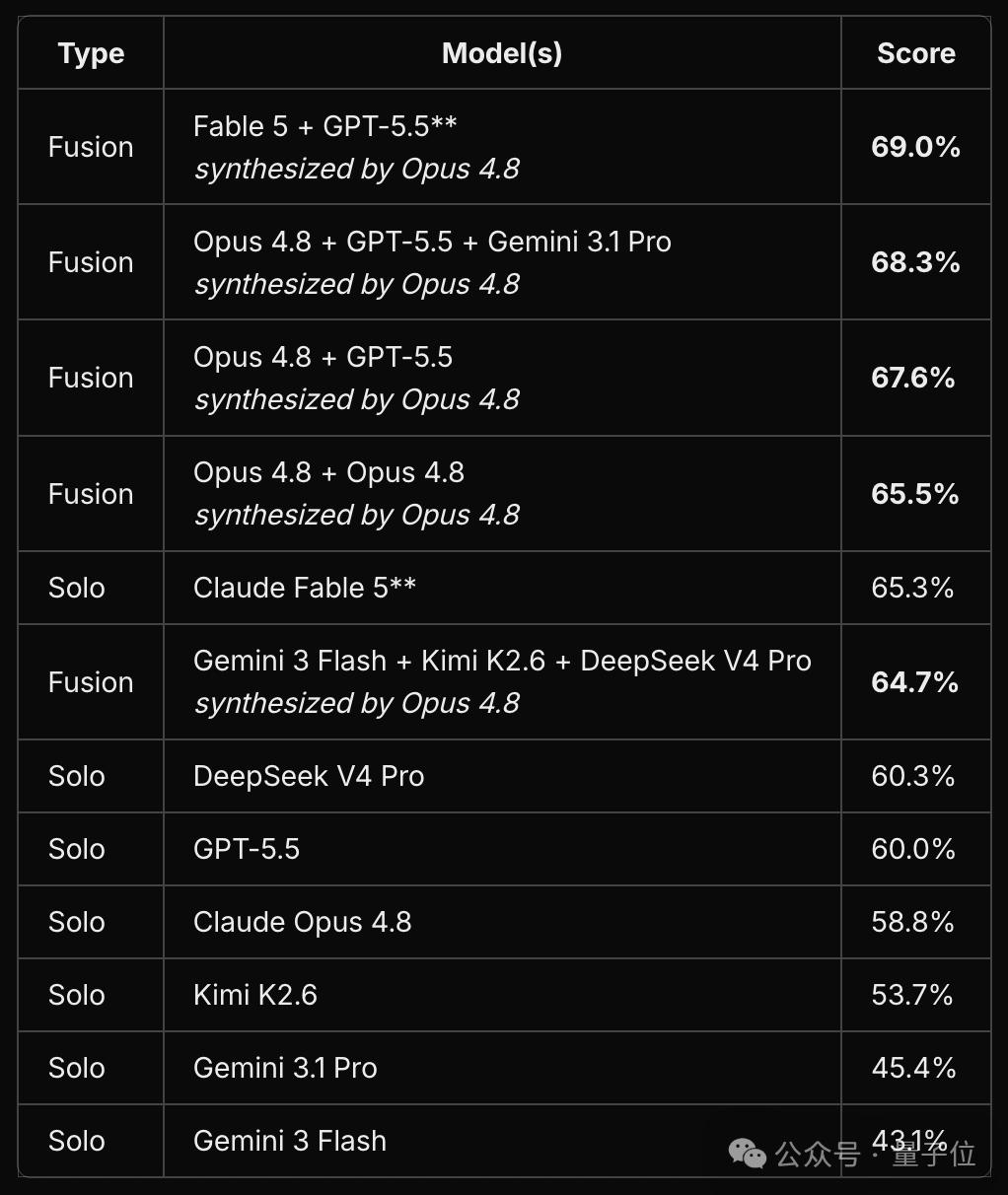
The Kimi K2.6+DeepSeek V4 Pro+Gemini 3 Flash combo scored 64.7%, nearly catching up to Fable 5's 65.3%.
Cost Comparison
Fable 5 Pricing
- $10 per million input tokens
- $50 per million output tokens
- Twice the price of Opus 4.8
Budget Combo Pricing
| Model | Input ($/M tokens) | Output ($/M tokens) |
|---|---|---|
| DeepSeek V4 Pro | 0.44 | 0.87 |
| Gemini 3 Flash | ~0.5 | ~3 |
| Kimi K2.6 (first) | 0.95 | 4 |
| Kimi K2.6 (cached) | 0.16 | 4 |
Combined, the three models' overall calling cost comes in nearly 80% below Fable 5. Factoring in additional costs like platform orchestration and content merging, the total spend per task is still only about 50% of Fable 5's.
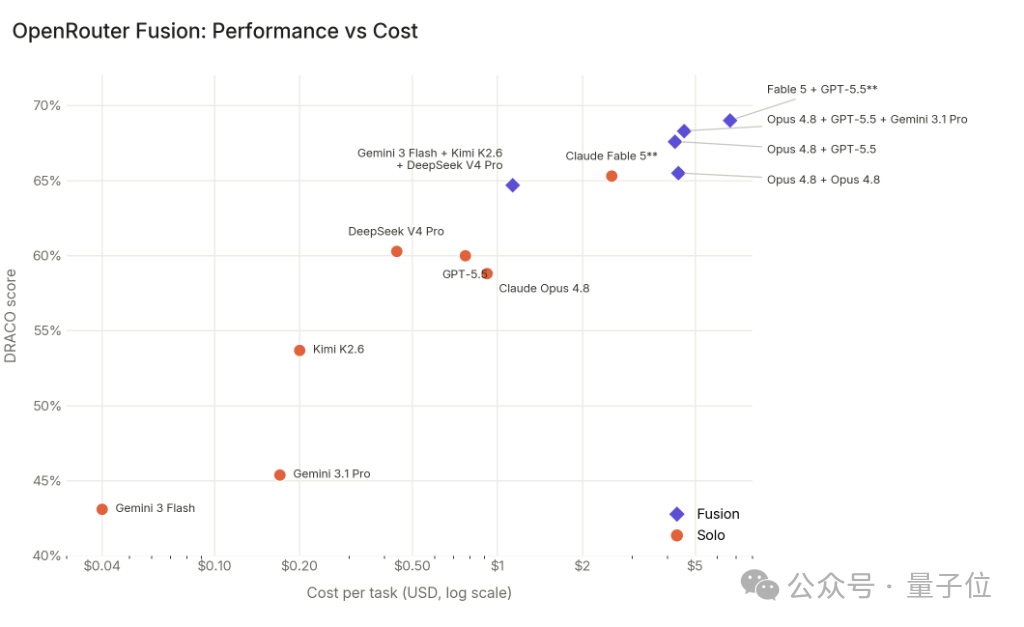
The trio's total cost per task remains below Fable 5's — the best value-for-money option in the field.
How to Use It
Option 1: The Web Dashboard
The OpenRouter web dashboard offers preset combos that activate in one click, and you can also mix and match models freely as needed.
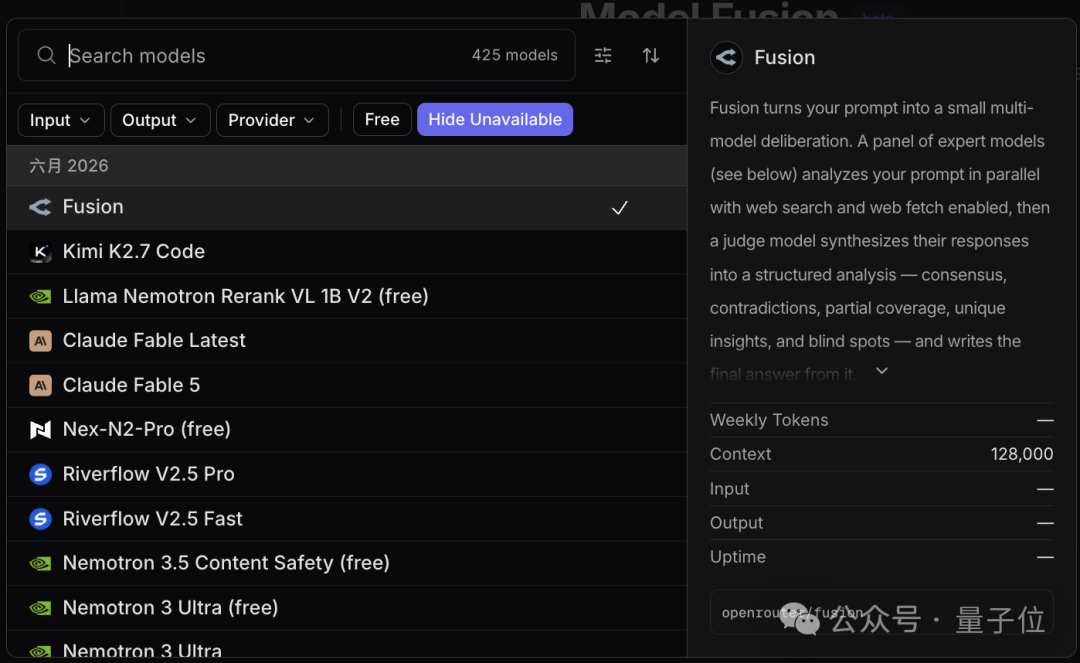
Pick a preset combo or build your own mix right in the web dashboard.
Option 2: API Calls
Call it programmatically through the API — just specify the model combo in the parameters.
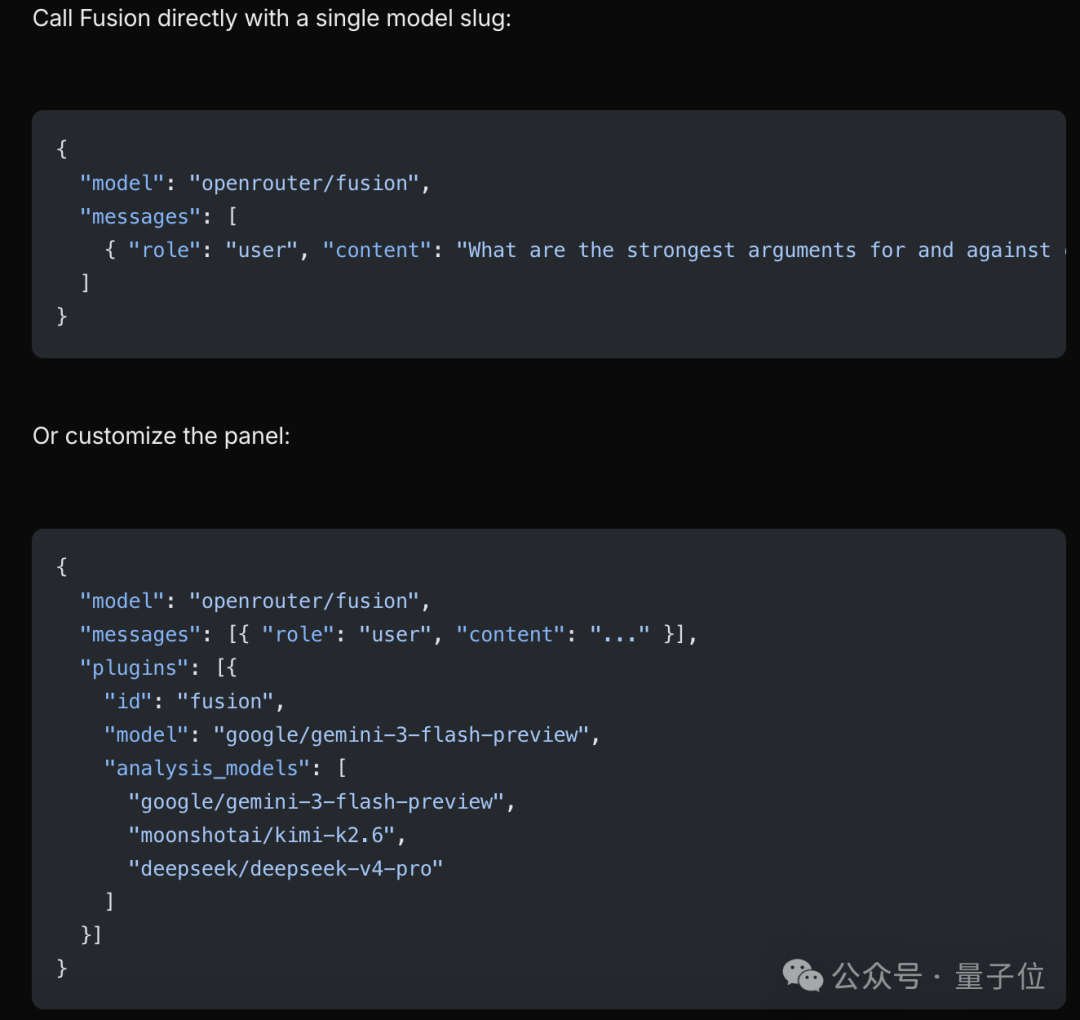
Specify the model combo in the API parameters and the call is complete.
Bonus Finding: Self-Fusion Boosts Performance Too
One interesting discovery from testing: even a single model fusing with itself (running the same instruction multiple times, then merging) delivers a performance gain. For example, when Opus 4.8 was combined with itself, its score rose from 58.8% standalone to 65.5%.
This shows that Fusion's performance gains come not only from the complementary strengths of different models — the answer-merging and logic-consolidation process itself can improve output quality.
References
- Official Fusion announcement: https://openrouter.ai/blog/announcements/fusion-beats-frontier/
- OpenRouter Twitter: https://x.com/OpenRouter/status/2065856860435988482