
WeChat Xiaowei Beta Hands-On: Swipe Right and Turn All of WeChat into an Agent
A beta look at WeChat's official AI assistant Xiaowei: chat summaries, auto-replies, invoking mini programs, money transfers, Moments browsing, and building small tools — eight capabilities in one read.
WeChat Xiaowei Beta Hands-On: Swipe Right and Turn All of WeChat into an Agent
A beta look at WeChat's official AI assistant Xiaowei: chat summaries, auto-replies, invoking mini programs, money transfers, Moments browsing, and building small tools — eight capabilities in one read.
WeChat has finally stepped in to build an Agent itself. The recently leaked beta build is called "Xiaowei" — no new app to download, no separate interface to switch to; just swipe right once inside WeChat and you're on the Xiaowei page. It strings together everything in WeChat — chats, group chats, mini programs, payments, Moments, official accounts, Channels — with the goal of letting you "complete services directly" inside WeChat rather than "hunting for services."
Xiaowei is currently in beta and requires access qualification to try. This piece walks through the eight capabilities summed up from official material and hands-on testing, so you can judge whether it's worth waiting for.
What Xiaowei Is
Xiaowei is WeChat's official AI Agent assistant. Its entry point hides inside the WeChat main interface:
- How to enter: swipe right once inside WeChat to reach the Xiaowei page
- How to summon: it can also be invoked directly inside a chat or group chat
- Core positioning: not another "chat box + tool calls," but taking WeChat's existing social, content, payments, and mini-program ecosystems as its "tool pool"
People have long debated whether Agents will become the next-generation super entry point; WeChat's answer: the entry point never disappeared — it just returned to where users spend the most time.
Eight Core Capabilities
1. Chat History Summaries
Summon Xiaowei directly in a group chat or conversation and have it summarize the chat history. In testing, it prefers to summarize recent chats — meaning it is more sensitive to "what just happened," well suited for quickly catching up on hundreds of unread group messages.
2. Auto-Replies
Beyond summaries, Xiaowei can reply to messages for you directly. The whole flow stays inside the WeChat conversation: summon Xiaowei and it generates the reply. For people with high message volume, it's a practical load-shedding tool.
3. Invoking Mini Programs to Order and Do Tasks
Xiaowei can directly invoke mini programs to get many things done. A typical scenario:
You say "I want a Luckin coffee" → Xiaowei brings up the Luckin mini program → you confirm the order → it jumps straight to the checkout screen
The experience is very smooth — essentially turning "adding AI to WeChat mini programs" into a standard Agent operation. Spring has come again for mini programs — for developers, a super entry point this big is a huge opportunity.
4. Money Transfers Directly
Xiaowei can transfer money directly. The flow: Xiaowei initiates the transfer → you confirm → enter your password → money moves. The safety mechanism requires your second confirmation; it will never send money without permission. But it also means Xiaowei is wired into WeChat Pay — future agents completing e-commerce purchases, splitting bills, or paying for services all become possible.
5. Viewing Moments
Xiaowei can pull up a specific person's Moments from a specific time. For example:
- "Show me XX's latest Moments post"
- Xiaowei sends you that post directly
Liking and commenting aren't supported yet — view only. But paired with future scheduled tasks it will be very comfortable — "remind me the moment that special someone posts to Moments" — practical for both client follow-ups and personal socializing.
6. Notes and To-Dos
Xiaowei can now:
- Take notes
- Record to-dos
- Proactively remind you in WeChat about to-dos recorded through it
One limitation: it can't yet read what you've saved in WeChat's "Favorites" — only what was recorded through Xiaowei itself. This generation is a closed loop: note it in Xiaowei, get reminded by Xiaowei.
7. Building Small Tools Directly (the Most "Wild" Capability)
This is what the tester found most stunning: Xiaowei can build mini programs directly (in the form of small tools for now).
The flow:
- Tell Xiaowei what you want, e.g. "build a single-player random-draw mini game"
- Tap "Start Building"
- Xiaowei summons an Agent to develop the mini program
- It's usable as soon as development finishes
Current limits:
- No publishing or sharing yet — self-use only
- Best for lightweight small tools that run right inside WeChat
This amounts to giving every ordinary user a "mini-program developer," with zero code knowledge. A new entry point for personal productivity tools.
8. Wired into Channels and Official Accounts
Xiaowei connects directly to Channels and official accounts:
- Inside Xiaowei you can find a blogger's latest official-account articles
- Forward them straight to a group chat or private chat
For content creators, that amounts to one more AI-driven distribution path.
An Interesting Side Effect: GEO Matters Even More
The tester finally had Xiaowei search for "Canghe" (an official-account blogger), and Xiaowei even surfaced his contact card.
This indirectly confirms one thing: in the Agent era, doing GEO (Generative Engine Optimization) becomes extremely important. When users look you up through an Agent, whether you get accurately recalled and whether your full identity information comes back decides your exposure. The WeChat search box was once the main battlefield of official-account SEO; Xiaowei may be the next one.
Current Limitations
- Beta stage: access required, opening date undetermined
- Moments are read-only: no liking or commenting
- Favorites not wired in: it only manages content recorded through Xiaowei itself
- Built tools can't be shared: self-use only for now
Who Should Pay Attention
- Mini-program developers: the entry-point effect of agents invoking mini programs could bring a new wave of traffic dividends
- Content creators / official-account bloggers: GEO optimization, a new distribution path
- Private-domain operators: auto-replies, Moments monitoring, and chat summaries are natural tools
- Ordinary users: once it opens up, hand daily message handling and small-tool building to the agent
💡 Tip: Once agents, the social graph, mini programs, payments, official accounts, and Channels are all strung together, WeChat is trying to turn "hunting for services" into "completing services directly." For tool sites and developers, the two things most worth positioning for early are: (1) agent-ready mini programs (let Xiaowei invoke your service); (2) GEO optimization (let Xiaowei recall you accurately). Cover image source: not provided in the original; pending official supplement.
Toolin Editorial Team
Categories
Related articles

ClawGym: An Open-Source Framework Unifying Agent Training and Evaluation
RUC has open-sourced a full-pipeline Claw Agent framework spanning data, training, and evaluation, with 13.5K executable tasks and support for sandbox-parallel reinforcement learning
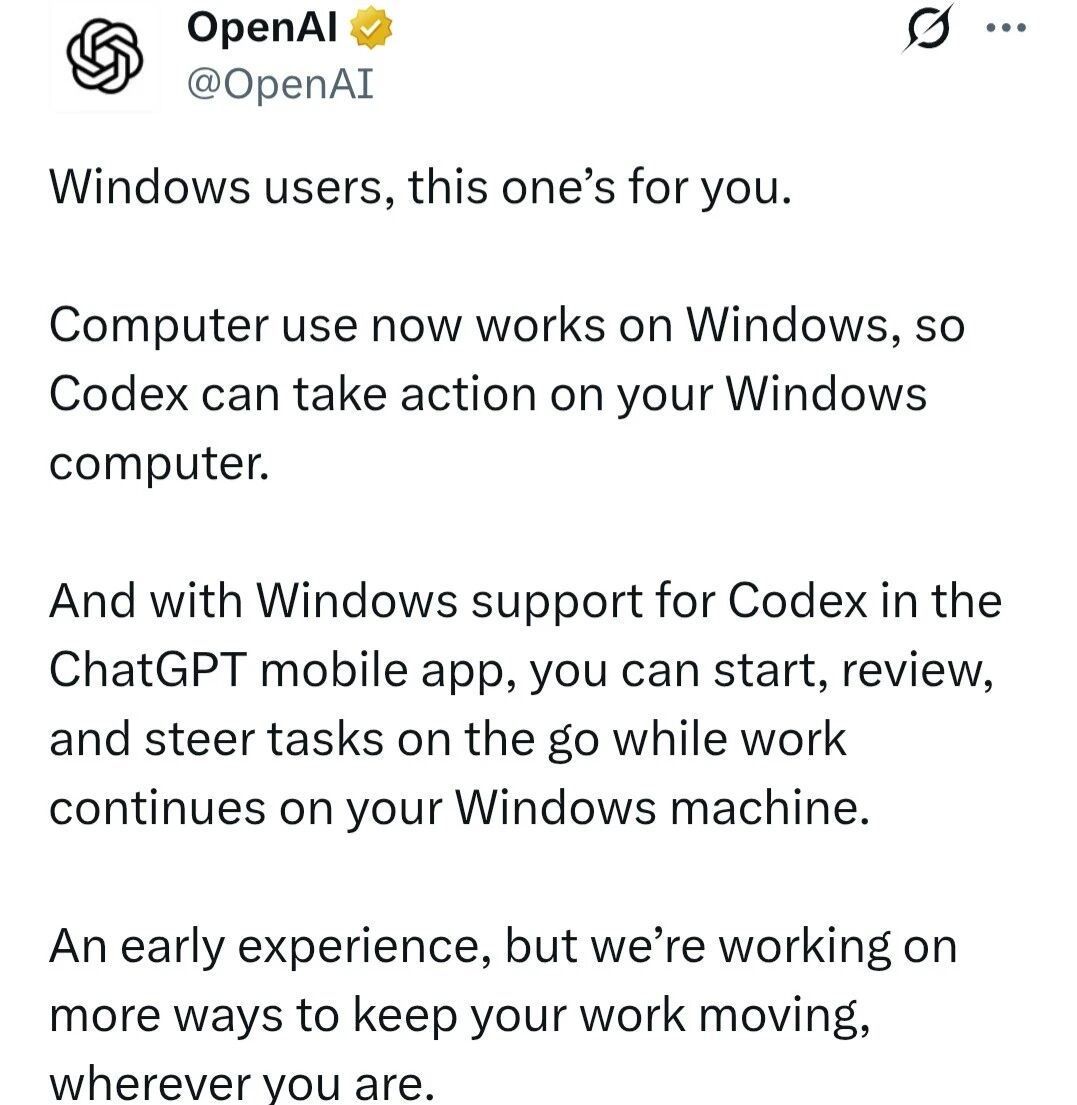
Codex Computer Use Lands on Windows: A Hands-On Guide
OpenAI Codex now officially supports operating Windows PCs, with complete setup steps, limitation notes, and how to control it remotely from your phone

Gamma-World: An Open-Source Multi-Agent World Model
NVIDIA and Tsinghua have open-sourced a multi-agent world model: trained on two players, it generalizes directly to four, supporting zero-shot real-time rollouts of multiplayer scenarios

Step 3.7 Flash in Claude Code: A Hands-On Guide
A hands-on test of StepFun's open-source Flash model integrated into Claude Code, using complex Agent workflows to see whether a Chinese model can stand in for closed-source foundations

Syll: Tsinghua's Open-Source Multimodal Full-Interaction Agent Framework
Supports GUI, CLI, and MCP operation styles, automatically generates reusable skills from demonstrations, and deploys locally to protect data privacy

SkillOpt: Train Your Agent Skill Docs Like a Neural Network
Microsoft's open-source text-space optimization framework that lets agent skill documents evolve automatically, ranking best or tied-best across all 52 evaluation combinations.