
GAAbstract
AI graphical abstract generator for researchers
Tool details
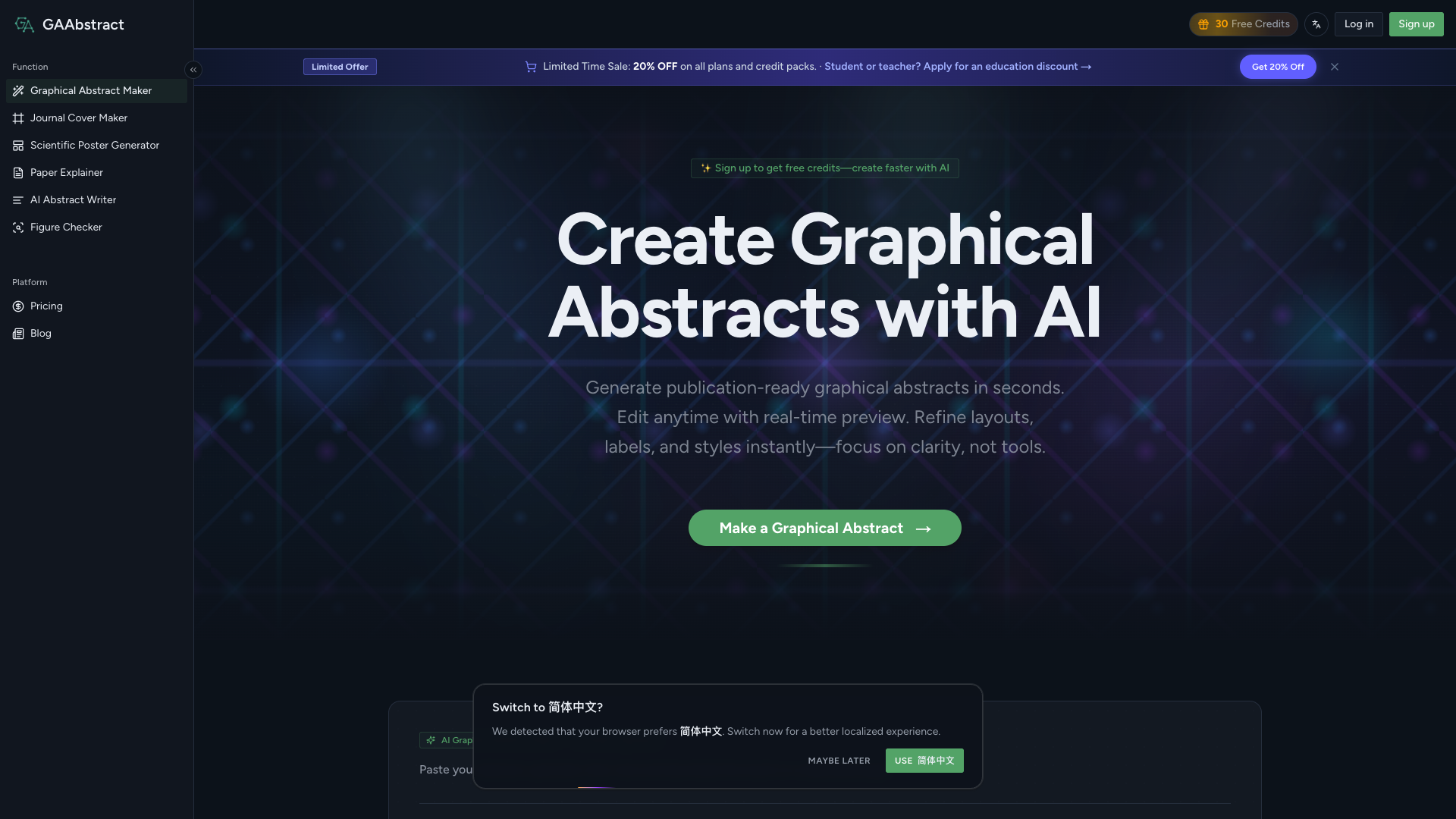
GAAbstract is a graphical abstract generator for researchers: it turns a full paper, an abstract or a set of key results into a shareable, journal-grade schematic in one step. It is not a general-purpose illustration tool. It solves only the mechanism figure that eats the most time in a submission, a lab meeting or a poster, and saves PhD students and postdocs on deadline the cost of outsourcing.
Core capabilities
- Generate straight from the paper: paste an abstract or upload a PDF and get an editable first draft in about a minute; 5 credits per generation
- Academic narrative layouts: seven structures — Flow, Comparison, Branching, Matrix, Circular, Timeline and Radial — map to different paper logics
- Style reference image: upload one reference image and the AI mimics its palette and icon style, keeping a whole lab's figures consistent
- Lasso-style editing: select a region of the canvas and edit it in natural language; labels, terminology and icons can all be rearranged
- Journal size presets: 11 presets at 300 DPI, export to PNG/JPG/TIFF, with SVG vector unlock on paid plans
- Companion tools: journal cover, academic poster and paper explainer on the same site; Paper Explainer costs no credits
Who it is for PhD students, postdocs and early-career faculty in materials, chemistry, engineering, computer science and the social sciences: the abstract figure before submission, figures for lab meetings, the key visual for a conference poster. Labs that need precise biological pathway diagrams should still choose BioRender.
Unique advantages Among the cheapest options in its class — from $9.90/month, roughly one third of BioRender's academic tier — and one of the few products that makes "text → figure" a single step. The billing is verifiable: prices are read straight from Stripe, and $0.50/$0.40/$0.30 per figure matches what the site advertises; credit packs start at $19.90 and stay valid for 365 days.
Editorial verdict
The product genuinely works and bills honestly; daily check-in credits are enough to run the whole flow. But it must be said: Elsevier and ACS explicitly prohibit generative AI for graphical abstracts, while the site's own blog says journals only check clarity — submitting on that basis carries documented risk; the 11 presets do not include Elsevier's 1328×531 (5:2); the domain was only registered in 2025-12, there is no corporate entity, it is a single developer, the version log stops at 2026-05, /docs is leftover template content, and no verifiable source of reputation can be found.
Pricing
Freemium$0 (free credits from daily check-in)1 trial generation without signing up; credits from registering and from daily check-in; exports are watermarked and SVG is not supported
Yearly $99/year (about $8.25/month), 100 credits per month, about 20 generations
Yearly $199/year (about $16.58/month), 250 credits per month, about 50 generations, priority email support included
Yearly $299/year (about $24.92/month), 500 credits per month, about 100 generations
150 credits, valid for 365 days, about 30 figures
450 credits, valid for 365 days, about 90 figures
1200 credits, valid for 365 days, about 240 figures
Additional notes
The free allowance is self-contradictory on the site: the navigation badge says 30 Free Credits while the pop-up says 5 free credits; free exports are watermarked and do not support SVG. Subscription credits expire after 30 days and do not roll over, while credit pack credits stay valid for 365 days. The real yearly discount on all three tiers is about 17% (the page badge says 20% OFF). Refunds require a request within 7 days of purchase with no more than 10% of credits used, and may carry a fee of up to 6%; students get 40% and teachers 20% off.
FAQ
User reviews
User Reviews
No reviews yet
No one has reviewed this tool yet