
Hermes Agent: The Open-Source AI Agent That Gets Smarter the More You Use It
The open-source agent that topped OpenRouter's global usage chart, with self-learning, persistent memory, and skill evolution -- deployable with a single command.
Hermes Agent: The Open-Source AI Agent That Gets Smarter the More You Use It
The open-source agent that topped OpenRouter's global usage chart, with self-learning, persistent memory, and skill evolution -- deployable with a single command.
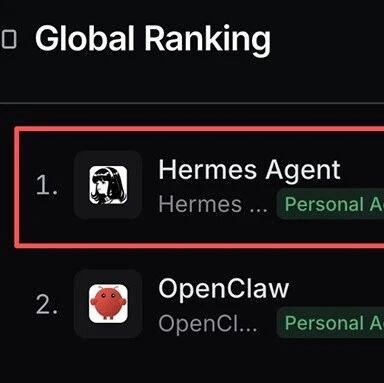
Hermes Agent is an open-source, self-evolving AI agent from Nous Research. In May 2026 it topped OpenRouter's global application usage chart with single-day token consumption of 271 billion, ahead of popular tools like OpenClaw and Claude Code. Its core selling point isn't parameter count but "growability" -- the more you use it, the better it knows you.
What Is Hermes
Hermes is an AI Agent with a self-learning loop. Unlike an ordinary chat assistant, it can:
- Automatically create "Skills" from task experience and keep optimizing them in later use
- Hold persistent memory, search past conversation records, and keep context across sessions
- Build a "User Model" that grows to know your preferences and habits as interactions deepen
- Schedule timed tasks and automatically run repetitive work like daily reports and backups
In short: it isn't a chatbot that only answers questions, but an assistant that gets work done, remembers, and learns.
Why It Suddenly Blew Up
On May 9, 2026, Hermes topped OpenRouter's global app token consumption chart. Key numbers:
| Rank | App | Daily token consumption |
|---|---|---|
| 1 | Hermes Agent | 271B |
| 2 | OpenClaw | 245B |
| 3 | Kilo Code | 149B |
| 4 | Claude Code | 79.2B |

As of publication, Hermes has consumed more than 6.37 trillion tokens cumulatively; GitHub stars have reached 140,000 (doubled within a month), with 21.8k forks.
The top five most-called models: MiMo-V2-Pro (Xiaomi), MiniMax M2.7, Nemotron 3 Super (NVIDIA), Step 3.5 Flash (StepFun), and Hy3 preview (Tencent). Chinese-made models take the lion's share.

Core Features, Broken Down
Multi-platform access: one Agent covers every scenario
Hermes isn't limited to the terminal. It supports messaging platforms including Telegram, Discord, Slack, WhatsApp, Signal, and Email, and manages every channel through a unified Gateway process. A task started on Telegram can continue in the terminal -- the conversation carries over.
The self-learning loop
This is the capability that separates Hermes from other agents:
- Automatic skill creation: after finishing a complex task, Hermes automatically extracts the reusable workflow and saves it as a skill
- Continuous skill optimization: every time a skill runs, it improves automatically based on execution results
- Cross-session memory: built on FTS5 full-text search + LLM summaries, it can recall past conversations precisely
- User modeling: using the Honcho dialectic method, it builds an increasingly accurate model of your preferences
Supports nearly every mainstream model
One-command switching via hermes model, no code changes required:
- OpenRouter (200+ models)
- OpenAI, Anthropic
- NVIDIA NIM (Nemotron)
- Xiaomi MiMo, DeepSeek, Zhipu GLM, Kimi/Moonshot, MiniMax
- Any self-hosted endpoint compatible with the OpenAI API
Scheduled tasks and parallel execution
- Built-in cron scheduler defines scheduled tasks in natural language (daily reports, weekly audits, etc.)
- Can spawn isolated sub-agents for parallel workflow processing
- Write Python scripts that invoke tools over RPC, compressing multi-step pipelines into a single call with zero context cost
Flexible deployment options
Seven terminal backends: local, Docker, SSH, Singularity, Modal, Daytona, and Vercel Sandbox. Daytona and Modal provide serverless persistence -- asleep when idle, woken on demand, at almost no cost.
Quick Install
Linux / macOS / WSL2
curl -fsSL https://raw.githubusercontent.com/NousResearch/hermes-agent/main/scripts/install.sh | bashAfter installation, restart the terminal:
source ~/.bashrc    # or source ~/.zshrc
hermes              # start a conversation
Windows (native PowerShell, Early Beta)
irm https://raw.githubusercontent.com/NousResearch/hermes-agent/main/scripts/install.ps1 | iexNative Windows support is still in early testing; for the most stable experience, use the Linux install command inside WSL2.
Basic Usage
Common commands after installation:
| Command | Description |
|---|---|
hermes | Start the interactive CLI |
hermes model | Choose an LLM provider and model |
hermes tools | Configure which toolsets are enabled |
hermes gateway | Start the messaging gateway (Telegram, Discord, etc.) |
hermes setup | Run the full setup wizard |
hermes claw migrate | Migrate from OpenClaw (if you were using OpenClaw before) |
hermes update | Update to the latest version |
hermes doctor | Diagnose problems |
Common slash commands to use inside a conversation:
/newor/reset— start a new conversation/model [provider:model]— switch models/skills— browse the skills you have created/compress— compress context to save tokens/stop— interrupt the current task
Migrating from OpenClaw
If you were previously using OpenClaw, Hermes offers one-command migration:
hermes claw migrate              # Interactive migration (full migration)
hermes claw migrate --dry-run    # Preview what gets migrated without executing
hermes claw migrate --preset user-data   # Migrate user data only, not keys
What gets migrated: the SOUL.md persona file, memory entries, custom skills, the command whitelist, messaging platform configuration, and API keys.
Compatibility in China
Hermes has officially announced support for China's major platforms:
- Cloud providers: Alibaba Cloud, Tencent Cloud, Huawei Cloud (all offer one-click deployment)
- LLMs: DeepSeek, Zhipu GLM, and Kimi are on the official support list
- Work messaging: Feishu, DingTalk, and WeCom support one-click integration
- WeChat: pair by scanning a QR code and use it directly

Who It Is For
- Developers: those who need a coding assistant that remembers context and executes tasks on its own
- Content creators: use scheduled tasks to auto-generate reports and organize material
- Productivity tool enthusiasts: those who want an AI assistant in Telegram/WeChat that truly "gets you"
- OpenClaw users: migrate seamlessly and gain stronger memory and learning abilities
Things to Note
Hermes's usage numbers are eye-catching, but keep the following in mind:
- Token cost: 271 billion tokens a day shows it can work, but it also means inference isn't cheap. Pair it with cost-effective models
- Stability: as a fast-moving open-source project, some features are still iterating
- Security: for production use, always configure command approval and container isolation
Related Links
- GitHub repository: NousResearch/hermes-agent
- Official docs: hermes-agent.nousresearch.com
- OpenRouter leaderboard: openrouter.ai/app
- License: MIT (fully open source and free)
Toolin Editorial Team
Categories
Related articles

Bun Rewrote Its Core from Zig to Rust with Claude: A Million-Line Agentic Engineering Effort
Bun founder Jarred Sumner used Claude Code to rewrite Bun's core from Zig to Rust — roughly 1 million lines of code in about 10 days. This piece breaks down the engineering significance of the agentic rewrite, what is verifiable, and where its applicability ends.

Kimi K3 Hands-On: A 2.8T-Parameter Open-Source Flagship That Clones a Paid Screen-Recording Tool in Half a Day
Moonshot AI has open-sourced Kimi K3: 2.8T parameters, 1M-token context, positioned against Sonnet 5's top tier. This piece breaks down its capability positioning, pricing strategy, and what you can actually verify.
RynnWorld-Teleop: DAMO Academy Open-Sources Digital Teleoperation — Robot Training Data Without Real Hardware
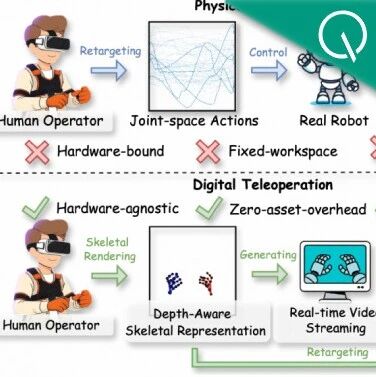
Alibaba DAMO Academy has open-sourced RynnWorld-Teleop, a digital teleoperation scheme that uses gesture-driven world models to generate robot visual demonstrations and automatically produce training data with joint-level labels. This piece breaks down the core idea, what's open-sourced, and where it fits.
Wan-Streamer v0.2: An Omnimodal Real-Time Interaction Model with 550ms End-to-End Latency
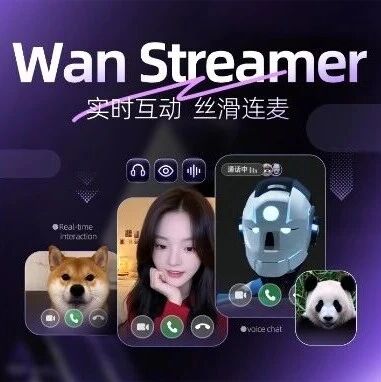
Alibaba Tongyi's Wan-Streamer v0.2 unifies listening, seeing, speaking, and performing in a single Transformer, achieving full-duplex audio-video interaction at roughly 550ms end-to-end latency. This piece breaks down its architecture, key metrics, and use cases.

Agnes-2.5-Flash: A Hands-On Look at Sapiens AI's Free, No-Time-Limit Coding Model
Singapore's Sapiens AI has launched the Agnes-2.5-Flash coding model — free with no time limit per official claims, ranked in the global top tier for coding, and now live in the Agnes Code desktop app.
LibTV Launches a Skill Store: 100+ Director-Grade Skills That Let Agents Shoot Video Autonomously
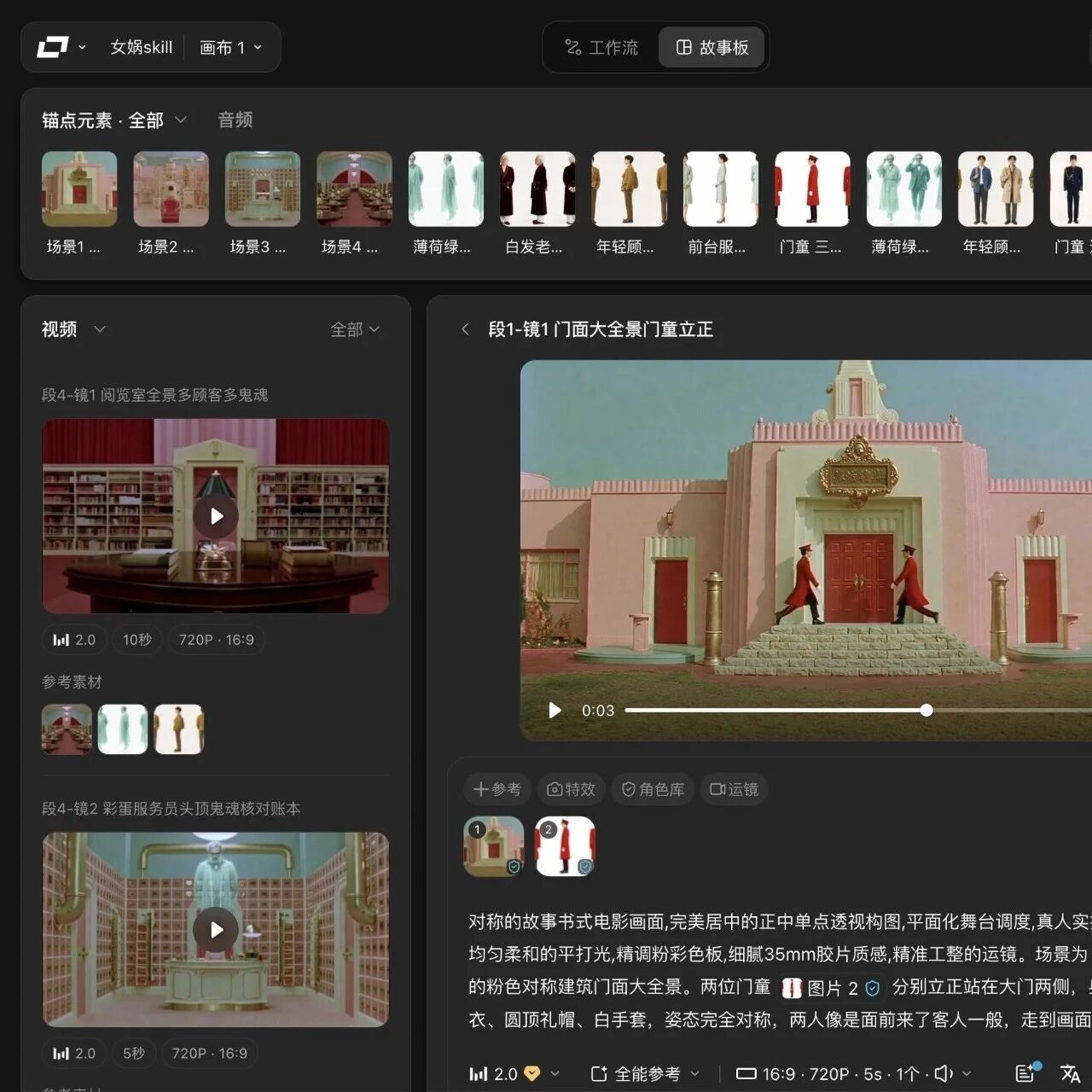
LibTV, LiblibAI's professional AI video platform, has launched the world's largest video Agent Skill Hub, packaging 100+ director-grade Skills for agent invocation — from script to finished film in a single sentence.