
Higress: The AI-Assisted K8s Gateway Migration Tool
An AI-assisted migration approach showcased by CNCF converts 60 ingress-nginx resources into Higress configuration automatically in about 30 minutes, slashing K8s gateway migration costs.

Higress: The AI-Assisted K8s Gateway Migration Tool
An AI-assisted migration approach showcased by CNCF converts 60 ingress-nginx resources into Higress configuration automatically in about 30 minutes, slashing K8s gateway migration costs.
If you manage Kubernetes clusters, gateway migration is probably one of those tasks you'd rather never touch. The network rules, traffic policies, authentication setups, and service routes inside ingress-nginx have, after years of iteration, become deeply entangled with application logic. Migrating by hand is not only slow but easy to trip over.
CNCF recently showcased an AI-assisted migration approach that moves 60 ingress-nginx resources to Higress in about 30 minutes. This isn't a concept demo — it's a real migration case backed by actual numbers.
What Is Higress
Higress is an open-source API gateway built on Envoy, designed for AI-native and cloud-native environments. Compared to ingress-nginx, it offers better native support for observability, traffic governance, and extensibility.
How the AI-Assisted Migration Works

The migration pipeline has three phases:
1. Configuration analysis
The AI tool reads your existing ingress-nginx configuration files and understands the network rules, routing policies, authentication methods, and traffic management rules inside them. This step runs automatically — no more line-by-line YAML review by hand.
2. Structure mapping
The tool maps ingress-nginx configuration concepts onto their Higress equivalents, including:
- Format conversion of Ingress Resources
- Mapping of Annotations to Higress policies
- Automatic conversion of routing configuration
- Redefinition of the authentication system
3. Configuration generation and validation
Higress configuration manifests are generated automatically. The engineer's role shifts from "building from scratch" to "validating and refining" — checking the generated output for correctness, handling edge cases, and confirming consistency of traffic management policies.
The Key Numbers
| Metric | Traditional manual migration | AI-assisted migration |
|---|---|---|
| Time to migrate 60 resources | Days to weeks | ~30 minutes |
| Downtime | Relatively long | Minimized as much as possible |
| Human effort | Manual verification, YAML rewrites, repeated testing | Validation + refinement |
| Error risk | High (human error) | Low (automated conversion + human review) |
When to Use It
- ingress-nginx migrations: teams actively moving from ingress-nginx to Higress
- Multi-cluster environments: anyone needing to unify the gateway across multiple clusters and environments
- Infrastructure modernization: teams looking to move gateways from static config management to automated systems
- Large-scale YAML management: platform teams maintaining thousands of interdependent YAML resources
Things to Watch
The goal of AI-assisted migration isn't to replace engineers — it's to shift human effort away from repetitive conversion work and toward validation, governance, and edge-case handling. A few points deserve special attention:
- Security policies: subtle differences between platforms can leave security policies inconsistent — always review them manually
- Traffic management: production traffic cutover needs staged validation
- Compatibility: not every ingress-nginx annotation has a perfect Higress equivalent; some require manual adjustment
Tip: CNCF's detailed technical blog walks through the full migration steps with configuration examples. Original article: https://www.infoq.com/news/2026/05/ai-nginx-higress/
Toolin Editorial Team
Categories
Related articles

Qwen-Audio-3.0-TTS: The Speech Synthesis Model That Can Express Emotion
Alibaba's new-generation TTS model controls laughter, gasps, and anger with tags, delivers 48kHz film-grade audio, and tops the global Speech Arena.

Qwen3.8-Max Preview: A Hands-On Early Access Guide
Qwen's 2.4T-parameter flagship preview is live on Token Plan, Qoder, and the Qwen website; officially rated second only to Fable 5 overall.

Making a Full-Scene Infographic with SenseNova U1 Pro
A hands-on tutorial for SenseTime's flagship multimodal model U1 Pro: turn raw data into a deliverable 8K infographic and full-match panoramic visual, automatically.

Claude for Teachers: A Free AI Teaching Assistant for Every K-12 Teacher in the US
Anthropic launches a free AI teaching assistant for certified US K-12 teachers, wired into 50 states' standards, with lesson-plan alignment, differentiated tiering, and student data analysis.

A Step-by-Step Codex Desktop Pet Tutorial: Build an Animated Desk Companion with Hatch Pet
Build a custom desktop pet for Codex with Hatch Pet from the OpenAI Skills repo — 5 steps from reference image to install and wake-up, roughly 1 hour and 60% of weekly usage in our test.
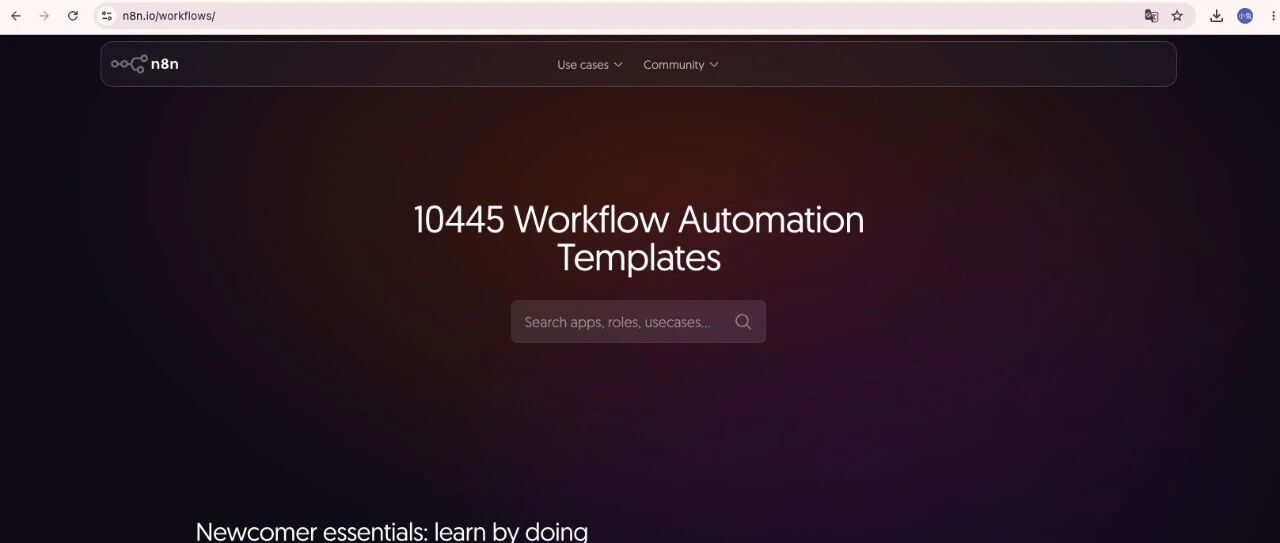
Turning an n8n Workflow into a Codex Skill: A Meta-Skill's Five-Step Pipeline
With the n8n-to-codex-skill meta-skill, convert any of n8n's 10,000+ public templates into a native Codex Skill — includes two real case studies: an SEO audit skill and a GEO content skill.