
Navos 2.0: Tec-Do Upgrades Marketing from a Chatbox to a Loop Agent
Navos 2.0, launched at WAIC, upgrades the chatbox into an Agentic Workflow, powered by the Tec-Chi 300B model ranked No. 1 on SuperCLUE-Mkt — with 5 core agents and a macOS client.
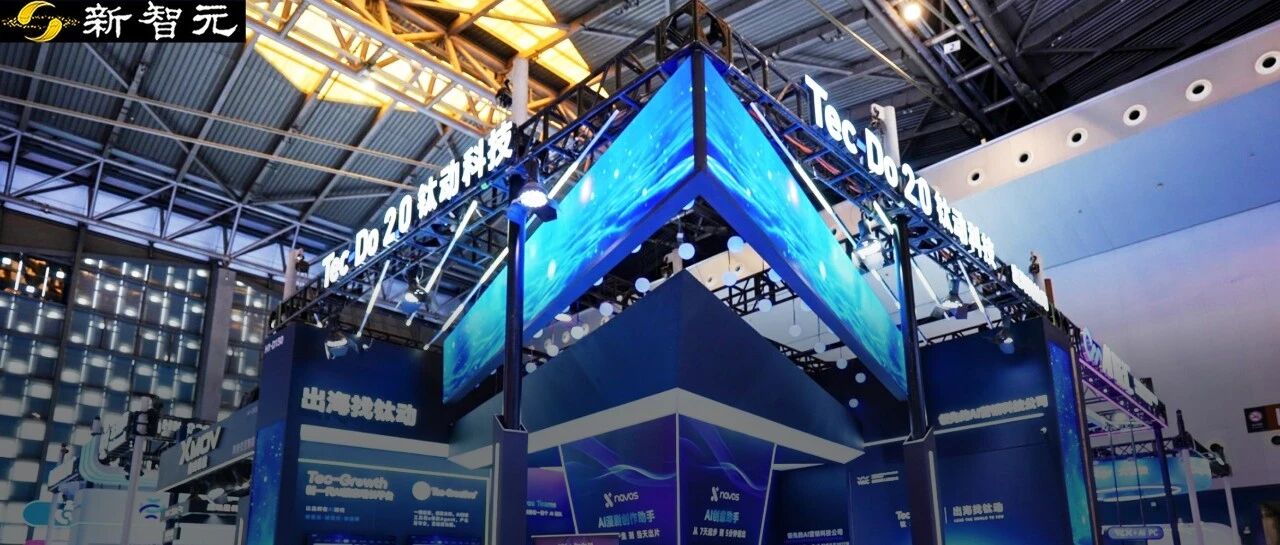
Navos 2.0: Tec-Do Upgrades Marketing from a Chatbox to a Loop Agent
Navos 2.0, launched at WAIC, upgrades the chatbox into an Agentic Workflow, powered by the Tec-Chi 300B model ranked No. 1 on SuperCLUE-Mkt — with 5 core agents and a macOS client.
At WAIC, Tec-Do released Navos 2.0, upgrading its multi-agent product from a web chat box to an agentic workflow architecture (internal codename: Loop Agent). Alongside it comes the Tec-Chi 300B marketing model — which took the global No. 1 spot in the SuperCLUE-Mkt marketing capability benchmark with a score of 85.82, ranking ahead of GPT.
Earlier this month, Tec-Do also formally signed a partnership with OpenAI to advance A2A agent commerce. This article breaks down Navos 2.0's product positioning, the capabilities of its 5 core agents, and how to download and try it. For practitioners in outbound marketing, cross-border e-commerce, or anyone tracking the Agentic Commerce trend.
Product Positioning: From Chat Box to Workbench
However strong the Tec-Chi model is, without a workflow to carry it, it's still just a chat window. Navos 2.0 is an architecture-level upgrade: marketing capabilities that used to be scattered across different models, tools, and processes are consolidated into one unified AI entry point, composing multiple specialized agents on demand around business goals to form workflows that loop autonomously.
The core trait of a Loop Agent: agents can call each other, feed back, and iterate, rather than executing a straight line once and stopping.
As CEO Li Shuhao puts it: you used to log into a pile of SaaS backends, then open an agent tool to chat and ask questions. Now the whole workflow is embedded in the agent — it is the workbench.
Tec-Chi 300B: How a Vertical Model Beats a General One
General-purpose models have a fatal blind spot in marketing scenarios: no battle data. Tec-Chi explains it with the Taoist taiji metaphor:
- The yang side: a 300B-parameter reasoning model, scoring 85.82 for the global No. 1 on the SuperCLUE-Mkt marketing benchmark
- The yin side: two categories of proprietary data pumped in daily
- Web-wide insights: same-day trending topics from Google, Meta, TikTok, Instagram, and X, plus real-time sales charts for Amazon / TikTok Shop / Shopee
- Domain battle data: copy, short videos, influencer sales performance, click-through rates, bounce rates, and positive/negative reviews generated daily by millions of products under active ad spend
How Fine-Grained Is the Data
A scenario Li Shuhao describes: an ad served to Hispanic audiences in Los Angeles, California, placed at 10 PM on a certain Instagram ad slot — is a 2% CTR good or bad? A general model can't answer, because it has no industry baseline broken down by three-level category, region, and time slot. Tec-Chi can, because its yin side updates those benchmarks every day with professional media-buying data.
A 300B-parameter vertical model beating a trillion-parameter general model comes from a data moat, not stacked compute.
Three Layers of Model Capability
| Layer | Approach | Notes |
|---|---|---|
| Reasoning | In-house | The deepest moat, backed by proprietary domain knowledge |
| Understanding | In progress | Frame-level video analysis ("second 2, frame 65 — all 10 test users swiped away") |
| Generation | External integrations | Integrating ByteDance's Seedance 2.0 and others; Tec-Do handles the paradigms and secondary processing (storyboards, editing, highlight-frame stitching) |
The 5 Core Agents
1. AI Product Selection
Feed it a one-line description (say, "I want to sell summer womenswear in Southeast Asia"), it taps Tec-Chi's industry data, and after a few rounds of interaction outputs a complete product selection report: market size, competitive landscape, target audience, stocking recommendations. Sample sizes jump from a few thousand in traditional research to the millions.
2. AI Creative
Integrated with multimodal models led by Seedance 2.0, it auto-generates multilingual short videos, image-text assets, and ad scripts, compressing the path from topic selection to finished piece down to minutes.
3. AI Influencer
Leveraging Tec-Do's 150-million-influencer resource network spanning the globe, the agent matches influencers automatically based on product traits and target market, generates outreach messages in multiple languages, and fires off collaboration invitations in bulk.
4. AI Comic Drama
It connects market topic selection, scriptwriting, storyboard production, and multilingual localization end to end, turning comic-drama content into a scalable content product at a daily — or faster — publishing cadence.
5. AI Desktop Assistant
Within the permissions you grant, it operates web pages, reads files, connects to Lark and Office, and generates documents, spreadsheets, PPTs, and H5 pages. It takes agent collaboration beyond the chat box, delivering results directly in the user's working environment.
Efficiency Comparison: Traditional Team vs Navos
| Stage | Traditional Team | Navos |
|---|---|---|
| Product selection | A 6-7 person team spending 1-3 months, 5,000 samples considered a lot | 4-5 prompt rounds, results in 10-20 minutes, samples in the millions |
| Creative | One video shot per week | Dozens of variants a day |
| Influencer BD | One BD contacting 20 influencers a day | An agent runs through hundreds in one pass |
| Comic drama | Fully manual across the chain | One person + Navos hits daily publishing |
A Real One-Person Company Case
A Guangzhou entrepreneur born after 1995, with a portable espresso machine and 100,000 RMB in starting capital, gave Navos a single instruction: find me the most worthwhile overseas market to enter, and get the first growth loop running within a month.
By the end of month one:
- 2 markets tested
- 80+ content assets produced
- 500+ overseas influencers reached
- 20+ content collaborations secured
- A five-figure USD GMV achieved
Under the traditional division of labor this takes at least 5-6 people at 80,000–100,000 RMB per month in staffing costs. He hired no one.
How to Download and Try It
macOS client:
https://navoscdn.tec-do.com/public/package/electron/latest/navos-mac-arm64.dmgThe interface is the same across faces; besides the in-house Tec-Chi model, you can also choose other mainstream models.
Skill Market
The infrastructure 2.0 is actually building. Effective working skills that experts accumulate while using the agents (like "how to cold-start a whitening sheet mask in Southeast Asia" or "what Instagram's hottest creatives look like right now") get extracted and distilled into standardized Skills. New users arrive, adopt existing Skills, and start working — the same logic as a Shopify merchant picking a template to open a store.
The A2A / AEO Partnership with OpenAI
Tec-Do's cooperation with OpenAI unfolds along Agentic Commerce. Li Shuhao's A2A network framework:
- The first A (B-side agent): Tec-Do's job. Structure product information and make it agent-readable, so machines can understand it
- The second A (C-side agent): OpenAI's job. Help consumers make purchase decisions
Timeline: late May, OpenAI launched B-side agent capabilities → June, the two sides started working together → July, the partnership was signed.
The Partnership Does Three Concrete Things
- AEO (Agentic Engine Optimization): similar to GEO — optimizing how often, how highly, and how accurately products are mentioned in ChatGPT conversations: making sure you're mentioned, ranked, and described correctly
- Agentic Landing Page: images deconstructed into structured descriptions + natural-language tags. Humans don't need to parse them, but agents can extract every selling point accurately
- Sponsored-style ad slots, similar to Google's: among the 3-5 answers ChatGPT recommends, brands can pay to be mentioned up front
💡 Key insight: Li Shuhao explains why OpenAI needs them — "ChatGPT currently recommends products based on crawlers scraping websites, not on training driven by commerce logic. A selling point like breathable fabric might get described as durable and sweat-proof — get the selling point wrong and the conversion is dead."
Who It's For
- Cross-border e-commerce sellers going overseas (independent sites, Amazon, TikTok Shop)
- Digital marketing agencies and brands
- One-person-company (OPC) founders
- Developers tracking Agentic Commerce and A2A trends
Known Limitations
- The client currently supports macOS (arm64) only
- Tec-Chi's moat is in marketing/overseas-expansion vertical scenarios; for general tasks, general-purpose models still fit better
- The real-world impact of the A2A/AEO partnership with OpenAI remains to be proven; Li Shuhao predicts shopping will be restructured within 2-3 years