
Nuwa Skill: Distilling How the Great Minds Think into Callable AI Skills
The open-source project Nuwa Skill automatically researches a person's public materials, extracts their thinking and decision-making patterns, and generates a Skill file you can call again and again; 17 figures have already been distilled, completely free under the MIT license.
Nuwa Skill: Distilling How the Great Minds Think into Callable AI Skills
The open-source project Nuwa Skill automatically researches a person's public materials, extracts their thinking and decision-making patterns, and generates a Skill file you can call again and again; 17 figures have already been distilled, completely free under the MIT license.
Have you ever wanted Steve Jobs to help you think through product direction, Charlie Munger to help you make an investment decision, or Richard Feynman to teach you a physics concept? That is exactly what the open-source project "Nuwa Skill" does—give it a person's name, and it automatically researches that person's public materials, extracts how they think through problems, how they make decisions, and how they talk, and generates a Skill you can call again and again.
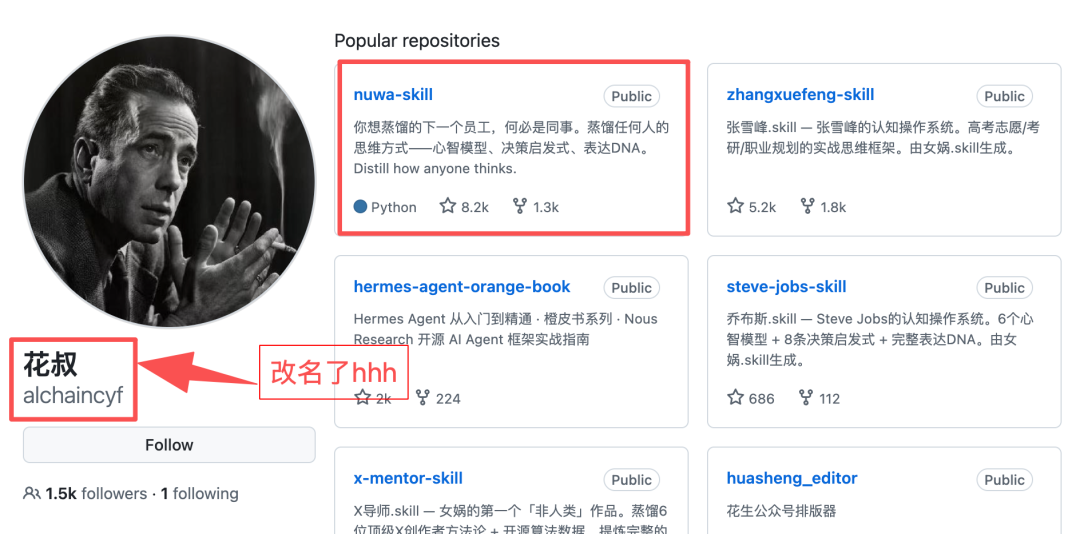
Project address: https://github.com/alchaincyf/nuwa-skill
What Is Nuwa Skill
Nuwa Skill is a tool open-sourced by Huashu, a Bilibili creator (the author of "Kitten Fill Light"). Its core capability is "distilling" a person's way of thinking into a Skill file that an AI can load.
Unlike ordinary "role-playing," Nuwa Skill does not simply have the AI imitate someone's tone of voice. It extracts a complete set of mental models, decision heuristics, and expression DNA from primary-source material, forming a structured thinking framework.
17 figures have already been distilled: Steve Jobs, Charlie Munger, Richard Feynman, Elon Musk, Naval Ravikant, Karpathy, Ilya, Paul Graham, Zhang Xuefeng, Luo Yonghao, and more. Fully open source and free under the MIT license.
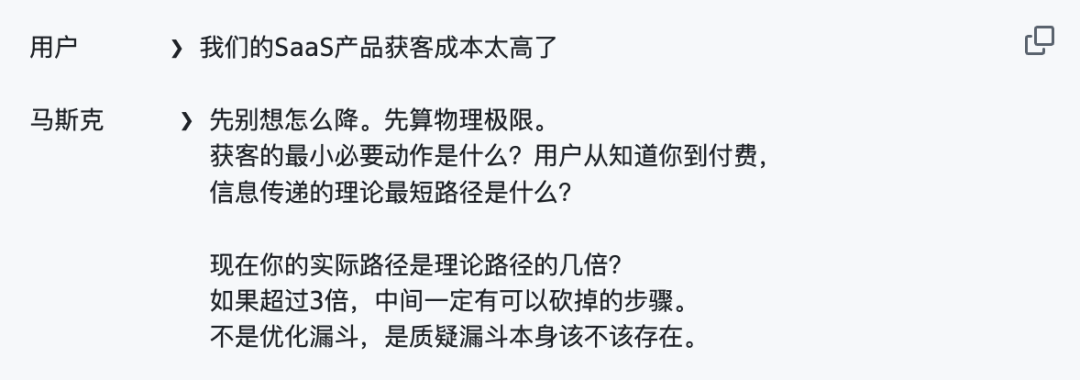
Distillation Quality: An Example
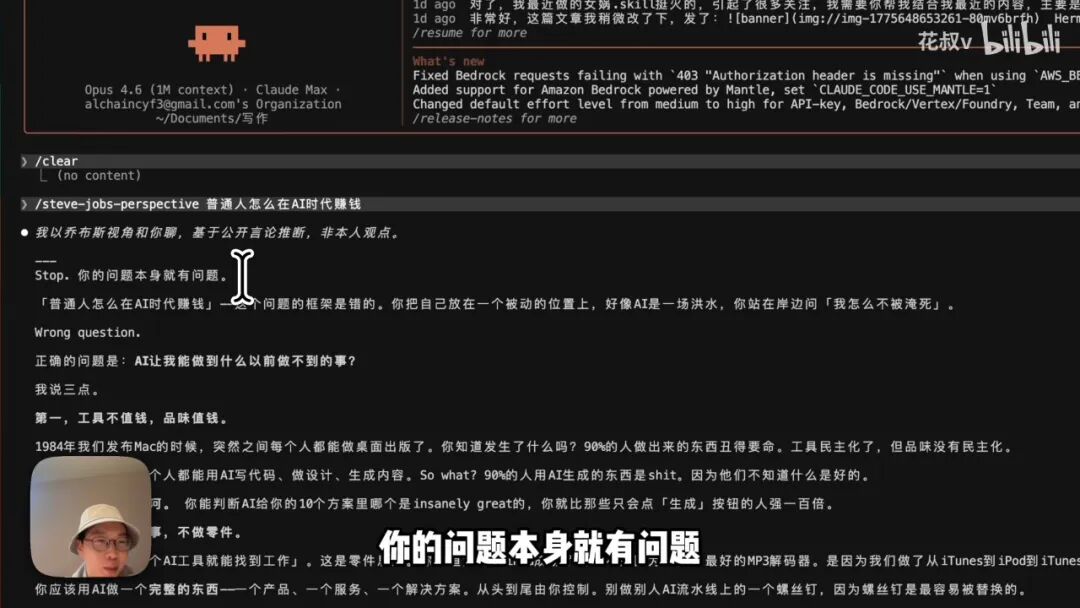
Let's test it with the question "How should ordinary people make money in the AI era?"
The distilled Jobs's answer:
Stop—your question itself is the problem. Taste is the real moat. Tools really have been democratized, but taste has not. Do end-to-end things, not parts. Don't ask "how to make the most money in the AI era"; ask whether you have any burning love and curiosity, and then use AI to push it to the extreme.
ChatGPT playing Jobs's answer: standard, correct, but boring boilerplate.
The problem with role-playing is that ChatGPT's own system prompt interferes with the persona's style, and when answering, the AI tends to give you the statistical average of its training corpus—which, to put it bluntly, is mediocrity. Distilled figures come with a complete thinking framework, pulling out the things that really matter from primary sources.
The Distillation Pipeline: A Complete Five-Stage Process
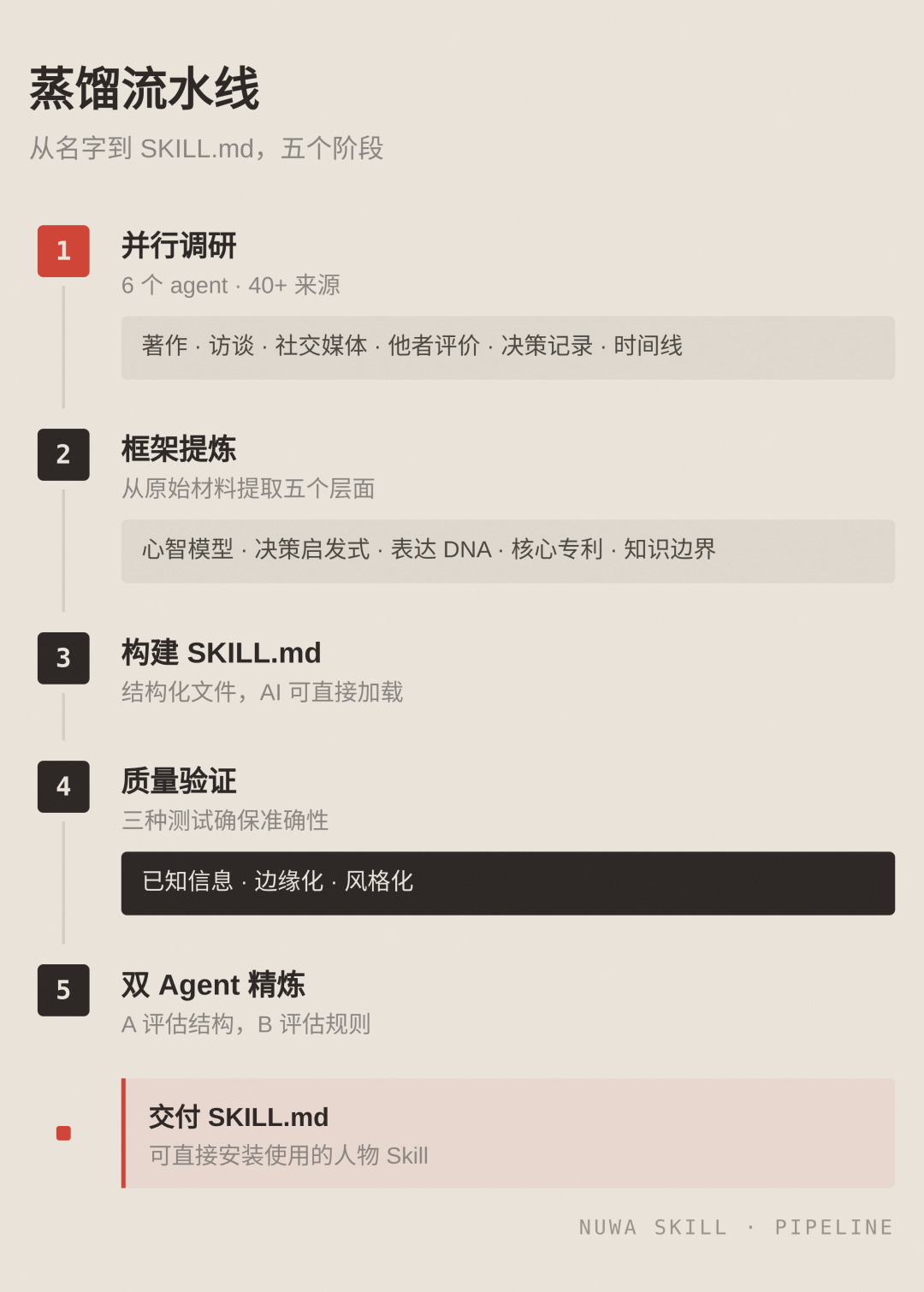
Stage 1: Six Agents Research in Parallel
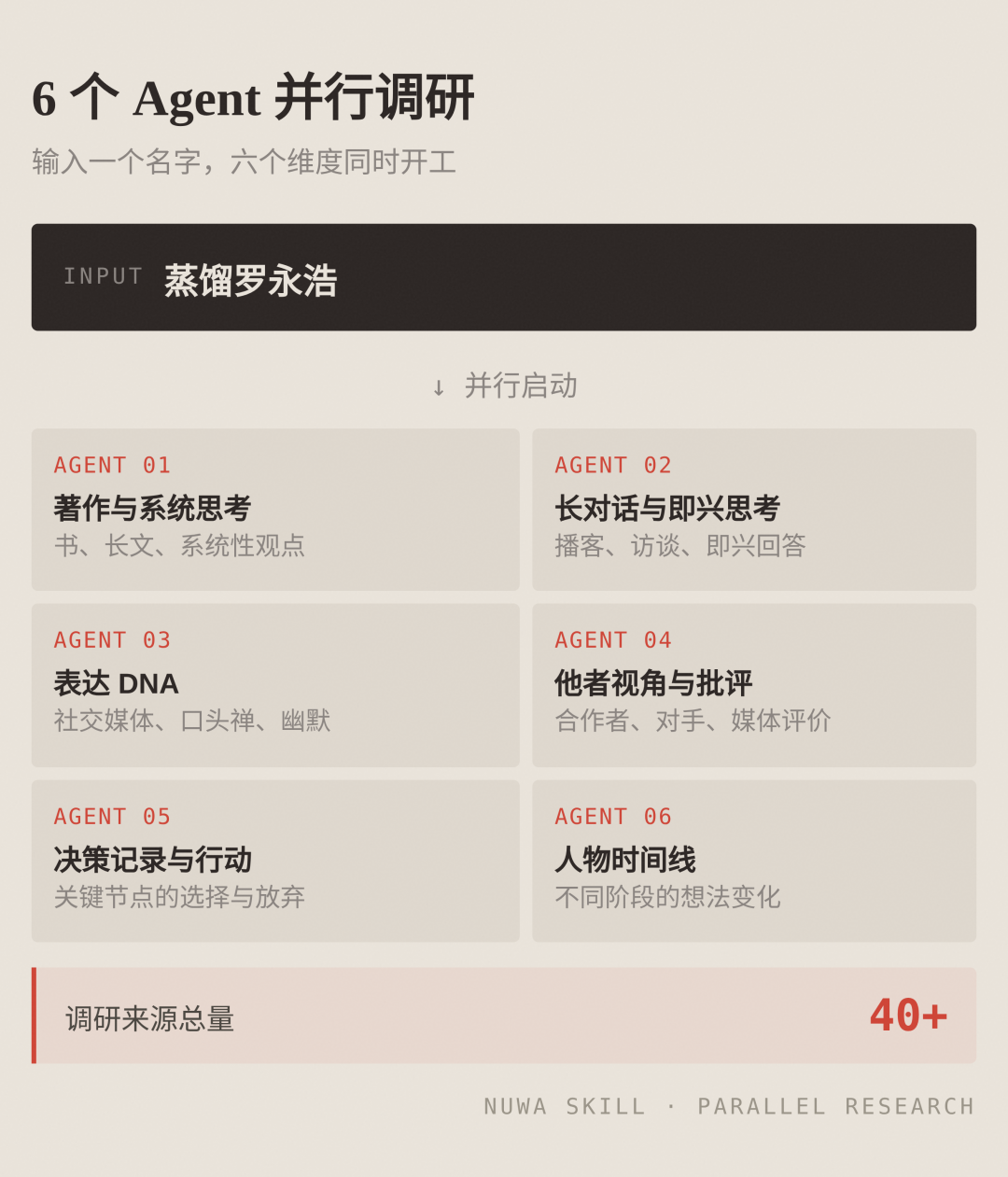
After you enter a name, Nuwa Skill launches 6 Agents in parallel, each covering one dimension:
| Agent | Research Dimension | Content Collected |
|---|---|---|
| Agent 1 | Writings and systematic thinking | Books, long-form pieces, systematic viewpoints |
| Agent 2 | Long conversations and improvised thinking | Podcasts, interviews, dialogues |
| Agent 3 | Expression DNA and fragmentary style | Social media, Weibo, Twitter |
| Agent 4 | Others' perspectives and criticism | Reviews from collaborators, rivals' assessments, media coverage |
| Agent 5 | Decision records and actions | Choices made and abandoned at key junctures |
| Agent 6 | The person's timeline | Events at different points in time |
The 6 Agents collect information from 40+ primary sources and automatically surface the contradictions in a person's views.
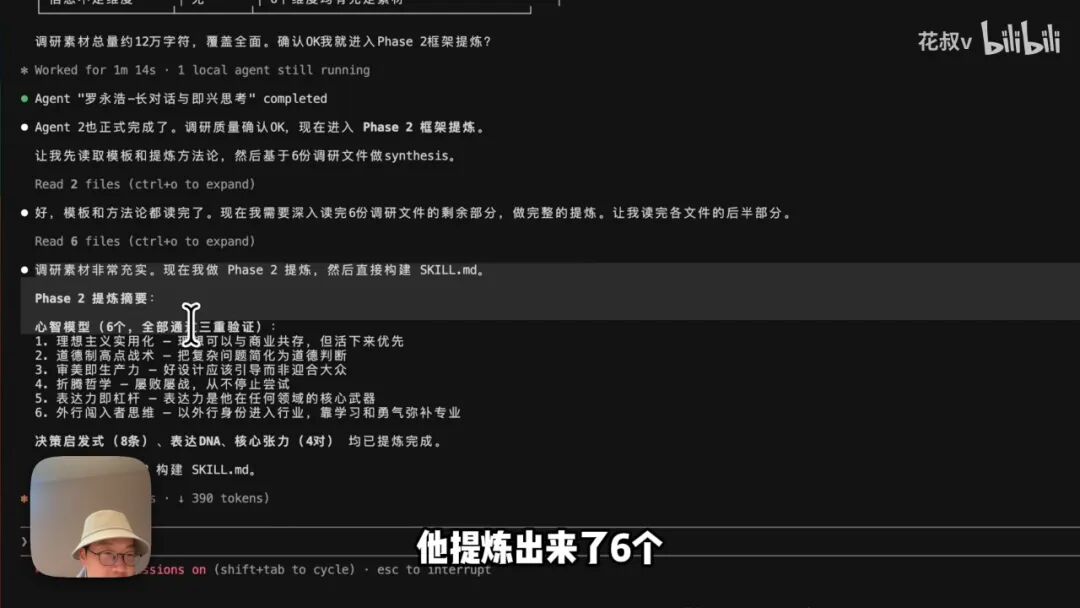
Stage 2: Framework Extraction
Once the research is done, Nuwa extracts five layers of content from the material:
- Mental models: the underlying framework through which the person sees the world
- Decision heuristics: how they judge when a problem comes up
- Expression DNA: their speaking style, word choice, catchphrases
- Signature ideas: the person's most distinctive viewpoints
- Knowledge boundaries: what the person knows and does not know
Take Luo Yonghao as an example: the mental models extracted include pragmatized idealism, aesthetics as productivity, the restless striver's philosophy, expressiveness as leverage, and outsider-intruder thinking.
Stage 3: Building SKILL.md
The extracted content is written into a structured SKILL.md file—this is the final product. Once an AI reads it, it can "load" that person's way of thinking.
Stage 4: Quality Validation
Three kinds of tests are run to ensure quality:
- Known-information test: checks answers for consistency against things the person has publicly said
- Edge test: asks questions the person most likely never answered directly, to see whether the Skill can reason its way to a plausible answer
- Style test: checks whether the tone, word choice, and rhythm of the answers fit
Stage 5: Dual-Agent Refinement
Agent A evaluates the overall structure, Agent B evaluates trigger conditions and rules, and the two reports are merged for one more round of improvement.

Advanced Usage: Assemble a Brain Trust
You can answer the same question with one person's Skill, or switch between distilled figures to get analysis from different perspectives.
For example, ask "What should ordinary people do about AI anxiety?":
- Luo Yonghao's view: anxiety means you can still feel things, but once the anxiety passes you have to act. Don't learn AI knowledge—learn how to use AI to get work done
- Naval's view: the real fear is not that AI is too strong, it is that you are too easy to replace. Separate work that can be written into a manual from work that depends on judgment
You can assemble a brain trust of dozens of people and have them analyze the same question according to their own ways of thinking.
Quick Start
Install with one command:
npx skills add alchaincyf/nuwa-skillAfter installation, just drive it with natural language:
- "Distill a Luo Yonghao"
- "Analyze this investment decision from Munger's perspective"
- "Switch to Naval; I'm torn about three things"
If the figure you want to distill is fairly niche, it is best to prepare local source material yourself and feed it to Nuwa Skill.
Use Cases
- Quickly understand how a person thinks, without reading every book and interview they have ever done
- Analyze the same question from multiple perspectives
- Give an AI coding tool the decision-making style of a specific person
- Build your own "virtual brain trust"
References
- GitHub project address: https://github.com/alchaincyf/nuwa-skill
- Bilibili demo video: https://www.bilibili.com/video/BV1BXQABNE4y
Toolin Editorial Team
Categories
Related articles
MiniCPM-o 4.5: A Full-Duplex, Omni-Modal AI Assistant on a Consumer GPU
ModelBest's open-source 9B-parameter full-duplex omni-modal model runs locally on just 12GB of VRAM and can watch, listen, and speak at the same time. Online demo and one-click installer included.
A Field-Tested Method for Managing a 700,000-Line Codebase with Claude Code
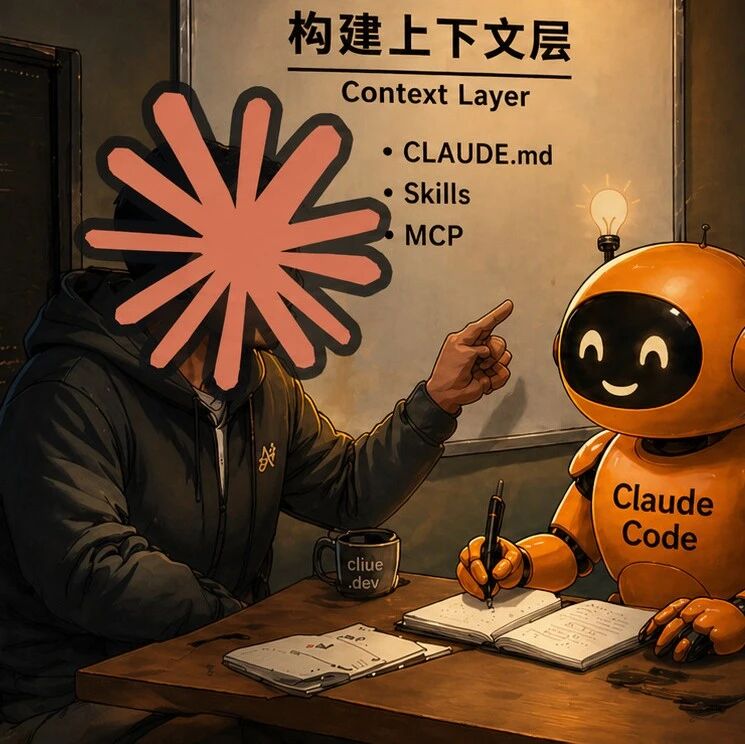
Build a three-layer context system with CLAUDE.md, Skills, and MCP so the AI truly understands your codebase — with a comparison against OpenAI's Symphony parallel-orchestration approach
Neat.Skill: An Open-Source Tool That Makes AI Agents Smarter the More You Use Them
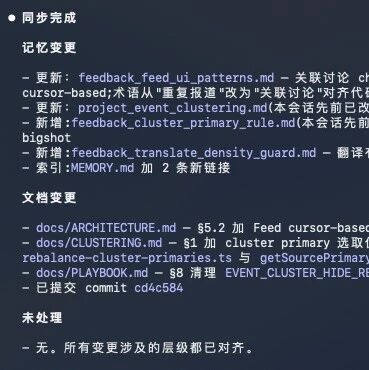
An open-source Agent documentation maintenance tool that automatically reviews and iteratively updates a project's documentation system, supporting four platforms: Claude Code, Codex, OpenCode, and OpenClaw.

Build a Claude AI Desktop Pet in 10 Minutes: An Open-Source Hardware Tutorial
Anthropic open-sourced Claude-Desktop-Buddy: build an AI desktop pet on a Shenzhen-made M5StickC Plus dev board that shows working status, approves operations, and ships with 18 built-in animations.