
Qwen-Image-3.0: Alibaba Qwen's Third-Generation Image Generation Model
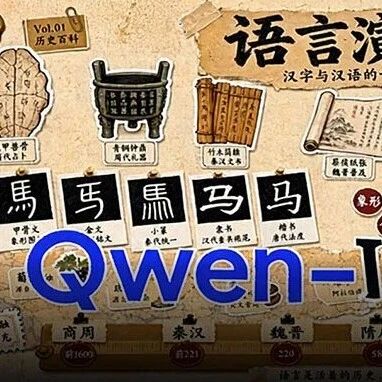
Up to 4.5k tokens of input, crisp rendering of 10px-scale small text, and 12 languages — renders complex layouts like posters, exam papers, and storyboard comics in a single pass.
Qwen-Image-3.0: Alibaba Qwen's Third-Generation Image Generation Model
Up to 4.5k tokens of input, crisp rendering of 10px-scale small text, and 12 languages — renders complex layouts like posters, exam papers, and storyboard comics in a single pass.
If you have been repeatedly burned by garbled characters, missing glyphs, and long-text breakdowns in AI image generation, that is precisely the problem Alibaba Qwen's new-generation image generation model Qwen-Image-3.0 set out to solve. It supports up to 4.5k tokens of input and can render text-dense, complex layouts — newspaper pages, exam papers, storyboard comics — in a single pass. It fits e-commerce collateral, social media posters, teaching slides, UI mockups, and any image-text scenario where "the text must be exact." This piece gets you quickly across its capability boundary, main model IDs, and API invocation.
What Qwen-Image-3.0 Is
Qwen-Image-3.0 is the third-generation image generation model in Alibaba Qwen's Qwen-Image series. Compared with the previous generation, it pushes AI image generation from "creative toy" toward "productivity tool" — with the core upgrades concentrated in three directions:
- Long text and complex layouts: up to 4.5k tokens of input, precisely generating text-heavy complex layouts like newspapers, storyboards, and exam papers.
- Detail rendering: achieves crisp rendering of 10px small text, and can also faithfully reproduce micro-textures like pores and hair strands.
- Multilingual support and world knowledge: native rendering support for 12 languages; combined with rich world knowledge, it can build web page, game, and livestream interface mockups.
Official text-to-image machine evaluations show Qwen-Image-3.0 is currently the top-ranked image generation model in China, below GPT Image 2 (defer to the latest official leaderboard).
Core Capabilities
Text Rendering: Long Text, Small Type, Multiple Languages in One Pass
Text generation has always been the technical wall for image generation models. Qwen-Image-3.0's measured performance:
- Wrote out the full text of the classical Chinese masterpiece Preface to the Pavilion of Prince Teng — nearly 800 characters — with no wrong or missing characters, a clear size hierarchy across title, author, and body text, plus a red seal-stamp stamp added on top.
- Generated a concert ticket with the theme, date, address, and other text rendered precisely, in a consistent typeface style.
- A mixed Chinese-English-Korean multilingual floating-lyrics effect with no dropped characters, garbled text, or misaligned distortion.
Complex Composition: Storyboard Comics and Group Scenes
A 20-panel vertical short comic can come out in a single pass: the plot flows smoothly from panel to panel, the dialogue-bubble text is clear and coherent, and the characters' expressions and actions fit the story. In group scenes, characters in ancient costume, xianxia fantasy, and light cyberpunk styles coexist naturally, with shop-sign text rendered accurately.
UI and Interface Mockups
One high-difficulty use case: asking the model to render "a pour-over coffee poster, generated via the Qwen app, posted inside a WeChat chat interface, all shown within a VS Code programming interface." The model has to accurately understand multi-level UI nesting, generating in sequence the VS Code programming interface, the Qwen app interface, the social media chat interface, and the coffee poster — and the final result adheres almost exactly to each platform's native visual spec.
Main Model IDs and Parameters (from the Alibaba Cloud Model Studio docs)
Qwen text-to-image (Qwen-Image) is a general-purpose image generation model, especially strong at complex text rendering, supporting multi-line layouts, paragraph-level text, and fine-grained detail rendering. Current main model IDs:
- qwen-image-2.0-pro (recommended): the Pro series — stronger text rendering, realistic texture, and semantic adherence; supports text-to-image and image editing; output resolutions from 512×512 to 2048×2048, defaulting to 2048×2048; can output 1-6 images; synchronous API only.
- qwen-image-2.0 (recommended): the accelerated version, balancing quality and response speed; same parameters as Pro.
- qwen-image-max: the Max series — stronger realism and naturalness, with fewer AI-composite artifacts; default 1664×928, fixed at 1 image.
- qwen-image-plus: the Plus series — strong at diverse artistic styles and text rendering.
💡 Tip: model version numbers and parameters defer to the official Alibaba Cloud Model Studio documentation; new versions may go live at any time.
How to Use It: API Invocation
Alibaba Cloud Model Studio and the Qwen AI platform have both opened Qwen-Image-3.0 API preview access; free trials on Qwen Studio and the Qwen app are coming soon. API invocation essentials:
Endpoint: Beijing region POST https://{WorkspaceId}.cn-beijing.maucs.aliyuncs.com/api/v1/services/aigc/multimodal-generation/generation
Authentication: use an Alibaba Cloud Model Studio API key, with Authorization: Bearer sk-xxxx added to the HTTP header.
Key request body fields:
model: model ID, such asqwen-image-2.0-pro.input.messages: single-turn, single user message only.parameters:negative_prompt: negative prompt.size: output resolution.n: number of images to output.prompt_extend: smart rewriting; recommended on for richer detail, off for more controllability.watermark: watermark.seed: random seed.
A few pitfalls to avoid:
- Prompt length caps: 1300 tokens for the qwen-image-2.0 series, 800 tokens for other models; both Chinese and English are supported.
- Generated image URLs are valid for only 24 hours — download and save them promptly.
- Billing is based on the number of images successfully generated; failed tasks are not billed.
For specific pricing tiers, defer to the Alibaba Cloud Model Studio console.
Who It's For
- E-commerce and social media operations: batch product images, campaign posters, and detail-page graphics where the text must be exact.
- Educational content production: exam papers, courseware, and long-form science explainers full of formulas and technical annotations.
- Comic and storyboard creators: multi-panel comics out in a single pass, with a coherent plot.
- Product and UI designers: rapid interface mockups for cross-platform visual verification.
Final Thoughts
Qwen-Image-3.0 pushes forward the two hardest problems in AI image generation — scrambled text and long-text understanding — while strengthening the scenarios that fit it best: UI mockups, long-form science explainers, and sequential storyboards. For professional creators who need "usable collateral in one pass," it cuts the trial-and-error cost of repeated tweaking and re-rolls. If you happen to be looking for a Chinese-language image generation model that renders text reliably, it is worth applying for preview access in the Model Studio console.
Official docs:
- Alibaba Cloud Model Studio Qwen-Image API: https://help.aliyun.com/zh/model-studio/qwen-image-api
- Image model overview: https://help.aliyun.com/zh/model-studio/image-model/