
Ibex
AI computational pathology platform for cancer diagnosis support
Tool details
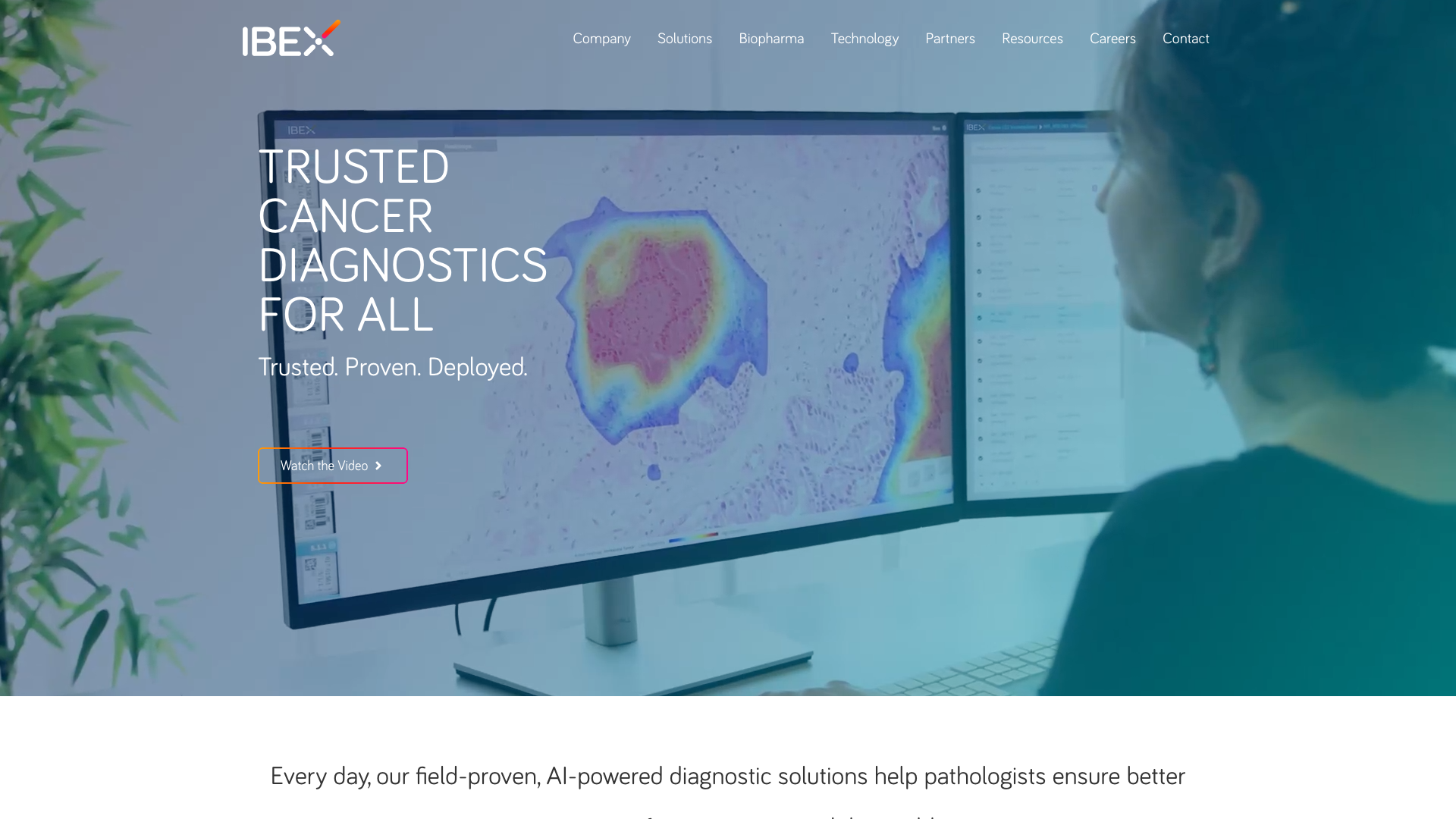
Ibex turns a pathologist's interpretive expertise into a copilot that never clocks off: it circles suspicious cancerous foci on H&E and IHC slides and computes quantitative metrics, while the sign-off still belongs to the physician. Its customers are hospital pathology departments, reference laboratories, and national diagnostic networks — the nationwide deployment at NHS Wales is its showcase.
Core capabilities
- Breast reading: on H&E it recognizes more than fifty morphologies, while on IHC it quantifies HER2 (including low/ultra-low), ER/PR, and Ki67 with zero clicks
- Prostate detection: covers needle biopsy and TURP, outputs Gleason grading and tumor measurement, with 98.4% sensitivity and 97.3% specificity
- Gastric cancer screening: identifies gastric cancer, H. pylori gastritis, lymphoma, and neuroendocrine tumors
- End-to-end loop: automatically pre-orders IHC from the primary H&E diagnosis and writes quantitative results back into the LIS as a report
- Ecosystem integration: an open API connects to WSI scanners and the LIS, and it is already embedded in Philips and Roche navify workflows
- Pharma partnerships: AI HER2 scoring with AstraZeneca and Daiichi Sankyo, extending into ADC target quantification
Who it is for Mid-size and large hospital pathology departments, third-party and reference testing laboratories, and national or regional diagnostic networks, especially organizations driving a digital pathology transformation; plus pharma companies that need AI-quantified IHC to support precision prescribing and ADC companion diagnostics. Small laboratories that have not gone digital are not a fit.
What sets it apart It holds at once a 510(k) number verifiable in openFDA, a complete IVDR breast portfolio, real deployments at scale, and peer-reviewed data, while most pathology AI is still stuck in pilots. The company describes itself as the only independent computational pathology vendor holding FDA clearance.
Editorial take The strengths are verifiable: K241232 really exists, NHS Wales sends every prostate biopsy through AI review and cuts IHC usage by 49%, and Alverno lowered its discordance rate by 32% in prostate. The weak spots are just as real: in the US only prostate second reading is cleared, while breast and gastric remain research use only; the instructions for use restrict images to the Philips Ultra Fast Scanner, which is in tension with the scanner-agnostic pitch; and there is no public pricing, no trial, and no downloadable certificate. The upfront digitization spend is often several times the license fee, and that is the real barrier.
Pricing
Custom pricingCustom (annual usage subscription)Annual usage subscription based on scanned slide volume; the amount is not disclosed and requires contacting sales
Additional notes
Pure B2B medical device sales model: no self-service signup, no public trial, and no price list.
FAQ
User reviews
User Reviews
No reviews yet
No one has reviewed this tool yet